 Owner’s manual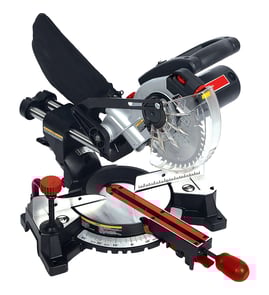

Can a 10 inch miter saw cut a 2x4?
Yes. A 10-inch miter saw like the Craftsman 137212371 cuts a 2x4 easily at 90° (straight crosscut), and it typically handles common miter angles on 2x4 as well as long as the board is positioned flat against the fence and fully supported. For safe setup details, use the 137212371 owner's manual.
Even with a 10-inch blade, cut capacity depends on how you’re cutting and how the lumber is positioned.
- Cut type: 90° crosscut vs. 45° miter vs. bevel (tilt)
- Board position: flat on the table vs. standing on edge
- Fence contact: workpiece must sit tight to the fence and table
- Blade condition: sharp, undamaged, and properly aligned
- Saw setup: miter and bevel stops correctly adjusted
These are common real-world guidelines for non-sliding 10-inch miter saws; sliding models usually cut wider.
| Saw type | Typical 90° crosscut | Typical 45° miter cut | Notes |
|---|---|---|---|
| 10-inch miter saw | 2x4 and often 2x6 | 2x4 is common | Capacity varies by fence height and head design |
| 12-inch miter saw | wider boards (often up to 2x8) | often up to 2x6 | More blade diameter, usually more width |
The Craftsman 137212371 manual calls out several setup and safety basics that directly affect cut quality.
- Unplug the saw before checking alignment or making adjustments
- Keep hands at least 7-1/2 inches from the blade path (stay out of the no-hands zone)
- Use only 10-inch blades intended for miter saw use (no dado sets, no abrasive wheels)
- With the saw unplugged, lower the arm and spin the blade by hand to confirm clearance
- If the saw vibrates or makes a new noise, stop, turn it off, unplug it, and correct the issue before continuing
A 2x4 is a common framing cut, but miter and bevel angles reduce effective capacity. Correct fence contact, proper blade selection, and accurate miter/bevel stop adjustment help prevent binding, kickback, and out-of-square cuts.
You can order replacement parts for the Craftsman 137212371 from the parts list for this model, or search by model number on Sears PartsDirect.
Last updated: February 2026
What should you never cut with a miter saw?
You should never cut metals or masonry with the Craftsman 137212371 miter saw, and you should never cut any workpiece so small that your hands would be within 7-1/2 inches of the blade path. These limits prevent binding, kickback, and severe injury; see the owner's manual for the full safety list.
- Ferrous metals (steel, iron): not a miter saw application; use the correct tool and blade for metal.
- Masonry products (brick, tile, concrete): prohibited for this saw.
- Small pieces that put fingers within 7-1/2 inches of the blade path.
- Hand-held metal workpieces: if you cut non-ferrous metal at all, it must be clamped securely.
- Freehand or unsupported cuts: always support and secure the workpiece.
If the cut is risky on a miter saw, these options are safer and more accurate:
| What you want to cut | Better approach | Why it is safer |
|---|---|---|
| Very small trim blocks | Use a stop block and clamp the workpiece | Keeps hands out of the blade path |
| Long boards | Add side support stands or a helper support | Prevents tipping and binding |
| Round stock (dowel/tubing) | Use a V-block or jig plus clamps | Prevents rolling into the blade |
| Non-ferrous metal (aluminum) | Use a blade rated for non-ferrous metal and clamp firmly | Reduces grabbing and flying debris |
- Keep hands out of the marked no-hands zone; maintain at least 7-1/2 inches clearance.
- Make sure the blade is not touching the workpiece before switching ON.
- After the cut, release the trigger and wait for the blade to stop before raising the saw.
- Wait for a complete stop before removing or repositioning the workpiece.
- If the saw vibrates or makes an unfamiliar noise, shut it off and unplug it before checking.
Most miter saw injuries happen when the workpiece shifts, binds, or is too small to control safely. Following the 137212371 safety limits (especially the 7-1/2 inch hand clearance and the no-metal/no-masonry rule) keeps the cut stable and your hands out of the blade path.
For replacement parts and diagrams for your Craftsman 137212371, start with the parts list for this model or search by model number on Sears PartsDirect.
Last updated: February 2026
Why is 31.6 on a miter saw?
The 31.6° mark on the Craftsman 137212371 miter saw is a built-in miter detent stop used for common compound crown molding cuts. It pairs with the saw’s 33.9° bevel positive stop to quickly produce accurate inside and outside corner joints when crown molding is laid flat on the table (not nested against the fence).
Your saw’s rotating table includes positive miter stops at 0°, 15°, 22.5°, 31.6°, and 45° (left and right). That 31.6° stop exists because it is one of the most common “shortcut” angles for crown molding work. See the owner's manual for the full detent-stop list and the crown molding chart.
- Speeds up setup: you can lock into 31.6° without hunting the scale.
- Improves repeatability: detents help you hit the same angle across multiple pieces.
- Works with bevel presets: this saw also has bevel positive stops at 0°, 33.9°, and 45° left.
- Designed for 90° corners: the crown chart is built around walls meeting at 90°.
When cutting standard crown molding flat on the table for a 90° corner, the manual’s chart uses these common settings:
| Cut type | Miter setting | Bevel setting | What you’re trying to achieve |
|---|---|---|---|
| Inside corner (left or right piece) | 31.6° left or right | 33.9° | Tight inside corner joint |
| Outside corner (left or right piece) | 31.6° left or right | 33.9° | Tight outside corner joint |
- Lay the molding’s broad back surface flat on the saw table.
- Set the bevel to 33.9° using the positive stop.
- Rotate the table to the 31.6° detent (left or right, depending on the corner and piece).
- Hold the work firmly against the fence; then tighten the miter lock handle before cutting.
Crown molding cuts are easy to get wrong because you are combining two angles (miter and bevel). The 31.6° detent and 33.9° bevel stop on the Craftsman 137212371 reduce guesswork and help you produce consistent compound cuts.
If you need diagrams, detent-stop operation, and the full crown chart, use the owner's manual. For ordering replacement parts by model number, we recommend starting with the parts list for Craftsman 137212371, or searching on Sears PartsDirect.
Last updated: February 2026
What is the best mitre saw for a DIY?
For most DIY projects, the “best” miter saw is the one that cuts accurately and safely for the materials you use most. A 10-inch sliding compound miter saw is the most versatile starting point for homeowners, and your Craftsman 137212371 is designed for common DIY crosscuts, miters, bevels, and crown molding work when it is set up and adjusted correctly (see the owner's manual).
- Blade size: 10-inch for a good balance of capacity, cost, and blade availability; 12-inch for more capacity.
- Sliding vs. non-sliding: sliding increases crosscut capacity for wider boards.
- Bevel range: dual-bevel saves time if you frequently flip workpieces for compound cuts.
- Fence and detents: solid miter detents and a straight fence help repeatable accuracy.
- Dust collection: improves visibility and cleanup, especially indoors.
- Work holding: support wings, hold-downs, and clamps reduce movement and splintering.
| Your typical projects | Best fit | Why it matters |
|---|---|---|
| Baseboards, 1x lumber, small trim | 10-inch compound | Plenty of capacity, easier to store and move |
| Wider boards, shelving, deck boards | 10-inch sliding | More crosscut width without jumping to 12-inch |
| Crown molding and frequent compound cuts | Sliding dual-bevel | Faster workflow and fewer setup errors |
| Occasional use, tight budget, limited space | Non-sliding 10-inch | Simple, compact, and usually lower cost |
Even a great saw performs poorly if it is out of adjustment or the workpiece is not secured.
- Keep guards installed and working; unplug the saw before adjustments.
- Do a dry run before powering on to confirm the cut path and clearance.
- Clamp moldings firmly to the fence and table; use a hold-down or C-clamps when possible.
- Reduce splintering by taping the cut line; splintering often comes from blade choice and thin material.
- Use recommended accessories and the correct blade type for the material (fine-tooth for trim).
DIYers usually get better outcomes by prioritizing accuracy, safe work holding, and correct setup over maximum size. Your 137212371 can handle demanding tasks like crown molding when the bevel and miter settings are dialed in and the workpiece is supported.
You can look up diagrams and replacement items for the Craftsman 137212371 on the model parts list, or search by model number on Sears PartsDirect.
Last updated: February 2026
Will any miter saw stand work with any miter saw?
No. A miter saw stand is not automatically a perfect fit for every saw; you need to match the stand’s mounting method to your saw’s base mounting holes and make sure the setup keeps your Craftsman 137212371 miter saw stable and level. Use the 137212371 owner's manual mounting guidance as your baseline, then choose a stand that can be bolted or clamped securely.
Most “universal” miter saw stands work because their rails and brackets adjust, not because every saw shares the same hole pattern.
- Mounting hole pattern: Your saw base has four mounting holes; the stand needs slots or brackets that can align to them.
- Secure attachment method: The saw must be bolted or clamped to the support to prevent unexpected movement.
- Flat, level support: The stand top must keep the saw from rocking or twisting.
- Capacity and stability: Confirm the stand’s weight rating exceeds the saw’s weight and typical workpiece loads.
- Workpiece support: Extension wings or rollers should support long stock without lifting the saw.
| Approach | How it works | Best for |
|---|---|---|
| Bolt-through mounting | Bolts pass through the saw base holes into the stand top/brackets | Shop use, repeatable accuracy |
| Clamp mounting | Heavy-duty clamps secure the saw base to the stand | Temporary setups |
| Adapter plate (plywood/MDF) | Saw bolts to a plate; plate bolts/clamps to stand | When hole patterns do not line up |
A stand that does not match the mounting holes or cannot be tightened down can let the saw shift during a cut. Our manual for the Craftsman 137212371 specifically calls out supporting the saw on a level work surface and bolting or clamping the saw to its support; that stability helps prevent binding, vibration, and unexpected movement.
- Unplug the saw before mounting, adjusting, or checking clearances.
- Never carry the saw by the power cord; use the designated carrying handles.
- Keep hands out of the blade path; clamp the workpiece when needed.
- If the saw vibrates or makes an unfamiliar noise, stop and correct the issue before continuing.
We recommend using the parts list for Craftsman 137212371 first when you are replacing mounting-related hardware; for broader parts and model lookups, search by model number on Sears PartsDirect.
Last updated: February 2026