
Do you have to thin paint for a Wagner sprayer?
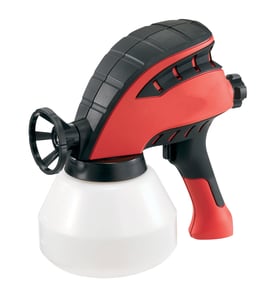
Yes, for a Wagner 255 power sprayer you often need to thin paint to get an even spray pattern and prevent spitting or clogging. We start by testing unthinned paint first, then thin in small steps until the sprayer produces a consistent mist without pulsing.
How to decide if thinning is needed
Use these quick checks before you add any thinner:
- Spray test: If the fan is patchy, “tails” at the edges, or spits, the paint is too thick.
- Flow test: If paint pours in globs instead of a steady stream, it is usually too viscous.
- Clogging: Frequent tip/nozzle buildup or surging often points to thick paint.
- Finish quality: Orange peel texture can mean the material is not atomizing well.
- Material type: Primers, exterior paints, and older paint tend to need thinning more often.
How much to thin (practical starting points)
Always follow the paint label first; then use these common starting ranges.
| Paint type | Typical thinner | Starting amount | Adjust by |
|---|---|---|---|
| Water-based latex/acrylic | Clean water | 5% to 10% | 2% to 5% at a time |
| Oil-based enamel | Mineral spirits (per label) | 5% to 10% | 2% to 5% at a time |
| Stain/sealer | Usually none | 0% | Small steps only |
Best practices for a smooth spray
These steps matter as much as thinning:
- Strain the paint before it goes into the cup to remove skins and debris.
- Mix thoroughly after every adjustment so viscosity is consistent.
- Test on cardboard and dial in pattern and flow before spraying your project.
- Keep the nozzle clean during the job; wipe buildup before it turns into spitting.
- Stop before over-thinning; too thin can cause runs, poor coverage, and weak hiding.
Why it matters
Correct viscosity helps the Wagner 255 atomize paint properly, which reduces clogs, improves coverage, and gives a smoother finish with fewer passes.
For more DIY help finding the exact model identifier you are working from when ordering parts, use how to find your appliance model number (and what it means for parts).
Last updated: February 2026
What paint to use in Wagner sprayer?
For the Wagner 255 power sprayer, we recommend using water-based interior wall and ceiling paints (often called dispersion or latex paints) that are labeled as sprayable; strain the paint and thin only as needed so it atomizes smoothly without spitting or clogging.
Paint types that typically work well
- Water-based interior wall paint (latex/dispersion)
- Water-based ceiling paint
- Water-based primers labeled for spraying
- Stains or clear finishes only if your material cup and seals are compatible
- Avoid heavy elastomeric coatings unless the product label specifically says it can be sprayed with an HVLP-style sprayer
Quick setup checklist (to prevent clogs and poor spray)
- Strain the paint through a fine mesh paint strainer before filling the cup
- Start unthinned, then thin in small steps only if the spray pattern is pulsing or spitting
- Test on cardboard and adjust flow and pattern before spraying the wall
- Keep the gun level and maintain a consistent distance (most handheld sprayers work best around 6 to 12 inches)
- Clean immediately after use; dried paint is the most common cause of poor performance
Thinning and viscosity: practical guidance
Most wall paints spray best when they flow smoothly off a stir stick and do not “glop” in thick ribbons. If thinning is needed, use the reducer recommended on the paint can (commonly water for latex) and mix thoroughly.
| Symptom | Most common cause | What we do first |
|---|---|---|
| Spitting or pulsing | Paint too thick or partially clogged pickup/nozzle | Strain paint; clean nozzle; then thin slightly |
| Orange peel texture | Paint too thick or spraying too far away | Thin slightly; move closer; slow down |
| Runs/sags | Too much material or moving too slowly | Reduce flow; speed up; apply lighter coats |
| Uneven fan | Tip/nozzle buildup | Clean tip/nozzle and retest |
Why it matters
Using the right paint type and prep steps protects the sprayer’s nozzle, seals, and pickup path from clogging, and it helps you get an even finish with fewer lap marks.
For general DIY prep and safety habits that also apply to sprayer projects, we recommend are diy appliance repairs safe.
Last updated: February 2026
Why is my Wagner paint sprayer not spraying paint?
If your Wagner 255 power sprayer runs but won’t spray paint, the most common causes are a clogged tip or filter, dried paint in the pickup tube or valve, an air leak at the suction connection, or paint that’s too thick. A thorough cleaning and suction check usually restores spray.
Quick checks (fastest fixes first)
- Confirm the sprayer is primed and the pickup tube is fully submerged in paint.
- Clean the spray tip/nozzle; dried paint here can stop flow completely.
- Remove and rinse the inlet filter/strainer (if equipped) and any cup or pickup screen.
- Tighten the suction tube connection; a small air leak prevents paint pickup.
- Check paint viscosity; thin per paint label if it is too thick for spraying.
- Inspect the pickup tube for cracks, loose fittings, or hardened paint inside.
Deep clean steps (when it hums but won’t pull paint)
- Unplug the sprayer.
- Remove the tip/nozzle and soak it in the correct cleaner (water for latex, mineral spirits for oil-based).
- Flush the sprayer with the correct cleaner until flow is steady.
- Clean the pickup tube and any check valve area; dried paint here blocks suction.
- Reassemble, prime, and test with cleaner first, then paint.
Symptom-to-cause guide
| What you see | Most likely cause | What to do |
|---|---|---|
| Motor runs, no spray | Clogged tip/filter | Clean tip and inlet filter; flush system |
| Sputters, then stops | Air leak or low paint level | Tighten suction tube; keep pickup submerged |
| Weak spray pattern | Tip partially clogged or paint too thick | Clean tip; thin paint; increase flow setting |
| Won’t prime at all | Dried paint in pickup/check valve | Deep clean pickup path; flush with cleaner |
Why it matters
A sprayer that won’t spray is usually losing suction or has a restriction. Running it while blocked can overheat the pump or wear internal seals faster, so it’s best to stop and clean before continuing.
For help confirming you have the correct model number before ordering parts or looking up diagrams, use how to find your appliance model number (and what it means for parts).
Last updated: February 2026