Owner’s manual
 Error Codes


What is the average lifespan of a Samsung dryer?
Samsung dryers typically last 10 to 15 years. For your Samsung DV56H9100EW dryer, consistent maintenance (especially lint and vent cleaning) and avoiding overloads are the biggest factors that push lifespan toward the high end; see the care and loading guidance in the DV56H9100EW owner’s manual.
What affects dryer lifespan the most
- Airflow and venting: Restricted ductwork makes the dryer run hotter and longer.
- Lint filter habits: Cleaning the filter every load helps protect the heater and blower.
- Load size: Overloading strains the drive system and reduces drying efficiency.
- Heat management: Using appropriate cycles and allowing cool-down reduces stress on components.
- Wear parts: Rollers, blower wheel, and thermostats wear over time.
DV56H9100EW care tips that extend life
Your manual emphasizes proper loading and vent maintenance. Follow these practical habits:
- Load loosely; do not pack the drum.
- Use the dryer’s Vent Sensor prompt as a reminder to clean ductwork.
- Keep the exhaust path short and clear (lint buildup is the most common performance killer).
- Do not run the dryer with a blocked vent or crushed duct.
Load size quick guide (typical for this style of Samsung dryer)
| Load size | How full to fill the drum | Why it helps |
|---|---|---|
| Small | About 1/4 full | Better tumbling, faster dry times |
| Medium | About 1/2 full | Balanced airflow and performance |
| Large | About 3/4 full | Prevents overheating and wear |
Why it matters
A dryer that dries efficiently runs fewer minutes per load. That reduces heat exposure on the heating system and lowers wear on moving parts like drum rollers and the drive motor, which is the simplest way to reach the 10 to 15 year lifespan range.
Last updated: February 2026
What is the most common Samsung dryer error?
On the Samsung DV56H9100EW dryer, the most common “error” customers run into is a door-related issue: the door is not fully closed or the dryer is not sensing the door as closed. If the door is shut but the dryer still acts like it is open, the door switch is the first part we check.
Quick checks we recommend first
- Open and firmly re-close the door; listen for a solid latch click.
- Remove lint or debris around the door opening and latch area.
- Power the dryer off, wait 1 minute, then power it back on.
- If your model supports it, use Smart Care to identify the exact code and recommended steps (see the DV56H9100EW owner's manual).
- If the dryer will not start and the door feels “loose,” inspect the switch and hinge alignment.
When it is likely a real fault (not just the door)
Door issues are common, but Samsung dryers also commonly show codes tied to airflow restriction or temperature sensing. A clogged vent can trigger warnings and poor drying performance.
Common symptom-to-cause guide
| What you notice | Most likely cause | What to do next |
|---|---|---|
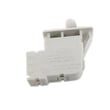
| Dryer will not start, acts like door is open | Failed door switch or door not closing squarely | Test/replace the dryer door switch DC64-00828B |
| Long dry times, “Vent Sensor” light, hot cabinet | Restricted venting or lint buildup | Clean lint filter and ductwork; confirm strong airflow |
| Overheating or shuts off mid-cycle | Airflow restriction or a thermostat/fuse opening | Check venting first; then test safety thermostats |
| Temperature-related code or inconsistent heat | Sensor issue | Test the thermistor and wiring harness |
Why it matters
A door-sensing problem stops the dryer for safety, but airflow-related errors can also lead to overheating and repeated shutdowns. Keeping the lint filter and vent duct clean helps the DV56H9100EW dry faster and reduces nuisance error codes.
Last updated: February 2026
How to find part number for Samsung dryer?
For your Samsung dryer model DV56H9100EW, we find the correct part number by matching the dryer’s model number and then using the parts diagram/list for that exact model. The model/serial tag is typically on the front frame behind the door; a secondary tag is often on the back.
Where to look for the model and serial tag
Check these common locations first:
- Open the door and look on the front frame (door opening area)
- Check the back panel of the dryer for a second label
- Wipe the label gently; lint and residue can hide characters
- Write the model number exactly as shown (letters and numbers)
- Take a clear photo so you can zoom in later
For model-specific label location and identification tips, use the DV56H9100EW owner's manual.
How we match the right part number (the reliable method)
Once you have the model number, we match parts using the model’s diagrams and part list. This prevents ordering a look-alike part that does not fit.
| What you have | What we use it for | Why it matters |
|---|---|---|
| Model number (DV56H9100EW) | Selects the correct parts breakdown | Ensures fit and compatibility |
| Serial number | Confirms production variation | Some parts change by run |
| Symptom (no heat, noise, no start) | Narrows the part category | Saves time and returns |
Quick examples of “part number” vs “part name”
A part name describes the component; the part number is the ordering identifier.
- Heating problem: dryer heating element assembly DC97-14486E
- No start (door not sensed): dryer door switch DC64-00828B
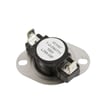
- Overheating or shuts off: dryer high-limit thermostat DC47-00018A
Why it matters
Samsung dryers can have multiple versions that look similar. Using the exact model number DV56H9100EW and then selecting the part by diagram position is the fastest way to get the correct replacement part the first time.
Last updated: February 2026
Is it worth replacing a heating element in a Samsung dryer?
Yes; for a Samsung dryer like model DV56H9100EW, replacing the heating element is usually worth it when the dryer runs but does not heat, because the repair cost is typically far less than replacing the whole dryer. We also recommend confirming airflow and safety cutoffs first using the DV56H9100EW owner's manual.
When replacing the heating element makes sense
Replace the element when the dryer tumbles normally, has good airflow, and still produces no heat.
- The drum turns and the cycle runs, but clothes stay cold and damp
- You have already cleaned the lint filter and checked the exhaust duct for restrictions
- The dryer is not overloaded (Samsung recommends loading loosely and not overfilling)
- You are not seeing repeated overheating symptoms (burning smell, very hot cabinet)
- Basic electrical checks point to an open element or failed heater assembly
Common “no heat” causes to rule out first
A failed safety device or airflow problem can mimic a bad element.
| Symptom | More likely cause | What to check first |
|---|---|---|
| Runs, no heat | Thermal cut-off or high-limit thermostat opened | Venting, lint buildup, overheating history |
| Long dry times | Restricted exhaust system | Duct condition, outside hood flap, crushed duct |
| Heat cycles on/off quickly | Temperature sensing issue | Sensor/thermistor mounting and wiring |
Parts that are often involved on this model
If testing confirms the heater circuit is the problem, these are common repair parts for DV56H9100EW:
- Dryer heating element assembly DC97-14486E (the heater assembly itself)
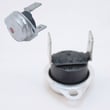
- Dryer thermal cut-off thermostat DC47-00016A (opens if overheating occurs)
- Dryer high-limit thermostat DC47-00018A (protects against excessive heater temperature)
- Dryer thermistor DC32-00007A (helps the control manage temperature)
Why it matters
A heating element often fails because the dryer overheated from poor airflow. Samsung dryers use a vent sensor to alert you when ductwork needs cleaning, and keeping the exhaust system clear helps prevent repeat failures and improves drying performance.
Last updated: February 2026