Owner’s manual


Can I use WD-40 on my snowblower chute?
Yes, you can use WD-40 on the discharge chute of your Craftsman snow thrower attachment model 48624839 to reduce snow sticking, but our best practice is a light coat of wax or a spray lubricant made for low-stick performance. Apply it to a clean, dry chute before you start.
What the 48624839 manual recommends
The 48624839 owner's manual specifically calls out two chute-friendly approaches:
- Let the attachment reach outdoor temperature before use (helps reduce sticking)
- Apply a light coat of wax to the inside of the housing and discharge chute
- Use a spray lubricant on the chute tilt control and trigger assemblies
When WD-40 is OK (and when to choose something else)
WD-40 can work as a quick, short-term anti-stick spray, especially in wet, heavy snow. For longer-lasting results, wax or a silicone-type spray typically stays put better.
| Option | Best for | How often to reapply |
|---|---|---|
| Light coat of wax | Long-lasting anti-stick on chute surfaces | Less often (usually per storm or as needed) |
| Silicone-type spray lubricant | Quick anti-stick plus light lubrication | Often (commonly each use) |
| WD-40 | Quick fix when you have it on hand | Often (commonly each use) |
Safe application steps
- Shut off the tractor engine and disengage the attachment clutch.
- Clear packed snow using a wooden stick (not your hands).
- Wipe the chute interior dry.
- Apply a light, even coat to the inside of the upper and lower discharge chute.
- Keep spray off belts, pulleys, and traction surfaces.
Why it matters
A slick chute helps prevent clogging, improves throwing distance, and reduces strain on the auger and impeller. It also helps you avoid stop-and-clear situations, which are when most jams and damage happen.
Last updated: February 2026
How do I tell what year my snowblower is?
For the Craftsman snow thrower attachment model 48624839, the year is tied to the serial number on the model/serial decal. Find that decal on the attachment, record the serial number, then use it (along with your purchase date) to identify the unit’s production timeframe using the 48624839 owner's manual.
Where to find the model and serial information
The manual specifies that the model number and serial number are on a decal attached to the snow thrower attachment. Once you locate it, write down both numbers and keep them with your records.
Common places to check on an attachment like the 48624839:
- Side of the snow thrower housing (near the frame)
- Near the lift handle or mounting plate area
- On the rear of the attachment frame
- Near the chute base or gearbox area
How to use the serial number to determine the year
Craftsman and the OEM manufacturers behind many attachments often encode date information in the serial number, but the exact pattern varies by production run. The most reliable approach is to match your serial number to the format shown or referenced in the manual and parts documentation.
What to record (and why)
- Model number: confirms you are looking at the correct parts list (48624839)
- Serial number: used to identify production batch and date coding
- Date of purchase: helps narrow the likely build year if the serial format is unclear
Quick decision guide
| What you have | What it tells you | Best next step |
|---|---|---|
| Model number only (48624839) | Identifies the attachment design | Use the manual to locate the serial decal |
| Serial number only | Usually contains date/batch info | Compare to manual format; use it when ordering parts |
| Serial number + purchase date | Strongest clue to the year | Use both when contacting service or ordering |
Why it matters
The build year (or production range) helps ensure you get the right belt, pulley, bearing, or hardware when parts changed mid-production. It also speeds up troubleshooting and parts lookup.
Last updated: February 2026
How many HP is a 243cc snow blower?
A 243cc snowblower engine typically falls in the 6 to 8 HP range in real-world output. On the Craftsman 48624839 snow thrower attachment, the engine is actually your lawn tractor’s engine, so horsepower depends on the tractor, not the attachment (see the 48624839 owner's manual).
Why “243cc” does not equal a single HP number
Engine displacement (cc) is only one piece of the power picture. Two 243cc engines can produce different horsepower depending on:
- RPM rating and governor setting
- Torque curve and cam timing
- Carburetion and intake/exhaust design
- Emissions tuning and fuel system setup
- How the manufacturer reports power (gross vs. net)
Attachment vs. self-propelled snowblower
Because model 48624839 is a tractor-mounted, belt-driven attachment, the more useful spec is whether the auger and impeller are getting full belt drive and correct tension.
- If the attachment bogs down, belt slip is more common than “not enough HP.”
- Correct belt tension and engagement setup are key for throwing distance.
- Shear bolts protect the auger when it hits ice chunks or debris.
Quick check list for weak throwing performance
- Inspect the auger drive belt for glazing, cracking, or stretching
- Verify belt tension and engagement linkage adjustment per the manual
- Replace broken shear bolts with the correct type (not a hardware-store bolt)
- Check skid shoe height so the scraper plate is not digging in
- Clear packed snow from the chute and impeller housing
Common “HP” labels you may see
Some brands use marketing terms that look like horsepower but are not comparable to true engine HP.
| What you see on the box | What it usually means | How to compare |
|---|---|---|
| “243cc” | Engine size (displacement) | Compare to other cc ratings |
| “6-8 HP” | Approximate real output range | Best for older models or spec sheets |
| “26” or “30” rating | Marketing power class | Compare within the same brand line |
Parts that often matter more than HP on this attachment
If you are troubleshooting performance on the Craftsman 48624839, these parts are frequent wear items:
- Belt 47846 (auger drive belt)
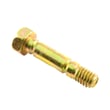
- Snowblower shear bolt 42849 (auger protection)
- Snowblower attachment skid shoe 24279BL1 (scrape height control)
Why it matters
Matching expectations to the right spec prevents overbuying and speeds up troubleshooting. For a tractor-mounted snow thrower attachment like the Craftsman 48624839, setup, belt condition, and shear bolt integrity usually determine performance more than a single “HP” number.
Last updated: February 2026
How often do you change the oil in a Craftsman snowblower?
For the Craftsman 48624839 snow thrower attachment, you do not change oil in the attachment itself because it has no engine. Oil-change intervals apply to the tractor engine that powers the attachment; follow your tractor’s schedule and use winter-grade oil (commonly SAE 5W-30) as noted in the 48624839 owner's manual.
What to do for this model (48624839)
- Check your tractor’s engine oil level before each use in winter conditions.
- Use the oil viscosity your tractor manufacturer specifies for cold weather (SAE 5W-30 is commonly recommended for winter operation).
- Change tractor engine oil on the tractor’s maintenance schedule (many tractors call for an early first change, then regular intervals).
- Keep the attachment maintained: lubricate pivot points, idler arms, and control cables.
- Inspect wear items often, especially the scraper plate and skid shoes.
Attachment maintenance that matters as much as oil changes
The 48624839 attachment’s reliability depends more on lubrication and wear checks than oil changes.
| Maintenance item | What to check | Typical frequency |
|---|---|---|
| Pivot points and idler arms | Light oil on moving joints | Every 10 hours or each storm |
| Control cables (chute controls) | Penetrating oil, smooth movement | Monthly in season |
| Skid shoes and scraper plate | Wear, uneven clearance | Each use |
If your skid shoes are worn or the housing is scraping, replace the snowblower attachment skid shoe 24279BL1 and re-adjust ground clearance.
Why it matters
Correct tractor oil and regular attachment lubrication help prevent hard starting, belt slip, and premature wear on the auger housing, scraper plate, and skid shoes when clearing packed snow.
Last updated: February 2026
How to increase snowblower throwing distance?
On the Craftsman snow thrower attachment model 48624839, you increase throwing distance by raising the upper chute angle, running the tractor at full throttle, and keeping auger speed up with correct belt routing and tension. Also match ground speed to snow conditions so the auger and impeller do not bog down.
Fast adjustments that usually add distance
- Tilt the upper chute up (pull back on the chute tilt handle) to throw farther.
- Run full throttle to maximize auger and impeller speed.
- Use a lower gear to reduce ground speed in deep, wet, or heavy snow.
- Clear packed snow safely: stop the engine, disengage the clutch, then clear the auger and chute.
- Let the attachment cool to outdoor temperature so snow is less likely to melt and stick.
Belt and drive checks (restore auger speed)
A slipping or misrouted belt is a top cause of weak discharge.
- Confirm the belt “V” side sits fully in pulley grooves.
- Verify the routing includes the 1/4-turn twist under each side idler pulley.
- Increase belt tension if the troubleshooting chart calls for it; replace a worn belt.
Helpful part to inspect:
Skid shoes and shear bolts (keep snow feeding correctly)
Skid shoe height affects how well the housing feeds snow; broken shear bolts reduce auger output.
| Check | What to look for | Result |
|---|---|---|
| Skid shoes | Set for your surface (lower on pavement, higher on gravel) | Better pickup and steadier throw |
| Shear bolts | Missing or broken at the auger | Restores auger drive |
Related parts:
Why it matters
Throwing distance comes from a balance of chute angle, impeller/auger speed, and snow flow. Small issues like belt slip, slow throttle, or a sheared bolt can cut distance dramatically.
For model-specific adjustment steps and belt routing diagrams, use the 48624839 owner’s manual.
Last updated: February 2026
Who repairs Craftsman snow blowers?
For a Craftsman snow thrower attachment like model 48624839, repairs are typically handled by lawn and garden equipment service centers, including Sears service locations. For the fastest, most accurate repair, we recommend using the service information and troubleshooting steps in the 48624839 owner's manual before scheduling service.
Best options for Craftsman snowblower repairs
- Sears service centers/departments: The manual directs warranty service through the nearest Sears service center in the United States.
- Local small-engine and lawn equipment shops: Many can service 2-stage snow thrower attachments and handle belts, bearings, and auger issues.
- Tractor dealer service departments: Helpful when the issue involves tractor mounting, lift linkage, or drive setup.
- DIY repair with OEM parts: Common wear items (belts, shear bolts, skid shoes) are straightforward to replace with basic tools.
What to check before you call for service
Many “needs repair” symptoms are adjustment or wear-item issues. We recommend checking these first:
- Shear bolts: A broken shear bolt can stop the auger from turning; use the correct replacement such as snowblower shear bolt 42849.
- Drive and auger belts: Slipping, squealing, or no-throw conditions often trace to a worn or stretched belt.
- Skid shoe height: Incorrect skid shoe adjustment can affect scraping and throwing performance.
- Bearing noise or wobble: Growling or play at the auger/impeller can point to a bearing issue.
- Ground speed and technique: The manual’s troubleshooting guidance commonly starts with reducing ground speed.
Common repair types and who usually handles them
| Issue | Typical fix | Who can do it |
|---|---|---|
| Auger stops under load | Replace shear bolt, inspect auger | DIY or service shop |
| Poor throwing distance | Belt inspection, adjustment, skid shoe setup | DIY or service shop |
| Loud grinding | Inspect bearings/gearbox | Service shop |
| Attachment won’t lift | Inspect lift cable and linkage | DIY or service shop |
Why it matters
Using the correct service path and the correct parts protects the attachment’s gearbox, auger, and impeller from secondary damage. Starting with the manual’s troubleshooting and adjustment steps often restores performance without a major repair.
Last updated: February 2026