Owner’s manual
 Error Codes



What is the average lifespan of a Samsung dryer?
A Samsung dryer typically lasts 10 to 15 years. For your Samsung DV337AER, consistent airflow and heat management make the biggest difference; cleaning the lint screen every load and keeping the exhaust duct clean helps the dryer run cooler, dry faster, and last longer (see the DV337AER owner's manual).
What affects dryer lifespan the most
- Vent restriction (crushed duct, long runs, clogged exterior hood) increases heat stress
- Lint buildup inside the cabinet or ducting accelerates wear and overheating
- Overloading strains the drum belt, rollers, and motor
- Skipping maintenance (lint screen, duct cleaning) reduces efficiency and component life
- Frequent high-heat cycles can shorten the life of heating and safety components
Maintenance schedule we recommend
| Task | How often | Why it matters |
|---|---|---|
| Clean lint screen | Every load | Improves airflow and drying time |
| Check vent airflow at outside hood | Monthly | Prevents overheating and long dry times |
| Clean exhaust duct (dryer to outside) | Every 6 to 12 months | Reduces heat stress and lint blockage |
| Clean inside dryer cabinet | Periodically (service) | Removes lint near heater and motor |
Parts that commonly wear as a dryer ages
If your DV337AER is getting noisy, taking longer to dry, or stopping mid-cycle, these are common wear items to inspect or replace:
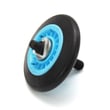
- Drum support rollers (thumping, rumbling): Samsung dryer drum support roller DC97-16782A
- Drum belt (drum not turning, squealing): Samsung dryer drum belt 6602-001655
- Heating and temperature sensing parts (no heat, overheating, shuts off):
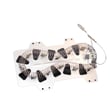
- Samsung dryer heating element DC47-00019A
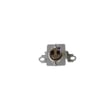
- Dryer thermistor DC32-00007A
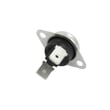
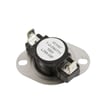
- Dryer high-limit thermostat DC47-00018A
Why it matters
A dryer can still “run” while drying poorly. When airflow is restricted, the dryer runs hotter and longer, which increases wear on the heating element, thermostats, belt, and drum support system. Keeping lint and venting under control is the simplest way to push lifespan toward the 15-year end of the range.
Last updated: February 2026
How to find part number for Samsung dryer?
For your Samsung DV337AER dryer, we find the correct part number by matching the dryer’s model number and then identifying the part on the parts diagram or in the parts list. The model/serial tag is typically on the front frame behind the door; a backup tag is often on the back.
Step-by-step: get the right part number
- Open the dryer door and look on the front frame (door opening area) for the model/serial label.
- If the label is missing or unreadable, check the rear panel for a second label.
- Write the model number exactly as shown (for this page, it’s DV337AER).
- Use the exploded-view diagrams and parts list in the DV337AER owner’s manual to confirm the part name and location.
- Match the part by function and symptoms (heat issue, noise, won’t start, door won’t latch) before ordering.
Common parts customers look up on DV337AER
If you already know what’s failing, these are common “search by symptom” items for this model:
- Heating problems: Samsung dryer heating element DC47-00019A, dryer high-limit thermostat DC47-00018A, dryer thermal cut-off thermostat DC47-00016A
- Long dry times or overheating: venting and exhaust ducting (also check lint buildup)
- Squealing or thumping: Samsung dryer drum belt 6602-001655, Samsung dryer drum support roller DC97-16782A
- Door won’t stay closed: door strike and door catch
Quick check: part number vs. model number
| What you’re looking at | Example | What it’s used for |
|---|---|---|
| Model number | DV337AER | Identifies the exact dryer version so parts match |
| Part number | DC47-00019A | Identifies the replacement component you order |
Why it matters
Samsung often uses similar-looking parts across multiple dryers, but mounting points, wiring connectors, and temperature ratings can differ by model revision. Using the DV337AER model number first prevents ordering a part that does not fit or does not solve the problem.
For troubleshooting by display messages, we also use the Samsung dryer error codes reference to narrow down which component to test.
Last updated: February 2026
How to tell if a Samsung dryer heating element is bad?
If your Samsung DV337AER dryer runs but won’t heat, the heating element is often the cause. We confirm a bad element by checking for a broken coil and testing the element for proper continuity and for a short to the metal heater housing; details are in the DV337AER owner’s manual.
Quick signs the heating element is failing
- Dryer tumbles normally but clothes stay cold or damp
- Heat comes and goes during a cycle (worsening over time)
- Burning smell or scorching (stop using the dryer and inspect airflow)
- Breaks or burned spots visible on the heater coil
- Repeated overheating symptoms that point to restricted venting
How we test the element (safe, reliable method)
- Disconnect power (unplug the dryer or switch off the breaker).
- Access the heater assembly and visually inspect the coil for a clear break.
- Use a multimeter:
- Continuity/resistance test: probe the two element terminals. A good element shows continuity (a measurable resistance). An open circuit indicates a failed element.
- Ground test: probe from either terminal to the metal heater housing. You should read no continuity. Continuity to the housing indicates a shorted element.
Heating problem checklist (rule out common look-alikes)
Restricted airflow can overheat the heater and trip safety devices, so we check these items before and after replacing parts:
| What we check | What it affects | What to do |
|---|---|---|
| Lint screen and exhaust duct | Dry time, heater temperature | Clean lint screen every load; clear venting regularly |
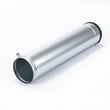
| Exhaust duct type | Airflow restriction | Use 4-inch rigid metal duct when possible |
| Thermal safety devices | No-heat condition | Test/replace if open (often after overheating) |
| Load size and tumbling | Sensor cycles, drying results | Avoid overloading; add towels to very small loads |
Parts that commonly relate to “no heat” on DV337AER
- Samsung dryer heating element DC47-00019A
- Dryer high-limit thermostat DC47-00018A
- Dryer thermal cut-off thermostat DC47-00016A
- Dryer thermistor DC32-00007A
Why it matters
A failed or shorted heating element can stop heating completely, and poor venting can overheat the heater and repeatedly damage thermostats and fuses. Keeping the lint screen and exhaust duct clean helps the dryer heat safely and dry faster.
Last updated: February 2026