Owner’s manual


How big is the Samsung dv210aew XAA?
For the Samsung DV210AEW dryer, the cabinet size is 27 inches wide x 38.3 inches high x 30.3 inches deep, and the depth is 49 inches with the door open to 90°. These dimensions help confirm fit in a laundry room, closet, or alcove. See the DV210AEW user manual for the full specifications section.
- Width: 27 in (68.6 cm)
- Height: 38.3 in (97.1 cm)
- Depth (door closed): 30.3 in (76.8 cm)
- Depth (door open 90°): 49 in (124.5 cm)
| Measurement | Inches | Centimeters |
|---|---|---|
| Width | 27 | 68.6 |
| Height | 38.3 | 97.1 |
| Depth (door closed) | 30.3 | 76.8 |
| Depth (door open 90°) | 49 | 124.5 |
Even when the dryer cabinet fits, we recommend planning for airflow, venting, and door swing.
- Leave room behind the dryer for the exhaust duct and to prevent kinks
- Use 4-inch metal venting (rigid or stiff-walled flexible metal)
- Avoid plastic or thin foil-style venting that can restrict airflow
- If installing in a closet/alcove, confirm required clearances and ventilation openings
Correct dimensions prevent installation problems like a crushed vent, poor drying performance, excess lint buildup, and a door that cannot fully open. Proper fit also makes service access easier for parts like the lint filter, belt, and drum support components.
Last updated: January 2026
What is the most common problem with Samsung dryers?
The most common Samsung dryer complaint, including on model DV210AEW, is no heat or poor heating, which often traces to an airflow restriction (lint buildup or venting issues) or a failed heating component such as a heating element, thermal fuse, or thermistor. See the troubleshooting section in the DV210AEW user manual.
- Clean the lint filter and confirm it is seated correctly.
- Check the outside vent hood; make sure the damper opens freely.
- Inspect the vent duct for crushing, kinks, or heavy lint buildup.
- Avoid plastic or non-metal venting; use 4-inch rigid or stiff-walled metal duct.
- Try a heated cycle (not Air Fluff) and confirm the dryer is not in cool-down.
| Symptom | Most likely cause | What you can do next |
|---|---|---|
| Runs but no heat | Failed heating circuit part (heater, thermal fuse, thermistor) | Verify airflow first; then diagnose heating components |
| Takes too long to dry | Restricted venting or clogged lint path | Clean lint filter, duct, and exhaust hood |
| Stops early, clothes still damp | Load too small/large, airflow issue, sensor-related behavior | Adjust load size; improve venting; try More Dry |
| Error code appears | Control detects a condition (door, vent, button, heat) | Use the code list and steps in Samsung dryer error codes |
On DV210AEW, restricted airflow can cause long dry times and overheating, which can trip safety devices (like thermal fuses) and lead to repeat no-heat failures if the venting problem is not corrected.
- You smell gas (gas models) or suspect a gas leak.
- The vent duct is damaged inside a wall or ceiling.
- The dryer repeatedly loses heat after you have verified clear, proper metal venting.
Last updated: January 2026
How to tell if Samsung dryer thermal fuse is bad?
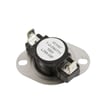
On a Samsung DV210AEW dryer, a bad thermal fuse is typically “open” (no continuity), which can stop the dryer from heating or stop it from running at all. The most reliable way to confirm is to unplug the dryer and test the fuse with a multimeter.
- Dryer won’t start (some designs cut power to the motor circuit)
- Dryer runs but won’t heat (common when the fuse is in the heater circuit)
- Dryer shuts off mid-cycle and won’t restart until it cools (can also indicate overheating/airflow issues)
- No error code is shown (a fuse can fail without triggering a code)
- Unplug the dryer (or switch off the breaker). For gas models, also shut off the gas.
- Access the thermal fuse area (commonly on the blower housing or heater duct, depending on configuration).
- Pull the two wire connectors off the fuse terminals.
- Set a multimeter to continuity or the lowest ohms setting.
- Touch one probe to each terminal.
| Meter result | What it usually means | Next step |
|---|---|---|
| Beep / near 0 ohms | Fuse is good (closed) | Check other heat/no-start causes (thermostat, door switch, heating element, gas ignition parts) |
| No beep / OL / very high ohms | Fuse is bad (open) | Replace the thermal fuse and correct the overheating cause |
A thermal fuse usually opens because the dryer overheated. On DV210AEW, the most common root cause is restricted airflow.
- Clean the lint screen before every load
- Inspect and clean the vent duct and outside hood
- Avoid crushed, kinked, or extra-long vent runs
- Use rigid or stiff-walled metal venting (not plastic)
For venting and maintenance guidance specific to this dryer, use the DV210AEW manual.
The thermal fuse is a safety device; replacing it without fixing airflow restrictions can lead to repeat failures, long dry times, and overheating symptoms.
Last updated: January 2026