 Installation guide
 Owner’s manual
 Error Codes



How to do a hard reset on a Frigidaire dishwasher?
For the Frigidaire FGBD2431KF1 dishwasher, a hard reset is done by canceling the cycle (to stop and drain) or power-cycling the unit at the breaker for several minutes; this clears most control glitches but will not fix a mechanical problem like a drain blockage or leak. See the FGBD2431KF1 owner's manual for the exact control-pad behavior.
Reset options that work most often
- Cancel/Drain reset: Press and hold START/CANCEL for about 3 to 5 seconds to cancel the cycle and run a drain.
- Breaker reset (power cycle): Turn the dishwasher’s circuit breaker OFF for 5 to 10 minutes, then turn it back ON.
- Door-latch reset: Close the door firmly until it latches, then press START/CANCEL to restart using the last remembered cycle.
What to check if it still will not run
If the reset completes but the dishwasher still will not start, focus on the basics that commonly prevent operation:
- Confirm the door is fully closed and latched.
- Verify the kitchen breaker is on and the dishwasher has power.
- Listen for a drain motor at the start of a cycle; many cycles begin with a brief drain.
- Make sure the tub is not overfilled; the overfill protector (float) should move freely.
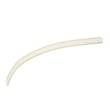
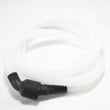
- If it is not draining after canceling, check the drain path and consider the drain hose 807117001.
Quick guide: which reset to use
| Situation | Best reset to try | What it does |
|---|---|---|
| Buttons unresponsive or cycle stuck | Breaker reset | Reboots the electronic control |
| You need to stop a cycle now | START/CANCEL hold | Cancels and drains |
| It beeps but will not start | Door-latch reset | Ensures the start command is accepted |
Why it matters
A reset is a fast way to clear a “stuck” control state. If the dishwasher repeatedly needs resets, the root cause is usually something the control is reacting to (door latch issue, drain restriction, or a fill problem), not the reset itself.
Last updated: January 2026
What is the most common problem with Frigidaire dishwashers?
The most common problem we see with Frigidaire dishwashers (including model FGBD2431KF1) is a drain-related issue: water left in the bottom because the filter area or drain path is restricted. A close second is “won’t start” complaints caused by a door not fully latching or a control-related interruption; the FGBD2431KF1 owner’s manual troubleshooting section helps narrow this down fast.
What to check first (fast, high-success checks)
- Look for standing water in the sump after the cycle; that points to a drain restriction.
- Clean the filter area and remove debris that can block the pump intake.
- Inspect the drain hose routing for kinks, crushing, or a low loop that can cause backflow.
- Confirm the dishwasher is filling; low fill can mimic “not cleaning” and “not draining” symptoms.
- Make sure the door closes firmly and the cycle actually starts (listen for fill and wash sounds).
Common symptoms and the most likely causes
| Symptom | Most likely cause | What to do next |
|---|---|---|
| Water left at bottom | Clogged filter area, restricted drain hose | Clean filter area; inspect/clear hose |
| Won’t start | Door not fully latched, control interruption | Re-close door; reset power; retry cycle |
| Not cleaning well | Low water fill, blocked spray, poor loading | Check fill, clear spray path, reload |
| Not drying | Heat dry not selected, heater issue | Use heat dry; check heater circuit |
Parts that commonly solve drain and fill complaints
If cleaning and hose checks do not fix it, these model-matched parts are common next steps:
- Drain hose 807117001 if the hose is split, kinked, or internally restricted
- Dishwasher filter 5304532206 if the filter is damaged or won’t clean up
- Pump A00126401 if the pump is noisy, seized, or not moving water
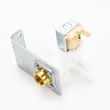
- Dishwasher water inlet valve 154637401 if the unit won’t fill or fills weakly
Why it matters
Drain and fill problems affect everything: cleaning performance, odors, cycle time, and even whether the dishwasher can complete a cycle. The manual notes typical performance factors like adequate water pressure (about 20 to 120 psi) and incoming water temperature (at least 120°F/49°C), which directly impact wash results.
Last updated: January 2026
How to fix a Frigidaire dishwasher power failure?
On a Frigidaire FGBD2431KF1 dishwasher, a “power failure” condition is often cleared by resetting the control and confirming the door is fully closed and latched. If the dishwasher still will not run, restore power at the breaker and then check for a door-latch or power-supply issue.
Quick reset steps (most common fix)
- Make sure the door is closed firmly and latched.
- Press and hold Start/Cancel for 3 to 5 seconds until the lights turn off.
- Wait 10 to 15 seconds.
- Restore power (turn the breaker back on) and start a cycle.
For model-specific button sequences and indicator meanings, follow the steps in the FGBD2431KF1 owner's manual.
If the dishwasher still has power but will not run
These checks solve most “PF” or dead-start complaints:
- Confirm the breaker is fully reset (switch OFF, then ON).
- Verify the door is latching; a partially latched door can stop the cycle from starting.
- Check for water in the base pan (some units will not run if a leak condition is detected).
- Disconnect power before inspecting wiring or controls.
- If the unit fills but stops, check the overfill protector (float) moves freely.
Parts that commonly relate to power or start issues
If troubleshooting points to a failed component, these are common suspects for this model:
| Symptom | Common area to check | Example part for FGBD2431KF1 |
|---|---|---|
| No fill, no wash action | Water supply and inlet circuit | Dishwasher water inlet valve (154637401) |
| Stops mid-cycle, odd behavior | Control and wiring | Control assembly (807024501) |
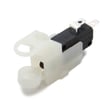
| Overfills or won’t fill correctly | Float/overfill circuit | Switch (154773201) |
Why it matters
A proper reset and a fully latched door prevent false “power failure” behavior and protect the dishwasher from running with unsafe conditions. Our safety guidance also requires disconnecting electrical power before servicing internal components.
Related DIY help: dishwasher has power but wont run could be demo mode.
Last updated: January 2026
How do I fix a Frigidaire Gallery dishwasher that won't drain?
If your Frigidaire dishwasher (model FGBD2431KF1) won’t drain, we start by confirming the cycle is truly finished (not paused), then check the disposer connection, drain hose routing, and the drain pump area for a clog. Most no-drain problems come from a blocked hose or pump.
Quick checks that solve most no-drain issues
- Make sure the cycle is complete and the dishwasher is not in a pause.
- If you have a food waste disposer, run it first so it’s empty.
- If the dishwasher drain hose connects to a disposer, confirm the disposer inlet knockout plug was removed.
- Inspect the drain hose for kinks, crushing, or a high loop that has slipped down.
- Check the bottom of the tub for standing water; water left after a completed cycle points to a drain problem.
For model-specific operating and troubleshooting notes, use the FGBD2431KF1 owner’s manual.
Step-by-step: clear the drain path
- Power off the dishwasher at the breaker.
- Remove standing water (cup or wet/dry vac) so you can see the sump area.
- Clean the filter area and remove any debris that could block flow.
- Check the drain hose for clogs; disconnect it at the sink/disposer connection and flush it.
- If the hose is clear, inspect the drain pump for obstructions; a small piece of glass, label, or food can stop draining.
If you find a damaged or leaking hose, replacement is typically the fix; the correct hose for this model is the drain hose 807117001.
What to check first (fast diagnosis)
| What you see | Most likely cause | What we do next |
|---|---|---|
| Humming but no drain | Pump jam or blockage | Clear debris at pump/sump |
| Drains slowly | Partial clog or kinked hose | Flush and reroute hose |
| Won’t drain after disposer install | Knockout plug still in place | Remove disposer plug |
Why it matters
A dishwasher that can’t drain often leaves water in the bottom of the tub, which can cause odors and poor cleaning on the next load. Restoring proper drain flow protects the pump and helps the cycle finish normally.
Last updated: January 2026





