Owner’s manual


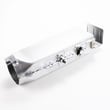
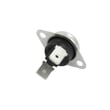
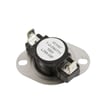
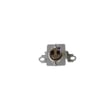
How to tell if Samsung dryer thermal fuse is bad?
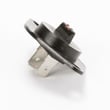
A bad thermal fuse in a Samsung DV350AEW dryer is usually indicated by a dryer that will not start or runs but will not heat. The reliable way to confirm is a continuity test with a multimeter after disconnecting power; an open (no continuity) reading means the fuse is blown. See the DV350AEW/XAA-00 dryer manual for safety steps before servicing.
How to test the thermal fuse (safe, accurate method)
- Unplug the dryer (or switch off the breaker); confirm the drum light and controls are off.
- Access the thermal fuse (commonly on the blower housing or heater housing, depending on configuration).
- Pull at least one wire off the fuse terminal so you are not reading the rest of the circuit.
- Set your multimeter to continuity or lowest ohms.
- Touch one probe to each fuse terminal.
- Good fuse: continuity tone or near 0 ohms.
- Bad fuse: no tone or OL/infinite resistance.
Symptoms that often point to a blown thermal fuse
- Dryer will not start (motor will not run)
- Dryer runs but has no heat (some designs)
- Cycle stops early or acts “dead” after overheating
- Strong hot smell or very hot cabinet (often paired with restricted airflow)
What to check next if the fuse is blown
A thermal fuse usually opens because the dryer overheated. Before replacing parts, we recommend checking airflow and heat control components.
| What to check | Why it matters | What you may notice |
|---|---|---|
| Exhaust vent and outside hood | Most common overheating cause | Long dry times, weak airflow |
| Lint screen and lint housing | Lint restriction raises temperature | Lint buildup, hot drum |
| Blower wheel | Poor airflow even with clean vent | Rattling, weak airflow |
| Thermistor / cycling thermostat | Can cause overheating or no heat | Heat is erratic or absent |
For step-by-step airflow guidance, use dryer takes a long time to dry.
Why it matters
The thermal fuse is a one-time safety device; if it is open, the dryer may not run or may not heat. Replacing the fuse without fixing the overheating cause can lead to repeat failures and continued drying problems.
Last updated: January 2026
What is the most common problem with Samsung dryers?
The most common issue we see with Samsung dryers, including the Samsung DV350AEW, is no heat or poor heating, which usually traces back to an airflow restriction (lint buildup or blocked venting) or a failed heating component such as a heating element (electric models) or gas ignition parts (gas models). See the DV350AEW manual for venting and troubleshooting basics.
What to check first (fast, high-impact)
- Clean the lint filter before every load; a clogged filter reduces airflow and heat performance.
- Check the exhaust vent path for crushing, kinks, or heavy lint buildup.
- Confirm the outside vent hood opens freely when the dryer runs.
- Avoid long vent runs and excessive elbows; they slow airflow and extend dry times.
- If the drum tumbles but clothes stay damp, focus on heat and airflow checks first.
Common “no heat” causes (by dryer type)
Because DV350AEW can exist in different configurations, we use the heating method on your unit (electric vs. gas) to narrow the most likely failure.
| Symptom | Electric dryer likely causes | Gas dryer likely causes |
|---|---|---|
| Runs but no heat | Heating element, thermal fuse, thermistor | Igniter, flame sensor, gas valve coils, thermal fuse |
| Long dry times | Vent restriction, lint buildup, weak airflow | Vent restriction, lint buildup, weak airflow |
| Stops mid-cycle | Overheating from poor venting, control sensing issue | Overheating from poor venting, control sensing issue |
Other frequent Samsung dryer problems
- Loud thumping or squealing: worn drum support rollers, idler pulley, or drive belt.
- Dryer starts then stops: door switch issues, overheating from restricted venting, or motor/belt problems.
- Error codes: often point to temperature sensing, heating, or airflow problems; use Samsung dryer error codes to match the code to next steps.
Why it matters
Heating and airflow problems do more than slow drying; they can cause overheating, repeated shutdowns, and premature wear on parts like the thermal fuse, heater, and motor.
Last updated: January 2026
Is it worth replacing a heating element in a Samsung dryer?
Yes, it’s usually worth replacing the heating element in a Samsung DV350AEW dryer when the dryer is otherwise in good shape (drum turns, controls work, airflow is good). A heating element repair is typically far less expensive than replacing the entire dryer.
When replacement is the smart choice
We generally recommend replacing the heating element when these conditions are true:
- The dryer runs but won’t heat, or heat is weak and inconsistent
- The drum turns normally and the cycle completes
- The venting is clear and the lint filter is clean (restricted airflow can overheat and damage parts)
- You’re not also facing major repairs like a failed motor or control board
- You can do the repair yourself or the total repair cost stays reasonable
For operating and safety basics (including venting and lint maintenance), use the DV350AEW/XAA-00 dryer manual.
When it may not be worth it
Replacing the heating element may be a poor value if:
- The dryer has multiple major issues (no tumble, burning smell, repeated shutdowns)
- You’ve had repeated no-heat failures and the vent system has not been corrected
- The repair quote approaches the cost of a replacement dryer
What to check before buying a heating element
On DV350AEW, “no heat” is not always the element. We suggest checking these common causes first:
- House power supply (electric dryers can run on 120V but need full 240V to heat)
- Thermal fuse or thermal cut-off (often opens if airflow is restricted)
- High-limit thermostat or thermistor problems
- Clogged venting or crushed ducting causing overheating and shutdowns
If you want a step-by-step diagnostic path, see electric dryer wont heat troubleshooting video.
Quick cost and effort comparison
| Option | Typical outcome | Best for |
|---|---|---|
| Replace heating element | Restores heat if element is open/burned | Dryer otherwise works well |
| Replace thermal fuse/thermostat parts | Fixes safety trip or temperature control issues | Dryer overheated due to airflow restriction |
| Replace dryer | Eliminates multiple aging issues at once | Multiple major failures or very high labor cost |
Why it matters
A failed heating element is a common, contained repair. But if the real problem is airflow (lint buildup, long duct run, crushed vent), the new element and safety thermostats can fail again. Fixing venting and cleaning habits protects the repair and improves drying time.
Last updated: January 2026