Owner’s manual


How to identify a Kenmore washer model?
Your Kenmore washer model number is printed on the model and serial number plate; on Kenmore model 11022902100, the 11022902100 owner's manual calls out this plate as the place to record the complete model and serial numbers for parts and service.
Where to look on the washer
Most Kenmore washers place the model and serial number plate in one of these common spots:
- Under the lid along the top rim of the tub opening (top-load washers)
- Inside the door opening on the cabinet frame (front-load washers)
- On the back panel near the power cord
- Along the side of the control console or cabinet edge
- Occasionally behind the lower front access panel
What the model number looks like (and why it matters)
For many Kenmore washers, the model number is a long number string and often starts with 110 (like 11022902100). Using the full model number helps us match the correct Kenmore washer parts list, diagrams, and compatible replacements.
Quick ID checklist
| What to capture | Example for this washer | Why we need it |
|---|---|---|
| Model number | 11022902100 | Ensures correct part fit |
| Serial number | (varies) | Helps with production variations |
| Brand | Kenmore | Confirms product family |
Tips to avoid mix-ups
- Write the model number exactly as shown; do not drop digits.
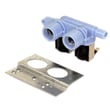
- Use the model number (not just “Kenmore washer”) when ordering parts like a lid switch, drain pump, or inlet valve.
- If the plate is hard to read, take a clear photo and zoom in.
Why it matters
Kenmore washers can look similar across years, but internal components can differ. The correct model number is the fastest way to avoid ordering the wrong part and to follow the right operating and troubleshooting steps.
Last updated: February 2026
Is it worth repairing a Kenmore washing machine?
Yes, it’s usually worth repairing a Kenmore washer like model 11022902100 when the fix targets a common wear part and the total repair cost stays well below the price of a comparable new washer. This model is designed for years of dependable operation when maintained and used as described in the 11022902100 owner's manual.
Quick way to decide (cost vs. benefit)
Use this simple rule: repair when the washer is otherwise in good shape and the repair restores normal wash, drain, or spin performance.
- Repair first when the problem is a common, replaceable part (lid switch, drain pump, coupling, clutch)
- Replace the washer when multiple major systems are failing (leaks plus no spin plus electrical issues)
- Repair when the tub and cabinet are solid (no severe rust, no major basket damage)
- Repair when the washer completes fill, agitate, drain, and spin after the fix
- Replace when repair cost approaches the cost of a reliable replacement washer
| Situation | Typical best choice | Why |
|---|---|---|
| Won’t spin or drains poorly | Repair | Often a single failed component causes it |
| Agitates poorly or “slips” | Repair | Common drive and agitation wear items |
| Loud grinding plus oil leak | Consider replacement | Gearcase repairs can be higher cost |
Repairs that are commonly “worth it” on this model
These are frequent, straightforward fixes on many Kenmore 110 top-load designs:
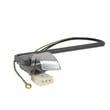
- Washer lid switch WP3949238 when the washer won’t spin or drain with the lid closed
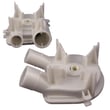
- Washer drain pump WP3363394 when the washer won’t drain or leaves water in the tub
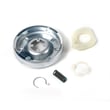
- Coupling 285753A when the motor runs but the washer won’t agitate or spin
- Clutch 285785 when spin is weak or the basket struggles to reach speed
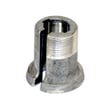
- Agitator dog 80040 when the agitator “ratchets” or doesn’t move clothes well
Why it matters
Repairing a single failed part often restores full performance and extends the life of the washer, while keeping your familiar cycle options and avoiding the learning curve and fit issues that can come with a new machine.
Last updated: February 2026
What is the average lifespan of a Kenmore washer?
Most Kenmore washers average 10 to 15 years of service life with normal household use. For Kenmore model 11022902100, following the care, loading, and operating guidance in the 11022902100 owner's manual helps you reach the high end of that range by reducing wear on the drive system, tub, and controls.
What affects washer lifespan the most
- Overloading (extra strain on the motor, clutch, and gear case)
- Unbalanced loads (more vibration and suspension wear)
- Water quality (sediment can shorten inlet valve life)
- Drain restrictions (pump strain and slow draining)
- Lid switch and timer wear (common stop-start or no-spin complaints)
Typical lifespan by major system (what to expect)
These are common ranges for top-load, direct-drive style washers like many Kenmore 110 models.
| System | Typical life impact | Common symptom when failing |
|---|---|---|
| Drive coupling | Medium | Won’t agitate or spin, motor runs |
| Drain pump | Medium | Won’t drain, humming, leaks |
| Lid switch | High | Won’t spin or drain with lid closed |
| Gear case | High | Grinding noise, oil leak, weak agitation |
Maintenance habits that extend life
- Load items loosely; do not wrap items around the agitator (reduces agitation stress)
- Use the correct water level and cycle for the load size
- Keep the washer level to reduce out-of-balance shaking
- Check hoses and connections periodically for seepage
- Address slow drain or no-spin symptoms early to prevent secondary damage
Why it matters
A washer that is run overloaded or allowed to keep operating with a drain or spin problem often wears out the drive and spin components faster. Small fixes and better loading habits typically cost less than replacing major assemblies.
Last updated: February 2026