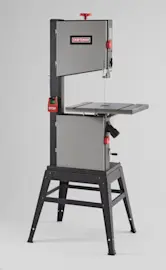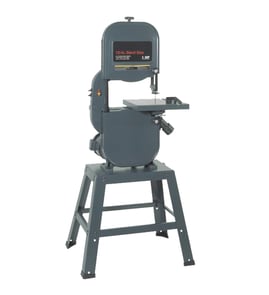

What does 14 mean on a bandsaw?
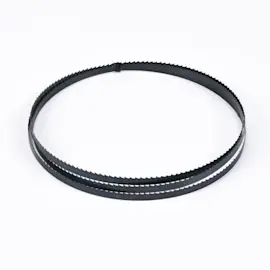
On a band saw, “14” usually refers to a 14-inch vertical band saw class (commonly the wheel diameter), but that meaning does not apply to the Craftsman 10122922, which is a small horizontal metal-cutting band saw with a fixed vise-style cutting capacity.
What “14” usually means (vertical woodworking band saws)
On many vertical band saws sold as “14-inch,” the number is used as a size class and is most commonly tied to wheel diameter.
- It helps compare overall machine size across brands
- It often correlates with common blade length families
- It does not directly state resaw height or motor power
- It is not a universal standard across every manufacturer
What matters on the Craftsman 10122922 (horizontal metal-cutting saw)
For a horizontal saw like the Craftsman 10122922, the important numbers are the cutting capacity and the blade size, not “14-inch” sizing.
- Cutting capacity is limited by the vise opening and pivot geometry
- Blade length is specific to the saw’s frame and wheel spacing
- Blade width and tooth count (TPI) should match the metal thickness
- Feed rate and blade speed affect cut quality and blade life
| If you see this number | It usually refers to | Applies to 10122922? |
|---|---|---|
| 14 | Vertical band saw size class (often wheel diameter) | No |
| 3 x 6 | Horizontal saw cutting capacity (height x width) | Yes |
| TPI (e.g., 10/14) | Teeth per inch for the blade | Yes |
Quick checks to identify what “14” is on your saw
Use where the “14” appears to interpret it correctly.
- On a blade package: it is often part of the TPI (for example, 10/14 variable pitch)
- On a spec label for a vertical saw: it is often the saw size class
- Cast into a part: it can be a casting mark, not a capacity rating
Why it matters
Using vertical band saw “14-inch” rules to choose blades or set expectations can lead to the wrong blade length, the wrong tooth pitch, and poor cutting performance on a horizontal Craftsman metal-cutting saw.
For confirming you are matching parts and specs to the correct unit, use how to find your appliance model number (and what it means for parts).
Last updated: January 2026
What is the 3-tooth rule for bandsaws?
The 3-tooth rule means you choose a bandsaw blade tooth pitch (TPI) so at least 3 teeth are in the workpiece at all times while cutting. On a Craftsman model 10122922 continuous-blade power hacksaw, this helps the blade track straighter, reduces tooth snagging, and improves cut quality.
How to apply the 3-tooth rule (quick steps)
- Measure the material thickness in the direction the blade travels (wall thickness for tubing, not overall width).
- Pick a blade pitch so 3 to 6 teeth are typically engaged for most cuts.
- Avoid pitches that leave fewer than 3 teeth in the cut (teeth can grab and strip).
- Avoid extremely fine pitches that pack the gullets with chips (overheats and dulls faster).
- For mixed thickness (angle iron, tubing), base pitch on the thinnest section.
Blade pitch cheat sheet (typical guidance)
| Material thickness being cut | Typical blade pitch to target | What you’ll notice |
|---|---|---|
| 1/16 in (thin sheet, thin-wall tube) | 18 to 24 TPI | Smoother cut, less tooth snagging |
| 1/8 in | 14 to 18 TPI | Good general control |
| 1/4 in | 10 to 14 TPI | Faster cutting, good chip clearance |
| 1/2 in and thicker | 6 to 10 TPI | Efficient cutting, larger chips |
Why it matters
Keeping at least three teeth engaged stabilizes the cut and spreads the cutting load across multiple teeth. That reduces vibration, tooth breakage, and wandering cuts, which is especially important on a continuous-blade saw where blade speed and feed pressure work together.
Related DIY skill that helps
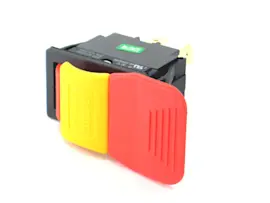
If your saw is cutting inconsistently, electrical issues (weak motor, bad switch, damaged cord) can mimic a “wrong blade” problem. Use how to use a multimeter to test electrical parts video to confirm power and component health before chasing blade setup.
Last updated: January 2026
What should you not do with a band saw?
You should not freehand unstable stock, force the cut, or put your hands in line with the blade on a Craftsman 10122922 band saw. Most serious band saw injuries happen when the workpiece twists, lifts off the table, or the operator reaches too close to the moving blade.
Don’t do these high-risk actions
- Don’t cut round or irregular stock (dowels, branches, spheres) without a jig, V-block, or clamp.
- Don’t feed a workpiece that is not flat on the table and supported at the blade.
- Don’t push with your fingers close to the blade; use a push stick or push block.
- Don’t back out of a curved cut with the saw running; stop first, then restart.
- Don’t cut without the blade guard set low (keep it just above the workpiece).
- Don’t wear gloves, loose sleeves, jewelry, or leave long hair unsecured near the blade.
Safe setup checklist (before you cut)
- Unplug the saw before changing blades or adjusting guides.
- Set blade tension and tracking, then rotate the wheels by hand to confirm alignment.
- Adjust side guides and thrust bearing close to the blade (without rubbing constantly).
- Confirm the table is square to the blade for straight cuts.
- Use dust collection and wear eye protection; hearing protection is also smart.
Common “don’t” scenarios and what to do instead
| If you need to cut… | Don’t do this | Do this instead |
|---|---|---|
| Round stock | Hold it by hand | Use a V-block jig or clamp it to a sled |
| Small parts | Pinch near blade | Use a push block and an auxiliary fence |
| Tight curves | Twist the work hard | Use a narrower blade and slower feed |
| Long boards | Let it droop off table | Add infeed/outfeed support |
Why it matters
A band saw blade cuts continuously and can pull material into the cut. When stock is unsupported or you force the feed, the blade can bind, break, or yank the workpiece, which is when hands tend to drift into the blade path.
For general DIY safety practices that apply to power tools like band saws, follow the guidance in are diy appliance repairs safe.
Last updated: January 2026