Owner’s manual
 View engine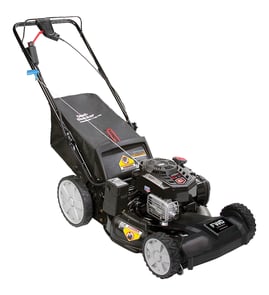


What gas to put in a Craftsman push mower?
For Craftsman model 917370440, use fresh, clean, regular unleaded gasoline (87 octane minimum) and do not use fuel with more than 10% ethanol (E10). Using E15 or higher ethanol fuel can cause running problems and can void the warranty; see the fuel section in the 917370440 owner's manual.
Fuel type we recommend for this model
Use these guidelines to help your Briggs & Stratton-powered mower start easily and run smoothly:
- Unleaded regular, 87 octane minimum
- E10 or less (up to 10% ethanol)
- No oil mixed in the gas (this is a 4-cycle engine)
- Buy only what you can use in about 30 days
- Store fuel in an approved container and keep it clean and dry
What to avoid (common causes of hard starting)
Avoiding the wrong fuel is one of the fastest ways to prevent no-start and surging issues.
- E15, E20, E85 or any fuel over 10% ethanol
- Old or stale gasoline (especially fuel left over from last season)
- Gas contaminated with water or dirt
- “Premium” fuel as a fix (it usually does not help small engines)
- Overfilling the tank (leave room for expansion)
Quick reference table
| Fuel choice | OK for model 917370440? | Why |
|---|---|---|
| Regular unleaded 87 (E0 to E10) | Yes | Matches the mower’s fuel requirement |
| Regular unleaded 87 (E15) | No | Higher ethanol can damage the fuel system and cause poor running |
| Mixed gas (2-cycle fuel) | No | Can foul the plug and cause heavy smoke |
Why it matters
This mower’s fuel system is designed around fresh unleaded fuel with E10 or less. Higher ethanol blends attract moisture and can lead to corrosion, varnish buildup, and starting problems, especially after storage.
Last updated: January 2026
How to tell the year of a Craftsman lawn mower?
For Craftsman model 917370440, we can’t determine the mower’s exact manufacture year from the model number or the owner’s manual alone. The most reliable approach is to use the date of purchase you recorded and the engine identification label to determine the engine’s build date. See the 917370440 owner’s manual for where the model/serial decal is located.
What we can confirm for model 917370440
Your manual identifies this mower as a 22-inch Craftsman rotary walk-behind mower with a 725 Series Briggs & Stratton engine.
- Model/serial decal location: rear of the mower housing
- Engine family shown: Briggs & Stratton 725 Series
- The manual includes an engine parts breakdown that lists an engine model number (used for parts identification)
How to identify the year (best methods)
Because Craftsman serial formats vary, we recommend using these methods in order:
- Check your proof of purchase: the purchase year is often the best practical “year” for parts matching.
- Read the engine label: Briggs & Stratton engines typically have a model/type/code label; the code is commonly used to determine the engine’s build date.
- Use the mower’s model/serial decal: record the serial number exactly; it helps confirm production run when matching parts.
Where to look on the mower
Use these common locations on the 917370440:
- Rear of deck: mower model/serial decal
- Engine shroud or valve cover area: Briggs & Stratton ID label
- Under the air filter cover area: sometimes the engine label is easier to see
Parts that often depend on the production run
Even when the “year” is unclear, correct parts selection is still straightforward when you match by model 917370440.
| Wear item | What to match | Example for this model |
|---|---|---|
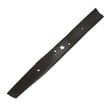
| Blade | Length and center mounting | Husqvarna lawn mower 22-inch deck 3-in-1 blade 532421825 |
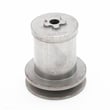
| Blade mounting | Adapter style | Blade adapter (match by model) |
| Drive system | Belt and cable routing | Drive belt and drive cable (match by model) |
Why it matters
Knowing the approximate year helps when comparing feature changes (drive system, deck hardware, controls), but matching parts by the full model number 917370440 is what prevents ordering the wrong blade, belt, or cable.
Last updated: January 2026
What are the common problems with Craftsman lawn mowers?
On the Craftsman 917370440 walk-behind mower, the most common problems are no-start or hard-start, loss of self-propel/drive, excessive vibration, and poor cutting or clumping. These symptoms usually trace to fuel and ignition basics, deck/blade condition, or drive-system adjustment (see the 917370440 owner’s manual).
Common problems on model 917370440 (and what usually causes them)
- Won’t start / starts then dies: stale fuel, dirty air filter, spark plug issues, water in fuel, control bar not held down.
- Loss of power: grass buildup under the deck, dirty air filter, cutting too low in heavy grass, incorrect oil level.
- Excessive vibration: loose or bent blade, damaged blade adapter, debris packed under the deck.
- Hard to push or won’t self-propel: drive control out of adjustment, worn drive belt, drive cable wear, drive wheels packed with debris.
- Uneven cut / poor bagging: dull blade, wheels set at different heights, grass catcher clogged.
Parts to inspect first on this model
We recommend checking these items early because they directly match the symptoms above and are routine service points on walk-behind mowers:
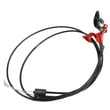
- Lawn mower control cable 587326601 (operator presence/zone control; can prevent starting if not operating correctly)
- Blade adapter 581473301 (can cause blade wobble and vibration)
- Lawn mower ground drive belt 532196853 (self-propel slows or stops when worn)
- Drive cable 532447570 (drive lever feels loose or won’t engage)
Quick symptom-to-check table
| Symptom | First checks | Likely next step |
|---|---|---|
| Won’t start | Fresh fuel, control bar held down, air filter clean | Check spark plug and ignition basics |
| Vibrates | Deck clear, blade bolt tight, blade not bent | Inspect blade adapter for damage |
| Won’t move | Drive cable tension, drive wheels clear | Inspect drive belt for wear/off pulley |
| Cuts poorly | Wheels same height, deck clean | Sharpen or replace blade |
Why it matters
Catching these issues early helps prevent bigger damage, such as crankshaft damage from severe vibration, overheating from a clogged deck, and premature belt wear from a misadjusted drive control.
Last updated: January 2026