Owner’s manual
What is the common problem with an air compressor?
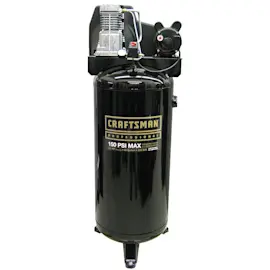
The most common problems we see on a Craftsman air compressor like model 919153131 are air leaks, failure to build or hold tank pressure, and start or restart issues. These usually trace back to loose fittings, a dirty or defective check valve, a regulator issue, or a pressure switch problem (see the 919153131 owner's manual).
Most common problems (and what they look like)
- Air leaks at fittings: hissing at tube connections or around the tank plumbing
- Won’t build tank pressure: runs a long time but pressure rises slowly or stalls
- Tank won’t hold air: pressure drops with the compressor off
- Won’t start or won’t restart: hums, trips overload, or struggles when the tank is full
- Safety valve pops: tank pressure gets too high or the pressure switch does not shut off
Quick checks you can do safely
Before any inspection or repair, unplug the compressor and bleed off tank air pressure.
- Listen for leaks and confirm the exact leak point with soapy water on fittings
- Tighten fittings where bubbles form (do not overtighten)
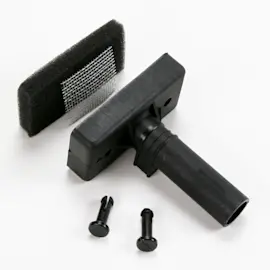
- Check the air intake filter for restriction (restricted intake reduces output)
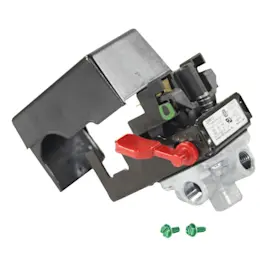
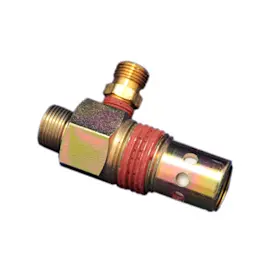
- If air leaks from the pressure switch release valve, suspect a dirty/defective check valve
- If the safety valve leaks, test it by pulling the ring; replace the valve if it still leaks
Common causes and best next step
| Symptom | Most likely cause | Best next step |
|---|---|---|
| Air leaks at fittings | Loose tube fittings | Tighten; verify with soapy water |
| Leaks at/inside check valve | Dirty or defective check valve | Clean or replace check valve |
| Safety valve pops off | Pressure switch not shutting off | Turn OFF; replace pressure switch if contacts are welded |
| Pressure drops at tool | Regulator not set under flow | Adjust regulator while air is flowing |
Why it matters
Air leaks and control problems (check valve, regulator, pressure switch) make the compressor run hotter and longer, increase wear on the pump, and can create unsafe overpressure conditions if the pressure switch fails to shut off.
For step-by-step troubleshooting, use our DIY guides like air compressor air leaks and air compressor won't build tank pressure.
Last updated: February 2026
What is the average lifespan of an air compressor?
Most homeowner and light-duty piston air compressors like the Craftsman 919153131 typically last 8 to 12 years with normal use and basic maintenance; heavy daily use, heat, and moisture in the tank shorten life, while clean power, good ventilation, and routine draining extend it. See the maintenance and storage guidance in the 919153131 owner's manual.
Typical lifespan by compressor type
Lifespan depends heavily on design and duty cycle.
| Compressor type | Typical lifespan | Best fit for |
|---|---|---|
| Small oil-free piston | 5 to 10 years | Occasional DIY, brad nailers, inflators |
| Oil-lubricated piston | 8 to 15 years | Garage tools, moderate shop use |
| Rotary screw (shop/industrial) | 10 to 20 years | Continuous or high-demand air |
What shortens lifespan fastest
These are the most common life-reducers we see with portable compressors:
- Moisture left in the tank (internal corrosion risk)
- Running on undersized extension cords (heat and motor stress)
- Poor ventilation or high ambient heat around the pump and motor
- Frequent short-cycling from leaks or a failing check valve/regulator
- Dirty intake air (dusty environments without proper filtration)
Maintenance habits that extend life
Use these as a simple routine for the Craftsman 919153131:
- Drain tank moisture after use and before storage
- Keep the unit in a dry, clean location; follow the storage section in the manual
- Use the correct outlet and circuit protection; avoid long/light-gauge extension cords
- Watch for new leaks, slow pressure build, or hard starting and correct early
- Keep the compressor clean so the motor and pump can shed heat
Quick “replace or repair” checklist
Use this table to decide when it is worth investing in repairs.
| What you notice | Most likely issue | Usual next step |
|---|---|---|
| Won’t start or trips breaker | Power supply, pressure switch, motor | Verify power setup; then diagnose switch/motor |
| Won’t build pressure | Pump wear, valve issue, major leak | Leak check; consider pump rebuild |
| Runs constantly | Air leak, regulator/check valve | Find leak; service valve/regulator |
Related help: air compressor won't start, air compressor won't build tank pressure, and how to rebuild an air compressor pump.
Why it matters
A compressor near end-of-life can overheat, struggle to reach cut-out pressure, and cycle more often; that increases wear on the motor, pressure switch, and seals. Consistent draining and correct electrical setup are the biggest lifespan multipliers.
Last updated: February 2026
Is it worth it to repair a compressor?
For a Craftsman air compressor model 919153131, repair is worth it when the problem is a single, serviceable failure (like a pressure switch, check valve, or leaking fitting) and the tank is sound. If you are facing repeated breakdowns or major pump wear, replacement is the better value.
Quick decision checklist
- Repair if the compressor still builds pressure but has a control or leak issue
- Repair if the fix is one part and labor is minimal
- Replace if it won’t build tank pressure after basic checks
- Replace if the unit trips breakers, overheats, or won’t restart consistently
- Replace if repairs are becoming frequent and downtime is costing you
What we check first (safe, high-value checks)
Before any maintenance or repair, unplug the compressor and bleed off all tank air pressure; the manual warns that repairs can expose voltage, moving parts, and compressed air. Use the 919153131 owner's manual for the exact safety steps and troubleshooting chart.
Common “repairable” causes include:
- Loose tube fittings (tighten and confirm with soapy water; do not overtighten)
- Dirty or defective check valve
- Pressure switch contacts welded or switch not shutting off at cut-out
- Air filter restriction (reduced capacity and longer run times)
Repair vs. replace: cost and outcome guide
| Situation | Typical best choice | Why |
|---|---|---|
| Air leaks at fittings or check valve | Repair | Low parts cost; restores performance quickly |
| Safety valve pops due to pressure switch not shutting off | Repair (switch) | Control issue; manual points to pressure switch replacement |
| Won’t start with a full tank | Repair (diagnose unloader/check valve) | Often a valve/control problem |
| Won’t build pressure and pump is worn | Replace | Major wear usually means higher cost and repeat failures |
Why it matters
A compressor that does not shut off correctly or is not drained can become unsafe over time. The manual specifically calls out draining water to prevent corrosion that can weaken the tank, so maintenance directly affects both reliability and long-term value.
If you decide to repair
- Follow the troubleshooting steps in the 919153131 owner's manual
- Match parts by model number 919153131 and the part description when ordering
- Use our DIY guides when symptoms match, such as air compressor won't build tank pressure or how to replace an air compressor pressure switch
Last updated: February 2026
What is the most common cause of air compressor failure?
The most common cause of air compressor failure is preventable wear from poor maintenance, especially restricted airflow (dirty intake filter, blocked ventilation) and air leaks that force the pump and motor to run hotter and longer. On the Craftsman 919153131, overheating and pressure-control problems can also lead to repeated shutdowns or unsafe overpressure.
What fails first most often (and why)
When an air compressor is pushed to run longer than it should, heat and vibration accelerate wear. These are the most common failure points we see:
- Restricted air intake: a clogged intake filter makes the pump work harder and run hotter.
- Air leaks: leaking fittings, hoses, or valves cause frequent cycling and longer run time.
- Check valve issues: a dirty or stuck check valve can cause hard starting and poor pressure performance.
- Pressure switch problems: if the switch does not shut off at cut-out, tank pressure can climb until the safety valve opens.
- Loose electrical connections or undersized extension cords: can cause no-start, overheating, or overload trips.
For model-specific safety and operating guidance, follow the 919153131 owner's manual.
Quick checks that prevent major breakdowns
Use this short checklist before assuming the pump or motor is “bad”:
- Unplug the compressor and bleed off tank pressure before servicing.
- Listen for hissing; check fittings with soapy water and tighten gently (do not overtighten).
- Inspect the intake area and make sure airflow around the unit is not blocked.
- If the safety valve pops, move the pressure switch lever to OFF and address the cause.
- If the motor struggles to restart with pressure in the tank, suspect the check valve or pressure switch.
Symptom-to-cause guide
| What you notice | Most common cause | What to do next |
|---|---|---|
| Safety valve pops off | Pressure switch not shutting off | Turn OFF; replace pressure switch if contacts are welded |
| Pressure drops fast | Air leak at fittings/hoses | Find leak with soapy water; tighten or replace leaking component |
| Won’t build tank pressure | Intake restriction, leaks, valve issue | Check filter/airflow; check for leaks; inspect check valve |
| Won’t restart | Check valve stuck open, electrical issue | Inspect check valve; verify cord/connection quality |
Why it matters
Most “failures” start as small airflow, leak, or control issues. Fixing them early reduces run time, heat, and stress on the pump, pressure switch, and safety valve, which extends the life of your Craftsman 919153131.
Last updated: February 2026
What are the 4 types of compressors?
The four main compressor types are reciprocating (piston), rotary screw, centrifugal, and axial. Your Craftsman 919153131 is a reciprocating, single-stage air compressor pump design, which is common for home and light shop use (inflation, nailers, blow guns). See the owner's manual for the operation description and safe-use guidelines.
The 4 compressor types (quick definitions)
- Reciprocating (piston): A piston compresses air in a cylinder; great for intermittent use and higher pressures.
- Rotary screw: Two meshing screws compress air continuously; common in commercial shops for steady airflow.
- Centrifugal: A spinning impeller accelerates air and converts velocity to pressure; used for high-volume industrial air.
- Axial: Rotating blades compress air in stages along the shaft; used in turbines and specialized high-flow systems.
How these types compare
| Type | How it compresses air | Typical best fit | Common tradeoff |
|---|---|---|---|
| Reciprocating (piston) | Piston and valves | Home, DIY, light shop | Louder; more vibration |
| Rotary screw | Twin screws | Continuous shop air | Higher upfront cost |
| Centrifugal | Impeller | High-volume plants | Not ideal for small demand |
| Axial | Blade stages | Turbines, specialty | Complex; not typical shop use |
Why it matters for your Craftsman 919153131
Knowing the compressor type helps you choose the right troubleshooting path and maintenance approach. For example, piston compressors commonly involve intake/reed valves, check valves, pressure switches, and regulators, and they are often used with accessories like air hoses, tire chucks, and spray guns.
Practical tips when using a piston-style compressor
- Use an air pressure regulator for most tools and spray applications.
- Keep the unit on a dedicated circuit when possible; undersized extension cords can cause hard starting.
- Let hot components cool before servicing; manifolds and tubes can get very hot.
- Bleed tank pressure and unplug power before working on fittings or valves.
- If performance issues come up, follow a symptom-based path such as air compressor won't build tank pressure.
Last updated: February 2026