Installation guide
 Owner’s manual


What size is the WDT720PADM2 dishwasher?
The Whirlpool WDT720PADM2 is a standard built-in dishwasher model, but the exact exterior dimensions (width, height, depth) are not identified in the model-specific information we have here. For a precise fit, we recommend measuring your cabinet opening and comparing it to the specifications in the WDT720PADM2 user manual.
Measure in inches with the dishwasher removed (or pulled forward) if possible.
- Opening width: inside cabinet to inside cabinet
- Opening height: floor to underside of countertop
- Opening depth: back wall to front of cabinet frame
- Door clearance: space needed for the door to open fully
- Toe-kick clearance: space at the bottom front for the toe panel
Most Whirlpool built-in dishwashers are designed around a standard opening; however, small differences in depth and height adjustment can affect installation.
| Measurement | Typical range (built-in dishwashers) | Why it matters |
|---|---|---|
| Width | ~24 in | Must match cabinet opening |
| Height | ~33.5 to 35 in | Leveling legs adjust to countertop height |
| Depth | ~24 in (plus handle) | Door and handle can protrude past cabinets |
Dishwasher sizing affects more than “will it slide in.” A tight opening can pinch the water line or drain hose, and a shallow opening can cause the door or handle to stick out and affect adjacent drawers.
If you are replacing an older unit, confirm your water supply, drain routing, and mounting method using the WDT720PADM2 installation guide before you finalize measurements.
Last updated: January 2026
Does WDT720PADM2 have a sanitize cycle?
Yes. Whirlpool dishwasher model WDT720PADM2 includes a sanitizing option called Sani Rinse; when it completes successfully, the Sanitized indicator light turns on at the end of the cycle (see the WDT720PADM2 user guide).
On this model, sanitizing is an option you add to certain wash cycles (it is not always a standalone cycle).
- Select a compatible cycle (commonly Sensor, Heavy, or Normal).
- Press Sani Rinse to enable sanitizing.
- Press Start/Resume and close the door as directed.
- Avoid opening the door during the cycle; interruptions can prevent sanitizing.
- Check the Sanitized light at the end of the cycle.
Sani Rinse raises water temperatures during the wash and final rinse to meet residential sanitization performance targets. If the dishwasher cannot maintain the required heat, or the cycle is interrupted, the Sanitized indicator may not light.
| Indicator at end of cycle | What it usually means | What to do next |
|---|---|---|
| Sanitized is on | Sanitizing completed successfully | Unload as normal |
| Sanitized is off (or flashes) | Cycle was interrupted or water did not reach target temp | Run the cycle again with Sani Rinse; avoid opening the door |
Using Sani Rinse can help when you want extra confidence on items like baby bottles (dishwasher-safe), cutting boards, or heavily soiled dishes; it also typically increases cycle time and energy use because the dishwasher heats the water more.
If you are troubleshooting a cycle that will not finish or indicators that flash, our Whirlpool dishwasher error codes guide can help you narrow down the cause.
Last updated: January 2026
Is WDT720PADM2 a good dishwasher?
The Whirlpool WDT720PADM2 is generally considered a strong performer for everyday cleaning; it is designed to deliver excellent wash results while keeping water and energy use efficient. Real-world satisfaction still depends on your loading habits, detergent choice, and keeping the filtration system maintained (see the WDT720PADM2 user guide).
When customers ask if the WDT720PADM2 is “good,” we typically evaluate it on cleaning, drying, reliability, and ease of ownership.
- Cleaning performance: Strong results on normal and heavy soil when spray arms can spin freely and filters are seated correctly.
- Efficiency: Longer cycle times are normal on efficient dishwashers; this model uses extended cycles to save water and energy.
- Drying: Best results usually require rinse aid plus Heat Dry.
- Noise: Some water valve hissing, draining surges, and dispenser “snap” sounds are considered normal.
- Maintenance: Filter placement and periodic cleaning matter a lot for consistent wash quality.
Use this simple checklist to decide if the WDT720PADM2 matches your needs.
| If you want... | WDT720PADM2 is a good fit when... |
|---|---|
| Strong cleaning on mixed loads | You use Sensor/Normal/Heavy appropriately and avoid blocking spray arms |
| Better drying | You use rinse aid and Heat Dry, especially for plastics |
| Fewer spots/film | You adjust detergent and rinse aid for hard water |
| Less hassle long-term | You keep the filter system installed and cleaned on schedule |
These are the most common “performance boosters” we recommend for the Whirlpool WDT720PADM2:
- Run hot water at the sink until it is hot before starting a cycle.
- Load soiled surfaces facing down and inward; avoid nesting bowls.
- Confirm both spray arms spin freely and are not blocked.
- Use fresh automatic dishwasher detergent (packs or tablets often reduce filming).
- Use rinse aid for drying and to reduce spotting.
- If you see poor cleaning or draining, inspect the filter area and drain path.
Most “bad dishwasher” complaints come from setup and maintenance issues (loading, rinse aid, filter seating, water temperature), not from the dishwasher being inherently weak. Following the operating and care guidance in the WDT720PADM2 user guide helps you get the cleaning and drying performance this model is built to deliver.
Last updated: January 2026
What are common problems with WDT720PADM2?
For the Whirlpool WDT720PADM2 dishwasher, the most common issues we see are leaking, not cleaning dishes properly, and not draining. Many of these problems trace back to loading and detergent habits, filter maintenance, or a few key components such as the drain pump or water inlet valve. See the WDT720PADM2 user guide for model-specific operating and care steps.
- Leaking: door not closing fully, oversudsing from wrong detergent, or a worn seal or gasket
- Not cleaning well: clogged filter, blocked spray arms, low water temperature, or poor loading
- Will not drain: kinked drain hose, disposer knockout plug not removed, or a drain obstruction
- Won’t start or stops mid-cycle: door not latched, power interruption, or control lock enabled
- Poor drying: rinse aid empty, Heat Dry off, or plastics holding water
- Run hot water at the sink until it’s hot before starting a cycle.
- Confirm you’re using automatic dishwasher detergent (not hand soap).
- Check that spray arms spin freely and holes are not blocked.
- Remove and clean the filter system; reinstall it locked in place.
- If the door was opened mid-cycle, press START/RESUME again.
If the basic checks don’t help, these model-compatible parts are common fixes:
| Symptom | Part to inspect | What it affects |
|---|---|---|
| Will not drain | Dishwasher drain pump W10876537 | Pumps water out during drain |
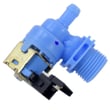
| Not filling or fills slowly | Dishwasher water inlet valve W11175771 | Controls water entering the tub |
| Not cleaning well | Dishwasher spray arm WPW10498900 | Delivers wash water to dishes |
Catching the root cause early helps prevent repeat wash cycles, water damage from leaks, and pump or motor strain. Regular filter cleaning and correct detergent use are especially important on energy-efficient cycles that run longer.
Last updated: January 2026