 Error Codes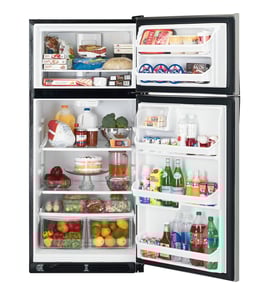


Is 1 or 7 colder on a Magic Chef mini fridge?
On Magic Chef refrigerators that use a 1 to 7 temperature dial, 7 is the coldest setting and 1 is the warmest. For your Magic Chef CTB1922ARW top-mount refrigerator, start near the middle (around 4) and adjust one step at a time.
- Set the control to 4 as a starting point for normal home use.
- Wait 24 hours after each adjustment before changing it again.
- Turn the dial higher (toward 7) if food is not staying cold enough.
- Turn the dial lower (toward 1) if items are freezing in the fresh food section.
- Keep the refrigerator not overpacked so air can circulate.
These dials are not exact degrees; they change how long the compressor runs.
| Dial setting | What you’ll notice | When to use it |
|---|---|---|
| 1 to 2 | Warmest cooling | Light use, cool room, or freezing problems |
| 3 to 5 | Normal range | Most kitchens and everyday use |
| 6 to 7 | Coldest cooling | Hot kitchen, frequent door opening, heavy load |
- Door seals: Make sure the gasket is sealing all the way around.
- Air vents: Do not block vents between the freezer and refrigerator sections.
- Condenser area: Clean dust from the condenser coils (if accessible).
- Food placement: Keep liquids and eggs away from the cold air outlet to prevent freezing.
Correct dial settings help your CTB1922ARW hold safe food temperatures, reduce freezer burn, and prevent the compressor from running longer than necessary.
For more DIY basics that apply to refrigerator troubleshooting and safe repairs, use are diy appliance repairs safe.
Last updated: January 2026
What does top mount fridge mean?
A top-mount refrigerator means the freezer compartment is on the top and the fresh-food (refrigerator) compartment is below it. Your Magic Chef CTB1922ARW uses this classic layout, which keeps frozen items at eye level and fresh foods in the lower section.
- Freezer door is the upper door (or upper section of a single door)
- Refrigerator door is the lower door/section
- Temperature controls are often inside the fresh-food section or at the top of the refrigerator compartment
- Air typically flows from the freezer into the refrigerator through vents
| Style | Freezer location | Common benefit | Common tradeoff |
|---|---|---|---|
| Top-mount | Top | Usually efficient and straightforward | Fresh foods sit lower, more bending |
| Bottom-mount | Bottom | Fresh foods at eye level | Freezer access requires bending |
| Side-by-side | Left side | Narrow doors fit tight kitchens | Narrower shelf width |
Knowing CTB1922ARW is top-mount helps narrow down where to look when symptoms show up.
- Frost or ice buildup often points to freezer airflow, door sealing, or defrost issues
- Warm refrigerator section can be caused by blocked vents between freezer and fresh-food sections
- Temperature swings can relate to control settings, door openings, or airflow restrictions
If you are ordering parts or confirming the exact model before troubleshooting, use our guide: how to find your appliance model number (and what it means for parts).
Last updated: January 2026
What is the upper part of a fridge called?
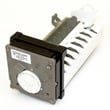
On a Magic Chef CTB1922ARW top-mount refrigerator, the upper section is typically the freezer compartment. It is the coldest area of the appliance and is designed to keep foods frozen; many models also place the ice tray or ice maker components in this top section.
People use a few different terms depending on what they mean:
- Freezer compartment: the full upper section where frozen food is stored
- Freezer section: another common name for the same area
- Freezer door: the upper door (not the compartment itself)
- Evaporator area: the cooling coil area behind the rear freezer panel (internal component)
- Freezer shelf/bin: specific storage pieces inside the freezer
| If you mean... | The common name is... | What it does |
|---|---|---|
| The whole upper area behind the top door | Freezer compartment | Stores food at freezing temperatures |
| The top door itself | Freezer door | Seals the freezer and keeps cold air in |
| The cold-air source behind the back panel | Evaporator (coil) area | Creates cold air that circulates through the unit |
| The control you adjust | Temperature control/thermostat | Regulates cooling and run time |
Using the right term helps you troubleshoot faster and order the right replacement items (for example, a door gasket vs a shelf vs an internal cooling component). It also helps when describing symptoms like frost buildup, warm freezer temperatures, or a door that will not seal.
If you are trying to identify a specific piece in the upper section (shelf, bin, gasket, light cover), match the wording to your model number label first. We use that model number to narrow down the correct diagrams and compatible parts.
- Check the model tag inside the fresh food section (often on a side wall)
- Write the model number exactly as shown: CTB1922ARW
- Use the part description you see (for example, “freezer shelf” vs “freezer door gasket”)
For help locating the model tag and understanding why it matters for parts compatibility, use how to find your appliance model number (and what it means for parts).
Last updated: January 2026
Why is the compressor not running on my Magic Chef mini fridge?
On the Magic Chef CTB1922ARW, a compressor that will not run is usually caused by a power supply problem, a failed start device (start relay/overload), a temperature control issue, or a bad compressor. Start with simple checks (power, settings, airflow), then move to electrical testing.
- Confirm the outlet works by plugging in a lamp; reset the kitchen GFCI if it is tripped.
- Make sure the temperature control is not set to OFF or the warmest setting.
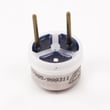
- Listen for a repeating click every few minutes; that often points to a start relay/overload problem.
- Check for heavy dust on the condenser area; poor airflow can overheat the compressor and stop it.
- If the unit was just moved, keep it upright and allow 24 hours before expecting normal cooling.
Unplug the refrigerator before accessing wiring.
- Inspect the start relay/overload on the compressor pins for burn marks or rattling pieces.
- Check the compressor windings with a multimeter (common, start, run); readings should be finite and consistent.
- Check for voltage to the compressor circuit when the thermostat calls for cooling.
- If the compressor is hot and repeatedly clicks off, the start device is the most common failure.
If you need help using a meter safely, use our how to use a multimeter to test electrical parts video.
| Symptom | Most likely cause | What we recommend |
|---|---|---|
| No sound at all, lights off | No power to refrigerator | Check outlet, cord, breaker/GFCI |
| Lights on, compressor silent | Control not calling for cooling | Adjust control, check thermostat/control wiring |
| Click every 2 to 10 minutes | Start relay/overload failing or compressor locked | Inspect and test start device, then compressor |
| Compressor very hot to touch | Overheating or locked rotor | Clean airflow path, test start device |
The compressor is the heart of the sealed system; if it is not running, the refrigerator cannot circulate refrigerant and temperatures will rise quickly. Correctly identifying a start-device failure versus a compressor failure prevents unnecessary parts replacement.
Last updated: January 2026





