Owner’s manual



What is the average lifespan of a Samsung dryer?
Most Samsung dryers last 10 to 15 years with normal household use. For the Samsung DV219AEW, consistent airflow and basic care (lint removal, proper venting, and avoiding overloads) are what most often push life toward the high end of that range; see the DV219AEW owner’s manual for care and setup details.
What affects dryer lifespan the most
- Vent airflow: crushed or restricted ducting makes the dryer run hotter and longer.
- Lint control: cleaning the lint screen every load reduces strain on the heater and motor.
- Load size: frequent overloading wears the drum support system and belt faster.
- Heat management: repeated overheating can trip safety thermostats and shorten component life.
- Installation quality: stable leveling and correct exhaust routing reduce vibration and heat buildup.
Typical lifespan by usage pattern
| Usage pattern | Typical lifespan | What you’ll notice first |
|---|---|---|
| Light (1 to 3 loads/week) | 12 to 15 years | Minor noise, slower drying |
| Average (4 to 7 loads/week) | 10 to 13 years | Longer dry times, occasional shutoffs |
| Heavy (multiple loads/day) | 7 to 10 years | Belt/roller noise, heat issues |
Maintenance that extends life (high impact)
- Clean the lint screen every load.
- Inspect and clean the vent path periodically; avoid flexible plastic venting.
- Keep the dryer level to reduce drum and roller wear.
- Stop cycles promptly and avoid packing the drum tight.
- If drying times increase, address airflow first before replacing parts.
Why it matters
A dryer that runs with restricted airflow often overheats and cycles longer, which accelerates wear on key components like the heating system, thermostats, and drive system. Good venting and routine lint removal are the simplest ways to protect performance and lifespan.
Last updated: February 2026
How to find part number for Samsung dryer?
To find the correct part number for your Samsung dryer, we first match parts to the model number and serial number on your dryer’s ID tag. On Samsung DV219AEW dryers, the tag is typically on the front frame behind the door; many units also have a second tag on the back. For diagrams and model identification details, use the DV219AEW manual.
Where to look for the model and serial tag
Check these common locations in this order:
- Open the dryer door and look on the front frame (door opening area)
- Check the back panel of the dryer for a secondary label
- Look for a label that includes MODEL and SERIAL (often a barcode label)
- If the label is worn, use a flashlight and take a photo to zoom in
How to use the tag to get the right part number
Once you have the model and serial information, use it to confirm the exact version of your dryer and then choose parts by name (belt, heating element, thermostat, roller) from the parts list.
- Write the model number exactly as shown (for this page: DV219AEW)
- Keep the serial number handy; it helps confirm production variations
- Use the part description to match what you’re replacing (example: drum support roller vs. belt)
- Compare your old part’s markings to the listing when available
Common part types customers look up (examples for DV219AEW)
These are frequent replacements on Samsung dryers; matching by model helps ensure fit.
| What you’re fixing | Common part type | Example part from this model’s list |
|---|---|---|
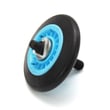
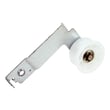
| Squealing or thumping | Drum support roller | Samsung dryer drum support roller DC97-16782A |
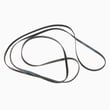
| Drum not turning | Drum belt | Samsung dryer drum belt 6602-001655 |
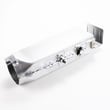
| No heat or overheating symptoms | Heating and safety controls | Samsung dryer heating element DC47-00019A |
Why it matters
Samsung dryers can have small design changes across production runs. Using the model and serial tag prevents ordering a heating element, thermostat, belt, or roller that looks similar but does not mount or wire the same.
Last updated: February 2026
Is it worth replacing a heating element in a Samsung dryer?
Yes. For a Samsung DV219AEW dryer, replacing the heating element is usually worth it when the dryer still tumbles normally and the rest of the machine is in good shape; it typically restores heat for far less than the cost of a new dryer. Confirm the failure first because airflow problems and safety thermostats can mimic a bad element; use the DV219AEW owner's manual for model-specific checks and safety guidance.
When replacement makes sense
- The drum turns, but clothes stay cold or take much longer to dry.
- You have good airflow (lint screen and vent are clear) and the dryer is level.
- The dryer is otherwise reliable (no loud squealing, burning smell, or repeated shutdowns).
- You are comfortable doing basic electrical testing and reassembly.
Parts that commonly get replaced with “no heat” symptoms
On this model, “no heat” is often caused by a failed heater or a safety device that opened due to restricted venting.
- Samsung dryer heating element DC47-00019A
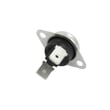
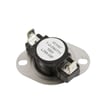
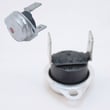
- Dryer high-limit thermostat DC47-00018A
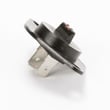
- Dryer thermal cut-off thermostat DC47-00016A
- Dryer thermal cut-off fuse, 320-degree f DC47-00015A
- Dryer thermistor DC32-00007A
Quick decision guide
| What you observe | Most likely direction | What we do next |
|---|---|---|
| Tumbles, no heat | Heater circuit issue | Test element and thermostats; inspect wiring |
| Long dry times, heat seems weak | Airflow restriction | Clean lint path and vent; verify rigid 4-inch metal duct |
| Heat works sometimes | Sensor or thermostat cycling | Check thermistor, high-limit thermostat, venting |
Why it matters
A restricted exhaust system can overheat the heater housing and trip a thermal cut-off. The manual recommends using a 4-inch rigid metal exhaust duct and avoiding flexible plastic venting because crushed or lint-trapping ducts restrict airflow and raise fire risk. Fixing venting first helps the new heating part last.
What we recommend before you buy parts
- Clean the lint screen and the entire vent run to the outside.
- Verify the exhaust duct is 4-inch rigid metal and not crushed.
- Check for normal tumbling and listen for abnormal noises.
- If you have a multimeter, test the heating element and safety thermostats for continuity.
Last updated: February 2026