Installation guide
 Owner’s manual
 Error Codes



How much top clearance does a fridge need?
For the Kenmore 2536880201B top-mount refrigerator, we install with 3/8 inch of clearance at the top (and sides) and 1 inch at the back for proper air circulation. If your unit has exposed condenser coils/tubing on the back, plan for 3 inches at the top.
Recommended clearances (quick guide)
Use these minimum clearances for installation access, airflow, and electrical or plumbing connections; confirm details in the 2536880201B installation guide.
- Top: 3/8 inch (or 3 inches if exposed back coils/tubing)
- Sides: 3/8 inch
- Rear: 1 inch
- Front (toe grille): keep fully open (do not block)
Why top clearance can change
Some refrigerators need extra top space because heat must rise and escape efficiently.
- Standard cabinet-backed installs: 3/8 inch at the top is enough
- Exposed condenser coils/tubing on the back: 3 inches at the top improves airflow
- Tight enclosures: can trap heat and reduce cooling performance
- Warm rooms: make airflow even more important
Clearance table
| Location | Minimum clearance | When to increase it |
|---|---|---|
| Top | 3/8 inch | Increase to 3 inches if exposed back coils/tubing are present |
| Sides | 3/8 inch | Increase if doors need more swing room near a wall |
| Back | 1 inch | Increase if cords, water line, or wall shape crowds the rear |
Why it matters
Proper clearance helps the compressor and condenser shed heat, keeps temperatures stable, and prevents the refrigerator from running longer than it should. It also helps doors close and seal correctly after leveling (details are in the 2536880201B owner’s manual).
Last updated: February 2026
How to tell cubic feet of Kenmore refrigerator by model number?
For Kenmore model 2536880201B, the most reliable way to get cubic feet is to read the model and serial (rating) plate inside the fresh food compartment, then match that information to the specifications listed in the 2536880201B owner's manual. Model numbers alone do not consistently encode capacity.
Fast ways to find the capacity (best to least reliable)
- Check the rating plate inside the refrigerator compartment (usually on a side wall); it lists the exact model and serial information used for specs.
- Look up the specifications section in the 2536880201B owner's manual.
- Use the model family clue: Kenmore 253 models are commonly built on Frigidaire platforms; capacity varies by configuration, so you still want the spec listing.
- Estimate by measuring interior volume only if you cannot access the spec sheet (useful for rough planning, not exact cubic feet).
Where to find the rating plate on this model
On Kenmore top-mount refrigerators like 2536880201B, the manual indicates the serial plate is inside the refrigerator compartment. Use only mild soap and water to clean the plate so the numbers stay readable.
Quick measurement estimate (rough)
If you need a ballpark number for moving or storage planning, you can estimate interior volume:
| What you measure | How | What you get |
|---|---|---|
| Fresh food interior | Width x depth x height (inches) | Cubic inches |
| Freezer interior | Width x depth x height (inches) | Cubic inches |
| Convert to cubic feet | Total cubic inches ÷ 1,728 | Approx. cu. ft. |
Why it matters
Cubic feet affects how much food you can store, what replacement shelves and bins fit, and whether the refrigerator will meet your household needs. It also helps when comparing Kenmore 253-series units that look similar but have different capacities.
Last updated: February 2026
What water filter fits my Kenmore fridge?
For Kenmore refrigerator model 2536880201B, the correct water filter is the one specified for your exact model and plumbing setup; we match it by model number and filter style (internal cartridge vs. inline). Use the 2536880201B owner's manual to confirm the filter type and replacement procedure for your refrigerator.
How to identify the right filter for your refrigerator
Start by checking whether your 2536880201B uses a built-in cartridge filter or an inline filter installed in the water line.
- Look inside the fresh food compartment for a filter housing (often upper right, upper left, or base grille area)
- Check behind the refrigerator for an inline filter canister on the 1/4-inch water line
- Confirm you have a working cold water supply at 30 to 100 psi (low pressure can mimic a “bad filter” symptom)
- If your refrigerator has no filter housing, you typically use an inline filter or no filter (depending on your installation)
- Use the model number 2536880201B when selecting the filter to avoid look-alike cartridges
What the installation guide tells us about water connections
Your installation requirements matter because some homes use an inline filter on the supply line.
| Item to check | What to look for | Why it matters |
|---|---|---|
| Water line material | 1/4-inch OD copper tubing is recommended | Helps reduce leak risk and improves reliability |
| Shut-off valve type | Standard shut-off valve (not self-piercing) | Better flow and fewer clogging issues |
| Water pressure | 30 to 100 psi | Ensures proper dispenser and ice maker performance |
For the exact connection steps and specs, use the 2536880201B installation guide.
Why it matters
Using the correct filter protects taste and odor, helps reduce sediment, and keeps water flow strong for the ice maker and any dispenser. The wrong filter style can cause leaks, poor flow, or fitment problems.
Quick tips before you order
- Verify the model number on the rating label inside the refrigerator
- Identify whether you have an internal cartridge filter or an inline filter
- Replace filters on schedule (most households: about every 6 months)
- After replacement, flush several gallons of water to clear air and carbon fines
Last updated: February 2026
What is the top part of the fridge called?
On the Kenmore 2536880201B top-mount refrigerator, the top section is the freezer compartment. It is designed to keep foods frozen, support proper cold-air circulation, and (on some setups) supply ice maker operation when equipped.
What you will typically find in the top freezer section
- Freezer shelves or door bins for frozen foods
- A freezer door gasket that seals cold air in
- Cold-air pathways that help cool the fresh food section below
- Space for an ice tray or an optional ice maker (if installed)
- A freezer temperature control setting referenced in the 2536880201B owner's manual
Freezer vs. refrigerator compartment (quick comparison)
| Compartment | Location on this model | Main purpose | Typical temperature target |
|---|---|---|---|
| Freezer | Top | Long-term frozen storage | 0°F |
| Fresh food (refrigerator) | Bottom | Short-term chilled storage | 37°F |
Why it matters
Knowing the correct compartment name helps when you are troubleshooting cooling problems, checking door sealing, or ordering the right parts for the correct door. For example, a poor seal can cause temperature swings and frost buildup.
Related setup tip for best performance
Our installation guidance for top-mount units focuses on airflow and door sealing. When setting up or re-leveling, confirm these basics in the 2536880201B installation guide:
- Place the refrigerator near a grounded outlet (no extension cord)
- Keep it out of direct sunlight and away from heat sources
- Level the cabinet so doors close tightly
- Verify the door is completely sealed to the cabinet on all sides
Last updated: February 2026
How big is the Kenmore freezer model 2536880201B?
The Kenmore 2536880201B is a top-mount refrigerator (freezer on top). For the exact exterior dimensions, capacity, and required clearances for your specific unit, use the specifications and installation-clearance section in the 2536880201B owner's manual and the 2536880201B installation guide.
What measurements to use (and where they matter)
When you are planning space for model 2536880201B, focus on these:
- Overall width, height, and depth (fit in the opening)
- Depth with doors and handles (front clearance)
- Door swing clearance (space to fully open the freezer and fresh-food doors)
- Ventilation clearance (airflow around the cabinet)
- Total capacity vs. usable space (shelves, bins, and ice maker reduce usable volume)
Typical size for this style of Kenmore top-mount refrigerator
Most Kenmore 253-series top-mount refrigerators are built in a standard footprint. Use this as a planning baseline, then confirm the exact numbers in your documents.
| Spec you are checking | Typical for this style |
|---|---|
| Width | About 28 to 33 inches |
| Height | About 66 to 70 inches |
| Depth (overall) | About 30 to 34 inches |
| Total capacity | About 18 to 21 cu. ft. |
Quick way to confirm you are measuring the right unit
Use these checks before you commit to a cutout size:
- Match the full model number 2536880201B on the serial plate inside the refrigerator compartment.
- Measure width at the widest point (often the hinge side or door edge).
- Measure depth including the doors; handles can add more.
- Add clearance for door swing so drawers and bins can pull out.
Why it matters
Correct sizing prevents poor airflow (warm temperatures), doors that cannot open fully, and installation issues such as the cabinet rubbing walls or the refrigerator sitting too far forward.
Last updated: February 2026
What does er/cf mean on a Kenmore Elite refrigerator?
On Kenmore refrigerator model 2536880201B, ER/CF is treated as a fan-related cooling airflow fault. In practice, we troubleshoot it by checking the condenser fan area by the compressor first because restricted airflow there quickly raises temperatures and can trigger fan or cooling alarms.
What to do first (safe checks)
- Power reset: unplug for 5 minutes, then restore power.
- Confirm the toe grille and rear/bottom area have clear airflow (no boxes, rugs, or heavy dust).
- Clean lint and dust from the condenser area; airflow problems mimic fan failures.
- Listen for a fan running near the compressor when the unit is cooling.
- If the fan is running, check for unusual rattling that suggests a damaged blade or obstruction.
Parts to focus on for this model
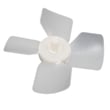
If the fan by the compressor is not running or is noisy, the most relevant replacement part for this model is the refrigerator condenser fan 242018404. If the fan runs but airflow is still poor, also inspect the condenser coil for heavy buildup.
| Symptom | What it usually points to | Next step |
|---|---|---|
| No fan sound near compressor while cooling | Condenser fan not operating | Inspect/replace condenser fan assembly |
| Loud rubbing or ticking from fan area | Fan blade hitting shroud or debris | Clear obstruction; recheck fan operation |
| Code returns after cleaning and reset | Fan feedback, wiring, or control issue | Follow diagnostic steps and wiring checks |
Why it matters
The condenser fan removes heat from the sealed system. When that heat is not expelled, the compressor runs hotter and longer, and the refrigerator struggles to hold safe food temperatures.
Where to find model-specific access and safety steps
Use the 2536880201B installation guide for access notes (toe grille, leveling, and clearance) and the 2536880201B owner’s manual for operating and care guidance.
Last updated: February 2026