Owner’s manual
 View engine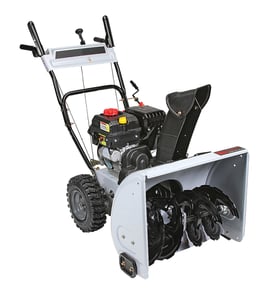


Where is the serial number on a snowblower?
On the Craftsman snow thrower model 247881721, the model and serial number are typically shown on a product ID label or decal on the machine, most often on the rear of the unit near the handle frame or on the back of the auger housing. Use that serial number when ordering parts.
Check these common label locations first:
- Rear of the snowblower, on the frame behind the engine
- Back side of the auger housing (bucket)
- Near the handle mounting area or control panel support
- On or near the engine area (sometimes a separate engine ID label)
For diagrams and identification notes, use the 247881721 operator's manual.
It is common to find multiple identifiers on a Craftsman snowblower. Here is how we use them:
| What you see on the label | What it’s used for | Example format |
|---|---|---|
| Model number | Confirms the exact machine family | 247881721 |
| Serial number | Identifies your specific unit build | Varies by unit |
| Engine model/spec numbers | Helps match engine-specific parts | Varies by engine |
The serial number can affect which version of a part fits your exact production run. This is especially important for wear items and drive components such as belts, cables, and decals.
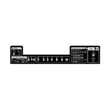
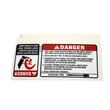
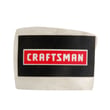
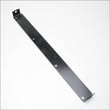
If your ID label is missing or unreadable, replacing the label can help keep the machine identifiable; the snowblower operator panel decal 777I22581 is one example of a model-related decal used on this unit.
- Wipe the label clean and use a flashlight at an angle
- Take a clear photo so you can zoom in
- Copy letters and dashes exactly as shown
Last updated: January 2026
Can I use 5W30 instead of SAE 30 in my snowblower?
For Craftsman snow thrower model 247881721, we recommend using 5W-30 engine oil; it is the specified oil grade for this model, so you do not need SAE 30. Using the correct viscosity helps cold starts and protects the engine during winter operation (see the 247881721 operator's manual).
The operator’s manual for this Craftsman snowblower lists Engine Oil: 5W-30 and also notes adding 5W-30 oil (with at least SF/SG classification) when topping off.
- Use 4-stroke engine oil (not 2-stroke mix).
- Use 5W-30 for typical snowblower temperatures.
- Check oil level before each use on a level surface.
- Change oil after the first 5 hours, then once per season or every 50 hours.
- Do not overfill; overfilling can cause smoking or hard starting.
5W-30 is a multi-viscosity oil designed to flow better when cold and still protect when the engine is hot. SAE 30 is thicker in cold weather, which can make winter starting and lubrication slower.
| Oil type | Cold starting | Winter suitability | Typical snowblower use |
|---|---|---|---|
| 5W-30 | Better flow | Best choice | Recommended for 247881721 |
| SAE 30 | Thicker when cold | Not ideal | More common in warm-weather equipment |
Snowblowers run in freezing temperatures. Using the specified 5W-30 helps the engine lubricate quickly at startup, reduces wear, and supports reliable starting when you need it most.
Last updated: January 2026
What is the typical lifespan of a gas snowblower?
A gas snowblower like the Craftsman 247881721 typically lasts 10 to 15 years with normal residential use and consistent maintenance. For this specific model, the operator guidance also cites an average useful life of 7 years or 60 hours of operation, which is a safety-based inspection benchmark rather than an automatic end-of-life date (see the 247881721 operator's manual).
Many owners think of lifespan as “how long until it won’t run.” We look at it in two practical ways:
- Service life: how long the snowblower can be kept reliable with routine upkeep
- Wear life: when high-wear items (belts, skid shoes, shear pins, friction wheel rubber) start needing more frequent replacement
- Safety/inspection benchmark: the manual’s 7-year/60-hour guideline for annual inspection
| Usage pattern | Typical lifespan | What usually ends it |
|---|---|---|
| Light residential (few storms/season) | 12–15 years | corrosion, fuel system issues, neglected storage |
| Average residential | 10–12 years | belts, friction drive wear, carburetor varnish |
| Heavy residential (long driveway, frequent use) | 7–10 years | drivetrain wear, auger/impeller wear, repeated belt failures |
These are the highest-impact habits for a Craftsman gas snowblower:
- Change engine oil on schedule (including the first change after early break-in)
- Use fresh fuel and avoid storing fuel in the tank for long periods
- Keep the auger and drive controls properly adjusted
- Lubricate key points (auger shaft, chute control, wheel axles, drive hex shaft)
- Replace worn wear parts before they damage other components
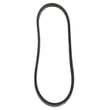
If your auger belt is slipping, glazing, or cracking, replacing it promptly helps prevent poor snow-throwing performance and extra strain on pulleys and idlers. A compatible option for this model is the mtd snowblower auger drive belt, 1/2 x 35-1/4-in 256963.
A snowblower that is “still running” can still be unsafe or unreliable if wear parts are overdue. Following the maintenance and inspection guidance in the manual helps you get the longest practical life and more consistent snow-throwing performance.
Last updated: January 2026
How to tell if a snowblower auger belt is bad?
On the Craftsman 247881721 snow thrower, a bad auger belt typically shows up as an auger that slips, stops under load, or will not spin even though the auger control is engaged. Visual signs include cracking, glazing (shiny sides), fraying, or a belt that sits loose on the pulleys.
- Auger turns slowly or stops when it hits heavier snow
- Burning rubber smell after engaging the auger
- Squealing noise when you squeeze the auger control
- Belt looks cracked, frayed, stretched, or shiny
- Auger works intermittently (especially after warming up)
Before inspecting anything, shut the engine off, remove the key, and disconnect the spark plug wire.
- Remove the belt cover and inspect the auger belt condition and tension.
- Check for belt debris (rubber dust) around the engine pulley and auger pulley.
- Confirm the auger control cable is adjusted correctly; a loose cable can mimic a “bad belt.” The adjustment procedure is outlined in the 247881721 operator’s manual.
| What you notice | More likely cause | What to do next |
|---|---|---|
| Belt is cracked/frayed/glazed | Belt worn out | Replace the belt |
| Belt looks OK but auger slips | Cable out of adjustment or belt stretched | Adjust cable, then re-test |
| Auger will not turn at all | Belt broken or off pulley | Inspect routing, replace if damaged |
For this model, the auger drive belt is the mtd snowblower auger drive belt, 1/2 x 35-1/4-in 256963 (part number 954-04050A).
A slipping auger belt reduces throwing distance and can overheat, leaving you without auger power mid-job. Catching belt wear early also helps protect pulleys, idlers, and the auger drive system.
Last updated: January 2026