Owner’s manual
 View engine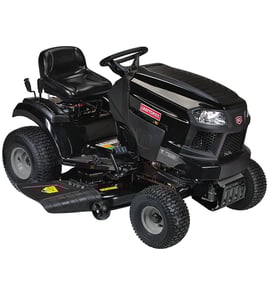


How much does it cost to replace a riding lawn mower engine?
For the Craftsman riding tractor model 917287220 (YS4500 series), a typical engine replacement (parts plus labor) runs about $260 to $1,800. Total cost depends on the engine type, whether you reuse the existing wiring and fuel system, and the shop’s labor rate; plan on roughly a half-day job.
What drives the total price
- Engine cost: new, rebuilt, or used engines vary widely in price
- Labor time: riding mower engine swaps commonly take around 6 hours
- Extra parts: fuel line, filter, battery cables, belts, or pulleys may be needed
- Condition issues: broken wiring, worn mounts, or damaged cooling shrouds add time
- Shop rate: local labor rates can change the total more than the parts do
Before you replace the engine, confirm it’s really the problem
Many “dead engine” complaints are caused by starting or fuel-delivery issues. Our manual’s troubleshooting guidance points you to basics like battery condition, wiring, fuses, ignition switch, and the starter circuit.
Use this quick check list (engine off, key removed):
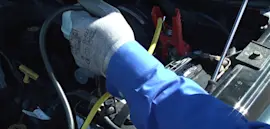
- Verify the battery is charged and terminals are clean and tight
- Inspect wiring for loose, corroded, or damaged connections
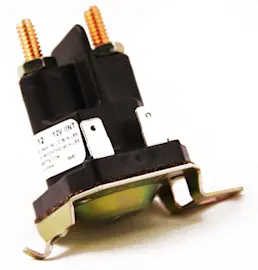
- Check the starter solenoid operation (a common no-crank culprit)
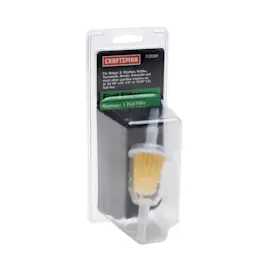
- Replace stale fuel and consider the in-line fuel filter if fuel flow is restricted
- Make sure the engine cooling areas are clean; blocked screens and fins can cause overheating damage
Helpful reference: 917287220 owner’s manual
Common “replace while you’re in there” items
If the engine is coming out, it’s smart to address wear items that affect drive and cutting performance.
| Item | What it affects | Example part for this model |
|---|---|---|
| Starter solenoid | No-crank or intermittent starting | Lawn tractor starter solenoid 582042802 |
| Ground/drive belt | Loss of drive or slipping | Ground drive or blade drive belt options vary by routing |
| Deck/mandrel components | Vibration, poor cut, noise | Mandrel and pulley wear can mimic engine problems |
Why it matters
A full engine replacement is one of the highest-cost repairs on a riding mower. Spending a few minutes on electrical and fuel checks first can prevent replacing an engine when the real issue is a solenoid, wiring, or restricted fuel flow.
Last updated: February 2026
How to look up Craftsman model number?
To look up the model number on your Craftsman riding mower, find the model and serial tag on the tractor frame under the seat (or on the underside of the seat). For the Craftsman model 917287220, the operator information is also listed in the 917287220 owner's manual.
Where to find the model and serial tag
We see the model/serial tag in one of these common spots on Craftsman tractors:
- On the frame directly under the seat (lift the seat to view)
- On the underside of the seat pan
- Near the rear fender area under the seat mounting points
- Occasionally on the frame rail close to the transmission area
How to use the model number once you find it
After you locate the tag, use the model number to match parts and diagrams for the exact tractor configuration (deck size, drive system, and engine family).
- Write the model number exactly as shown (numbers only for many Craftsman tractors)
- Record the serial number too; it helps confirm production variation
- Use the model number to select the correct belts, blades, and deck parts
Quick check: what the manual shows
| Item | What to look for | Example for this tractor |
|---|---|---|
| Model number | Printed on the tag and in documentation | 917287220 (manual family shows 917.28722) |
| Serial number | Printed on the same tag | Unique to your unit |
Why it matters
Craftsman tractors often share similar names, but parts like a ground drive belt, mandrel components, and blades can vary by model series. Using the exact model number prevents ordering the wrong part and saves time during repairs.
Last updated: February 2026
What are the parts of a tractor engine?
On the Craftsman 917287220 (YS4500) riding tractor, the engine is built from core internal parts (like the cylinder, piston, crankshaft, and valves) plus supporting systems for fuel, ignition, lubrication, cooling, and starting. For your exact engine layout and service points, use the 917287220 owner's manual.
Main tractor engine parts (what they do)
These are the most common engine components you will hear referenced in repairs and maintenance:
- Cylinder block and cylinder head: the main structure where combustion happens
- Piston and piston rings: compress the air-fuel mixture and transfer power to the crankshaft
- Connecting rod and bearings: link the piston to the crankshaft and reduce friction
- Crankshaft: converts up-and-down piston motion into rotating power
- Camshaft, valves, and valve guides: control intake and exhaust flow
- Gaskets and seals: prevent oil, fuel, and compression leaks
Supporting systems you will service most often
Even when the “engine” is running rough, the issue is often in a supporting system:
- Fuel system: fuel tank, fuel line, carburetor
- Ignition and electrical: battery, wiring, fuse, starter circuit
- Lubrication: engine oil, oil passages, (on some engines) an oil pump
- Air intake and exhaust: air filter, muffler
Quick reference: parts vs. symptoms
| System | Common symptom | What to check first |
|---|---|---|
| Fuel delivery | Starts then dies, surging | Fresh fuel, tank venting, carburetor flow |
| Ignition/electrical | No crank, intermittent start | Battery connections, wiring, fuse |
| Mechanical (internal) | Knocking, low power, smoke | Oil level/condition, compression, leaks |
Why it matters
Knowing whether a problem is internal engine (piston/valves/crankshaft) or a support system (fuel, wiring, belts) helps you avoid replacing the wrong parts and speeds up troubleshooting. The manual also calls out key safety and operation checks, including verifying wiring is secure and using fresh, clean regular unleaded gasoline.
Last updated: February 2026
What brand engine does Craftsman use?
For Craftsman lawn tractors, the engine brand depends on the specific model; for Craftsman model 917287220, the engine brand is identified on the engine’s ID label and in the specifications section of the 917287220 owner's manual. Craftsman commonly uses Briggs & Stratton, Kohler, and Kawasaki across different tractor lines.
What to check on model 917287220
Use the engine’s identification label to confirm the brand and the exact engine family before buying tune-up or fuel-system parts.
- Find the engine ID label on the blower housing or engine shroud
- Write down the engine model/type/code (or model/spec/serial, depending on brand)
- Match those numbers to the engine information listed in the manual’s specifications section
- Use the tractor model number 917287220 for chassis and deck parts (belts, blades, mandrel)
- Use the engine ID numbers for engine parts (carburetor, air filter, spark plug)
Common engine brands used on Craftsman tractors
Craftsman has used multiple engine suppliers over the years; the engine itself always shows the brand.
| Engine brand | What the ID tag usually shows | Typical parts matched to the engine ID |
|---|---|---|
| Briggs & Stratton | Model, type, code | Carburetor, air filter, ignition parts |
| Kohler | Model, spec, serial | Fuel system, charging parts, gaskets |
| Kawasaki | Model, spec, serial | Fuel system, ignition parts, filters |
Why it matters
Engine parts are matched to the engine’s model and spec, not just the tractor model. For starting problems, you may also need tractor electrical parts such as the lawn tractor starter solenoid 582042802, but the correct tune-up parts still depend on the engine ID.
Last updated: February 2026
What model number is the Craftsman 917287220?
The model number for this Craftsman front-engine lawn tractor is 917.287220 (often shown without the dot as 917287220). You can confirm it on the identification label and in the 917287220 owner's manual.
Where to find the model number on the tractor
We typically see the model number in one of these places on Craftsman riding mowers and tractors:
- Under the seat (seat pan area)
- On the frame near the rear wheels
- Under the hood near the engine compartment
- On a fender or side panel label
How the number may be written
The same model can appear in a few formats depending on the label or document.
| Where you see it | Common format | What it means |
|---|---|---|
| Operator's manual cover | 917.28722 or 917.287220 | Model identifier used for the tractor |
| Parts lookup and ordering | 917287220 | Same model number without punctuation |
| Product family name | YS4500 (tractor) | Product type, not the full model number |
Why it matters
Using the exact model number 917287220 helps us match the correct diagrams and parts for your deck, drive system, and engine components. That prevents ordering the wrong belt, blade, or mandrel parts.
Quick tip before ordering parts
- Match the model number exactly (all digits)
- Use the tractor’s label if the manual and decal differ
- When replacing wear items, compare size and mounting style (especially blades and belts)
Last updated: February 2026
What year is Craftsman Model 917287220 serial number?
For a Craftsman riding tractor like model 917287220, the year is typically encoded in the serial number, but the exact format depends on which serial tag style your tractor has. Use the date-code section of the serial number to identify the build year, then confirm the tag location and format in the 917287220 owner's manual.
How to decode the serial number date
Most Craftsman/Husqvarna-built tractors use a 6-digit date code within the serial number that reads as:
- MM = month (01 to 12)
- DD = day (01 to 31)
- YY = year (last two digits)
Examples:
072811= July 28, 2011031520= March 15, 2020110905= November 9, 2005
Where to find the serial number on 917287220
On many Craftsman YS4500-style tractors, the serial/model tag is commonly found:
- Under the seat (seat pan area)
- On the rear fender pan near the seat
- On the frame rail (left or right side)
- Near the engine compartment on the chassis
If the tag is dirty or faded, wipe it with a damp rag and take a photo with your phone to zoom in.
Quick check: what you should write down
Use this checklist so you decode the correct digits:
- Full model number: 917287220
- Full serial number exactly as printed
- Any separate date code printed on the tag
- Engine model/type (engine tags can have their own date codes)
Serial number decoding at a glance
| Code pattern | What it means | Example result |
|---|---|---|
| MMDDYY | Month, day, year | 072811 = July 28, 2011 |
| YYMMDD | Year, month, day | 110728 = July 28, 2011 |
If your serial number doesn’t match MMDDYY, try YYMMDD next; both formats are common on outdoor power equipment tags.
Why it matters
Knowing the correct build year helps us match the right deck parts, belts, and electrical parts for your 42-inch mower deck and automatic transmission setup, especially when there were mid-year production changes.
Last updated: February 2026