




What is the valve clearance on a 331877-0805-E1?
For the Briggs 331877-0805-E1 lawn and garden engine, a common valve lash setting is 0.005 in. intake and 0.002 in. exhaust, adjusted at top dead center (TDC) on the compression stroke. Correct valve clearance helps prevent hard starting, backfiring, and sudden cranking stops.
How to set valve clearance (basic process)
- Disable starting: remove the spark plug wire and secure it away from the plug.
- Remove the valve cover to access the rocker arms.
- Rotate the engine to TDC on the compression stroke (both valves closed).
- Use a feeler gauge to measure lash between the rocker arm and valve stem.
- Adjust the rocker nut until the feeler gauge has a slight drag.
- Recheck both valves after tightening; then reinstall the cover.
Quick spec table
| Valve | Typical clearance | When to measure |
|---|---|---|
| Intake | 0.005 in. | At TDC compression |
| Exhaust | 0.002 in. | At TDC compression |
Symptoms of incorrect valve clearance
- Engine cranks but stops abruptly (acts like it hits compression)
- Hard starting when hot
- Backfiring through the carburetor or muffler
- Low power or uneven running
Why it matters
Valve lash changes over time from normal wear. On a single-cylinder Briggs engine like the 331877-0805-E1, even a small change can affect compression release and starting performance, so setting lash correctly is a key tune-up step.
If you are also chasing a no-start or surging issue, we often check fuel delivery and filtration at the same time; a restricted lawn & garden equipment engine fuel filter (white) 394358S can mimic carburetor problems.
Last updated: February 2026
How to tell what year a Briggs and Stratton engine is?
To tell the year on a Briggs engine like model 331877-0805-E1, we use the engine code (date code) stamped on the engine. On most Briggs engines, the first two digits of the code are the year, followed by month and day.
Where to find the date code on your engine
Look for a stamped code on the engine shroud, valve cover, or blower housing area. It is usually near the model and type numbers.
Common places to check:
- Blower housing (top cover) near the recoil starter area
- Valve cover area on the cylinder head
- Engine shroud near the muffler side
- Flat machined surface near the flywheel
- Sticker plate or stamped pad near the model/type information
How to read the Briggs engine code
Most Briggs & Stratton engine codes follow this pattern:
| Code digits | What it means | Example (from a typical code) |
|---|---|---|
| 1st-2nd | Year | 99 = 1999 |
| 3rd-4th | Month | 01 = January |
| 5th-6th | Day | 15 = 15th |
| Remaining | Plant/line details | Varies by factory |
Quick example
If your code starts with 990115, that reads as January 15, 1999.
Why it matters
Knowing the manufacture date helps us match the correct Briggs parts and specs for your exact build, especially for tune-up items and fuel system parts that can change across production runs.
If you are doing maintenance while you confirm the date code, these common service parts for this engine family are good starting points:
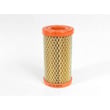
- Briggs & stratton lawn & garden equipment engine air filter 793569 for restricted airflow and hard starting
- Briggs & stratton lawn & garden equipment engine fuel filter (white) 394358S for fuel starvation and surging
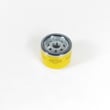
- Briggs & stratton lawn and garden equipment engine oil filter 696854 for routine oil service intervals
Last updated: February 2026
How do I find the specs on my Briggs & Stratton engine?
To find specs for your Briggs lawn and garden engine model 331877-0805-E1, locate the engine ID numbers (Model, Type, and Code) stamped on the engine, then use those numbers to match the correct parts and specifications such as oil capacity, tune-up parts, and ignition details.
Where to find the Model, Type, and Code numbers
On Briggs engines, the ID is typically stamped into the metal (not on a paper label). Check these common spots:
- Valve cover area
- Blower housing (recoil starter shroud)
- Above the spark plug
- Muffler heat shield area
- Engine shroud near the flywheel
What specs you can look up once you have the ID
Once you have the full ID (Model, Type, Code), you can identify the correct maintenance specs and service parts, including:
- Oil type and oil capacity
- Air filter and pre-filter style
- Fuel filter type
- Ignition system details (magneto/armature style)
- Gasket and seal part matches for repairs
Common maintenance parts that tie directly to engine specs
These parts are often selected based on the exact Model, Type, and Code:
| Spec or service item | What it affects | Example part for this model |
|---|---|---|
| Oil filtration | Oil cleanliness and engine life | Briggs & stratton lawn and garden equipment engine oil filter 696854 |
| Fuel filtration | Prevents carburetor clogging | Briggs & stratton lawn & garden equipment engine fuel filter (white) 394358S |
| Air filtration | Protects cylinder and rings from dust | Briggs & stratton lawn & garden equipment engine air filter 793569 |
| Pre-filter | Extends air filter life in dusty mowing | Briggs & stratton lawn and garden equipment engine pre-filter 793685 |
Why it matters
Briggs engines can share similar model numbers but use different carburetors, filters, and ignition parts by Type and Code. Using the full ID prevents ordering the wrong air filter, fuel filter, or gasket set and helps you apply the correct oil and tune-up specs.
Last updated: February 2026
What psi should a Briggs and Stratton compression test be?
For the Briggs 331877-0805-E1 lawn and garden engine, a healthy compression reading is typically about 60 to 90 PSI on a standard small-engine compression test; readings above 90 PSI usually indicate a strong, well-sealed cylinder. Consistent readings between cylinders (if applicable) matter as much as the exact PSI.
Quick PSI guide (what the numbers usually mean)
- 0 to 30 PSI: engine typically will not start; major sealing issue likely
- 30 to 60 PSI: hard starting, weak power; wear or valve sealing issue likely
- 60 to 90 PSI: normal running range for many Briggs-style L-head/OHV engines
- 90+ PSI: strong compression; good ring and valve seal
| Compression result | What you’ll notice | Most common next step |
|---|---|---|
| Low but improves with oil “wet test” | Starts then dies, low power | Suspect rings/cylinder wear |
| Low and does not improve with oil | Backfiring, no-start, poor idle | Suspect valves or head gasket |
| Good PSI but still won’t start | No-start with fuel smell | Check spark, fuel delivery, timing |
How to get an accurate compression reading
- Warm the engine if possible (cold tests often read lower).
- Disable ignition (remove spark plug wire and ground it safely).
- Remove the spark plug; thread the gauge in firmly.
- Hold throttle wide open; crank until the gauge stops climbing (usually 4 to 8 pulls or several seconds of cranking).
- Repeat once more; use the highest stable reading.
Why it matters
Compression is the engine’s “air pump” health check. On the 331877-0805-E1, low compression points you toward mechanical sealing problems (rings, valves, head gasket) instead of chasing fuel or ignition parts.
Parts that often relate to low compression symptoms
If compression is low and you find leakage at the head or crankcase, these model-matched parts are common fixes:
- Cylinder head gasket 794114 (seals cylinder head to block)
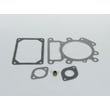
- Gasket set 794152 (multiple gaskets for teardown and reseal)
- Crankcase gasket 697110 (helps stop crankcase leaks that can affect sealing)
Last updated: February 2026
How to tell what HP a Briggs and Stratton engine is?
For your Briggs 331877-0805-E1 lawn and garden engine, we identify engine power by the engine’s model/type code and the power rating information provided for that exact engine family. Many engines are not labeled with a simple “HP” sticker, so matching the model number is the most reliable way to confirm horsepower.
Quick ways to identify horsepower
- Use the engine model number: Match 331877-0805-E1 exactly; the power rating is tied to that specific build.
- Check the equipment label: Riding mowers and other equipment often list engine HP on the tractor or deck label.
- Look for torque ratings: Some Briggs engines are marketed by gross torque instead of HP.
- Avoid guessing by size: Displacement and appearance alone can be misleading across engine series.
- Confirm you are reading the engine tag: The tag typically lists model, type, and code; record all of it before ordering parts.
What to look for on the engine
Most Briggs and Stratton single-cylinder and V-twin lawn engines have an ID label or stamped tag on the blower housing, valve cover area, or near the muffler heat shield. Write down:
- Model (example: 331877)
- Type (example: 0805)
- Code (example: E1)
Common label formats
| What you see | What it means | How it helps |
|---|---|---|
| Model / Type / Code | Engine identification | Best way to match the correct power rating |
| “HP” number | Marketing horsepower | Helpful if present, but not always included |
| Torque value | Gross torque rating | Can be converted to an approximate HP range at a given RPM |
Why it matters
Horsepower affects more than bragging rights; it helps you match the correct carburetor settings, air intake parts, and maintenance intervals. When you service the engine, using the correct filters also protects power output and engine life.
If you are doing a tune-up while you confirm the rating, match maintenance parts to this model, such as the Briggs & stratton lawn & garden equipment engine air filter 793569 and the Briggs & stratton lawn & garden equipment engine fuel filter (white) 394358S.
Last updated: February 2026
What oil goes in a HP Briggs and Stratton engine?
For the Briggs 331877-0805-E1 lawn and garden engine, we use a high-quality 4-cycle detergent oil; SAE 10W-30 is the most common all-around choice for typical mowing temperatures, with SAE 5W-30 preferred for colder starts and SAE 30 often used in consistently warm weather.
Recommended oil weights by temperature
Choose the viscosity based on the temperatures you expect during starting and operation:
- SAE 5W-30 (synthetic is ideal): best for cold weather starting
- SAE 10W-30: best all-season option for most climates
- SAE 30: best for steady warm weather use
- Avoid 2-cycle oil: this is a 4-cycle engine and needs crankcase oil
| Typical outdoor temperature | Common oil choice | What you will notice |
|---|---|---|
| Below ~40°F | SAE 5W-30 | Easier starting, better cold flow |
| ~40°F to ~90°F | SAE 10W-30 | Balanced protection and starting |
| Above ~50°F (steady heat) | SAE 30 | Stable viscosity in hot operation |
Oil change and maintenance tips
Using the right oil is only half the job; clean oil and airflow keep a Briggs engine running cooler and lasting longer.
- Change oil on schedule and anytime it looks dark, smells burnt, or feels gritty
- Check oil level before each use; low oil can cause rapid internal wear
- Replace the oil filter if your setup uses one; see lawn and garden equipment engine oil filter 696854
- Keep fuel clean to reduce carburetor varnish; consider lawn & garden equipment engine fuel filter (white) 394358S
- Keep the intake clean; a restricted filter can cause rich running and carbon buildup; see lawn & garden equipment engine air filter 793569
Why it matters
Oil viscosity affects how quickly the engine lubricates at startup and how well it protects under load. Too thick in cold weather can make starting hard; too thin in heat can reduce protection when the engine is working hardest.
Last updated: February 2026