Installation guide
 Owner’s manual
 Error Codes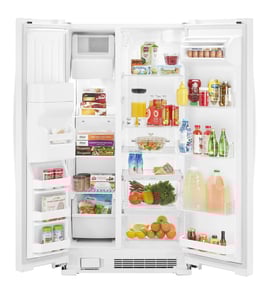


Can I run my Kenmore refrigerator without a water filter?
Yes. Your Kenmore Pro refrigerator model 40140483800 will still cool normally without the water filter, but your dispenser water and ice will no longer be filtered, so taste and odor can worsen and mineral sediment can build up in the water system over time. Check the 40140483800 owner’s manual for your model’s filter setup and replacement steps.
- Water and ice quality depends entirely on your home water supply.
- Off-taste or odor in ice becomes more likely (the manual notes water quality and filter condition affect ice taste).
- Sediment can collect in water components (valves, lines, ice maker), which can lead to slow flow or clogs.
- The filter replacement indicator and schedule no longer match what is actually happening.
- The refrigerator still needs proper water pressure for the ice maker and dispenser to work.
- Turn off the water supply before opening the filter area.
- Remove the filter and confirm the housing seals are clean and not nicked.
- Restore water and dispense water for a few minutes to purge air and confirm there are no leaks.
- If you notice leaking at the filter area, replace the housing or reinstall a proper filter.
| Symptom | Part to consider | What it affects |
|---|---|---|
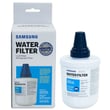
| Water tastes or smells off | Refrigerator water filter DA29-00003B | Reduces chlorine taste and odor and other contaminants |
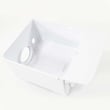
| Leaks at filter area | Kenmore pro refrigerator water filter housing DA97-06317D | Seals and holds the filter |
| No water or weak flow | Kenmore pro refrigerator water inlet valve DA62-00914B | Controls water supply to dispenser and ice maker |
The embedded filter in this refrigerator is designed to improve drinking water and ice quality; running without it shifts all protection to your household plumbing and water quality. Keeping filtration in place also helps reduce sediment-related issues in the dispenser and ice maker.
Last updated: February 2026
How do I know which Kenmore refrigerator filter to buy?
For Kenmore Pro model 40140483800, the right water filter is the one that matches your exact model and the filter style used in your refrigerator. The quickest confirmation is the filter part number and replacement instructions listed in the 40140483800 owner's manual.
- Match the refrigerator model number exactly: 40140483800.
- Check the existing filter label for a printed part number and match it.
- Use the manual’s filter section to confirm the correct filter type and how it locks in.
- Replace the filter every 6 months or when the filter indicator turns red (per the manual).
- If water flow is weak, verify home water pressure is 20 to 125 psi (low pressure can mimic a clogged filter).
For this model, a commonly used replacement filter is:
If you have leaking at the filter area or the filter will not seal, these related parts can be involved:
- Kenmore pro refrigerator water filter housing DA97-06317D
- Kenmore pro refrigerator water inlet valve DA62-00914B
| What you notice | Most likely cause | What to do next |
|---|---|---|
| Filter light is red | Filter is due | Replace filter; reset indicator per manual |
| Slow dispenser flow | Clogged filter or low supply pressure | Replace filter; confirm 20 to 125 psi |
| Drips or leaks near filter | Filter not fully seated or housing issue | Reinstall filter; inspect housing and O-rings |
Using the correct Kenmore refrigerator water filter protects water taste and helps the dispenser and icemaker maintain normal flow. A mismatched filter can leak, fail to lock, or restrict water.
Last updated: February 2026
How to tell cubic feet of Kenmore refrigerator by model number?
You typically cannot determine the exact cubic-foot capacity from the Kenmore model number alone. For Kenmore Pro model 40140483800, the reliable ways are to look up the capacity in the 40140483800 owner's manual or calculate it by measuring the usable interior space and converting cubic inches to cubic feet.
Capacity is usually listed with other specifications (electrical requirements, installation clearances, features). Start with the 40140483800 owner's manual.
Use this when you need a quick estimate or the label is missing.
- Empty the compartment you are measuring (fresh food and freezer are often listed separately).
- Measure usable interior height, width, and depth in inches (do not include door bins or unusable curves).
- Multiply H x W x D to get cubic inches.
- Divide by 1,728 to convert to cubic feet.
- Repeat for the other compartment, then add them for total capacity.
The model tag confirms you are matching the correct Kenmore Pro refrigerator when comparing specs or parts.
| What you have | What to do | Result |
|---|---|---|
| Interior measurements (inches) | H x W x D | Cubic inches |
| Cubic inches | Divide by 1,728 | Cubic feet |
| Fresh food + freezer cu. ft. | Add together | Total cu. ft. |
Cubic feet affects how you shop for the right refrigerator water filter, shelving, and storage accessories, and it helps you compare similar side-by-side refrigerators accurately.
If you are troubleshooting low water flow or taste issues while you are checking specs, replacing the refrigerator water filter haf-cu1/xaa (part number DA29-00003B) is a common first step.
Last updated: February 2026
How to unclog a Kenmore refrigerator drain line?
For Kenmore Pro model 40140483800, we unclog a refrigerator drain line by melting any ice at the freezer drain opening, then flushing the drain with hot water until it flows freely to the drain pan. This stops water from pooling, leaking, or refreezing into a blockage.
- Unplug the refrigerator to prevent shock and protect components.
- Empty the freezer floor area; remove the lower bin if it blocks access.
- Find the drain opening at the bottom rear of the freezer compartment (under the evaporator cover area on many side-by-sides).
- Melt visible ice with warm water (not boiling) and towels.
- Flush the drain with a turkey baster or squeeze bottle of hot water until it drains quickly.
- If water backs up, gently work a flexible plastic tube, zip tie, or pipe cleaner into the drain to break up sludge.
A drain that re-freezes or clogs repeatedly usually has an airflow, defrost-water, or debris issue.
- Door left ajar or torn door gasket letting humid air in
- Food packages blocking air passages (poor airflow increases frost)
- Heavy frost buildup from frequent openings
- Debris in the drain trough (crumbs, ice chips)
- Drain tube grommet or end clogged near the drain pan
| Symptom | Most likely cause | What we do next |
|---|---|---|
| Water under crisper drawers | Drain partially blocked, water overflowing | Clear drain; confirm fast flow to drain pan |
| Sheet of ice on freezer floor | Drain frozen at opening | Melt ice; flush with hot water |
| Musty odor near fridge | Standing water in drain tube/pan | Flush drain; clean drain pan area |
| Repeated refreeze in 1 to 2 weeks | Air leak or airflow restriction | Check gasket, door closing, and air vents |
A clear drain line lets defrost water exit the freezer properly. When it backs up, water can leak onto floors, freeze into thick ice, and force longer run times that hurt cooling performance.
We follow the access and disassembly guidance in the 40140483800 owner's manual and leveling/installation precautions in the 40140483800 installation guide before removing covers or working near wiring.
Last updated: February 2026
What is the disadvantage of a side-by-side fridge?
A main disadvantage of a side-by-side refrigerator like the Kenmore Pro 40140483800 is reduced usable width in both compartments; wide platters, pizza boxes, and large deli trays often do not fit as easily as they do in a French door refrigerator.
- Narrow shelves: each side is slimmer, so bulky items can be hard to place.
- More bending for fresh food: produce drawers and lower shelves are often below waist height.
- Freezer organization can feel “stacked”: tall, narrow space makes it easier for items to get buried.
- Door storage can crowd the main shelves: large gallon bins reduce interior flexibility.
- More door openings: you may open the refrigerator door more often to access fresh items, which can add temperature swings.
| Feature | Side-by-side (40140483800 style) | French door (typical) |
|---|---|---|
| Fits wide items | Fair | Better |
| Frozen food access | Very good | Good |
| Fresh food visibility | Good, but split | Often best |
| Door bin capacity | High | Medium to high |
- Keep everyday items at eye level; reserve lower shelves for bulk.
- Use clear bins to group snacks, deli items, and breakfast foods.
- Store wide items diagonally when possible (platters, sheet pans).
- Avoid overpacking the freezer; leave space for airflow.
- Set temperatures correctly and confirm recommended settings in the 40140483800 owner’s manual.
Side-by-side refrigerators trade “wide-open” shelf space for strong freezer access and a smaller door swing. If you regularly store wide containers, planning your shelf layout and storage bins prevents frustration and helps maintain steady cooling.
Last updated: February 2026
What's the average lifespan of a Kenmore refrigerator?
Most Kenmore refrigerators last 12 to 15 years on average with normal household use. For your Kenmore Pro model 40140483800, steady temperatures, clean airflow paths, and correct installation practices help you reach (and often exceed) that typical lifespan; see the 40140483800 owner's manual for care and cleaning guidance.
- Condenser and ventilation: dust buildup and restricted airflow make the compressor work harder.
- Door seal condition: worn gaskets cause long run times and temperature swings.
- Ice and water system health: low water pressure or leaks can create ongoing issues.
- Temperature settings and loading: overpacking blocks air passages and stresses cooling.
- Power quality: frequent outages or surges can shorten control and compressor life.
- Vacuum and brush dust from the grille and condenser area every 6 to 12 months.
- Keep interior air vents clear; do not pack food tightly against back walls.
- Replace the water filter on schedule; use the refrigerator water filter DA29-00003B when your unit takes that cartridge.
- Confirm the refrigerator is level and doors self-close smoothly.
- If you have a dispenser, verify household water pressure is in the typical 20 to 125 psi range used for proper icemaker operation.
| Refrigerator age | What we typically see | What to do |
|---|---|---|
| 0 to 5 years | Mostly minor adjustments | Clean, level, set temps correctly |
| 6 to 10 years | Wear items show up (gaskets, fans, sensors) | Address noises, warm spots early |
| 11 to 15 years | Higher chance of major cooling repairs | Compare repair cost vs. replacement |
A refrigerator that runs longer than necessary uses more energy and puts extra wear on key components like the evaporator fan motor, temperature sensors, and sealed system. Simple airflow and cleaning habits are the easiest way to protect the cooling system.
Last updated: February 2026
Why is the water dispenser not working on my Kenmore side by side refrigerator?
On Kenmore Pro model 40140483800, the water dispenser usually stops working because the water supply is off, the supply line is not connected correctly, the door line is frozen, or water pressure is too low. Start with the supply and pressure checks, then move to the filter and valve.
- Confirm the household shutoff valve is fully open.
- Verify the water supply line connection is tight and not kinked (especially after moving the refrigerator).
- Dispense water for 2 to 3 minutes total (in short bursts) to refill the internal water tank after a new install or filter change.
- Check for low water pressure; this model needs 20 to 125 psi for proper dispenser and icemaker operation.
- If the dispenser line inside the freezer door is frozen, gently thaw it with a hair dryer on low (keep heat moving and away from plastic).
The installation guidance for 40140483800 gives a simple performance check: under normal conditions, a 6-ounce cup fills in about 10 seconds.
| What you see | What it points to | What to do next |
|---|---|---|
| No water, no sound | Supply off, kinked line, bad switch | Recheck shutoff valve and line routing; then test dispenser switch |
| Hums or clicks but no water | Frozen door line or inlet valve not opening | Thaw door line; if still no flow, replace the inlet valve |
| Slow flow | Clogged filter or low pressure | Replace filter; confirm 20 to 125 psi |
If the supply and pressure are good, these parts are the usual suspects:
- Refrigerator water filter DA29-00003B (restricted filter reduces flow)
- Kenmore pro refrigerator water inlet valve DA62-00914B (valve can hum but not open)
- Dispenser switch or wiring (a failed switch prevents the valve from energizing)
A dispenser that is not flowing is often the first sign of a restricted filter, a frozen door tube, or low water pressure. Fixing the root cause protects the inlet valve and helps the icemaker keep up.
For model-specific setup and water line details, follow the 40140483800 installation guide and keep the 40140483800 owner’s manual handy for troubleshooting steps.
Last updated: February 2026
Why is there water leaking from the bottom in my Kenmore refrigerator?
Water leaking from the bottom of your Kenmore Pro refrigerator model 40140483800 is usually caused by a clogged or frozen defrost drain that overflows into the base, or by a water supply connection issue to the dispenser or icemaker. We focus on clearing the drain first, then checking the water line and inlet valve.
- Defrost drain clogged or iced over: Water from defrost cannot reach the drain pan and spills into the bottom.
- Drain tube blocked: Debris or ice restricts flow to the pan.
- Water line connection seepage: A loose fitting can drip and collect underneath.
- Low or unstable water pressure: Can contribute to dispenser and icemaker fill problems; this model needs 20 to 125 psi for proper operation.
- Cracked or mispositioned drain pan: Less common, but it can leak onto the floor.
- Turn the Master Power switch OFF before any cleaning or repair.
- Remove items from the bottom of the fresh food section and freezer as needed.
- Locate the drain opening under the evaporator cover area (rear interior).
- Melt ice with warm water (turkey baster works well). Use a hair dryer on low only if you keep it moving.
- Flush the drain with warm water until it flows freely to the pan.
- Clean the drain tube with a flexible brush or pipe cleaner.
Use this quick guide to narrow it down:
| Symptom | Most likely area | What to do first |
|---|---|---|
| Leak only when dispensing water | Dispenser tubing or fittings | Inspect tubing connections for drips |
| Leak near back/bottom | Supply line or valve | Check fittings; inspect valve body |
| Ice maker overfills or drips | Inlet valve not sealing | Test/replace the valve |
If you suspect the valve, the correct replacement for this model is the Kenmore pro refrigerator water inlet valve DA62-00914B.
Water at the bottom can lead to ice buildup, odors, and floor damage. Fixing the drain or a small seep at the water line early prevents repeat leaks and helps the refrigerator maintain stable temperatures.
For model-specific locations and safety steps, follow the 40140483800 installation guide.
Last updated: February 2026