Owner’s manual
 Error Codes


What size is Kenmore refrigerator model 79577573600?
Kenmore Elite model 79577573600 is a bottom freezer refrigerator; the exact exterior width, depth, and height vary by the specific 795.7756 and 795.7757 version and door/handle configuration. For the most accurate cabinet opening and clearance measurements, we use the dimensions listed in the 79577573600 owner's manual.
Use these steps so you measure the same way the manufacturer does:
- Measure width at the widest point (usually the cabinet or doors).
- Measure height from floor to top of hinge cover (leveling legs affect this).
- Measure depth in two ways: cabinet only, and overall with doors/handles.
- Add clearance for door swing and for pulling out the bottom freezer drawer.
- Include extra space for airflow behind the unit (especially if using an extension cord).
Most Kenmore 795 bottom freezer refrigerators in this family are approximately:
| Measurement | Typical range (approx.) | What changes it most |
|---|---|---|
| Width | 33 in | Door style, trim |
| Height | 68 to 70 in | Leveling, hinge covers |
| Depth | 31 to 34 in | Handles, door thickness |
Correct dimensions prevent installation problems like doors hitting walls, poor ventilation (warm running, weak cooling), and a freezer drawer that cannot fully open.
This model family is commonly listed around the low-to-mid 20 cu. ft. range. Use the manual specs for the exact capacity and the official exterior dimensions.
Last updated: February 2026
Where to find model number on Kenmore Elite refrigerator?
On Kenmore Elite refrigerator model 79577573600, the model and serial number are printed on an identification label inside the fresh food (refrigerator) compartment, on the right-hand side. Use that label when ordering parts or checking troubleshooting steps in the 79577573600 owner's manual.
Start with the fresh food compartment; then check the other common label locations used on bottom-mount refrigerators.
- Inside the refrigerator compartment on the right wall (most common for 79577573600)
- On a side wall near the crisper drawers
- On the ceiling of the refrigerator compartment near the light
- On the door frame (hinge side) when the door is open
- On the back exterior panel (less common, but possible)
The identification label typically lists both the model and serial number. Record both so we can match the correct Kenmore parts and diagrams.
| You need | Why it matters | Example format |
|---|---|---|
| Model number | Ensures parts fit your exact refrigerator configuration | 795.7757xxxx |
| Serial number | Helps confirm production details for some service questions | Letters and numbers |
Kenmore Elite bottom-mount refrigerators can look similar across multiple 795-series models, but parts like the electronic control board, door switch, or water inlet valve can vary by model. Using the exact model number from the ID label prevents ordering the wrong part.
- Copy the model number exactly as shown on the label (include all digits)
- Take a clear photo of the label for reference
- If the label is hard to read, clean it gently with a damp cloth and dry it
- Use the model number when looking up diagrams and troubleshooting steps in the manual
Last updated: February 2026
Why is my Kenmore bottom freezer fridge not cooling?
If your Kenmore Elite 79577573600 bottom-mount refrigerator is not cooling, the most common causes are incorrect control settings, poor airflow (dirty condenser coils or a failed fan), or a defrost problem that lets frost block the evaporator. Start with temperature controls, then check fans and frost buildup using the 79577573600 owner's manual.
- Confirm the refrigerator and freezer controls are not set to OFF; note that OFF does not remove power to the light circuit.
- Give the unit time to stabilize after changes; we wait 24 hours between temperature adjustments.
- Make sure doors close fully and gaskets seal; warm air leaks quickly reduce cooling.
- Listen for the evaporator fan in the freezer area; no airflow usually means a fan or frost issue.
- Clean condenser coils and verify the condenser fan runs (if equipped).
- Check for heavy frost on the rear freezer panel; that points to a defrost system problem.
The refrigerator control acts as the thermostat for the whole appliance; higher settings run the compressor longer for colder temps. The freezer control mainly adjusts how much cold air is sent to the fresh food section.
| Symptom | Adjust first | Then wait | Next step |
|---|---|---|---|
| Fresh food too warm | Refrigerator control | 24 hours | Adjust freezer control if needed |
| Freezer too warm | Refrigerator control | 24 hours | Check airflow and frost |
These parts match common cooling failures on this model:
- Evaporator fan not running or noisy: refrigerator evaporator fan motor 4681JB1027C
- Frosted evaporator from defrost failure: lg refrigerator defrost heater 5300JK1005D
- Weak or failed compressor start components (clicking, no start): compressor start relay (match by model)
- Sealed system or compressor issues (warm both sections, compressor runs constantly): refrigerator compressor TCA37091209
A refrigerator that is not cooling can spoil food quickly and can also overwork the compressor. Catching airflow, fan, or defrost problems early helps restore normal temperatures and prevents repeat icing.
Last updated: February 2026
What is the average lifespan of a Kenmore Elite refrigerator?
A Kenmore Elite refrigerator like model 79577573600 typically lasts 12 to 15 years. Regular maintenance (keeping airflow clear, cleaning condenser coils, and maintaining good door seals) helps you reach the high end of that range and avoid premature cooling problems.
Most modern bottom-mount refrigerators fall into a predictable lifespan range, with a few components commonly needing service before the cabinet itself wears out.
- Average lifespan: 12 to 15 years
- Common mid-life repairs: evaporator fan, defrost heater, water inlet valve, ice maker components
- Long-life components (often): sealed system parts (compressor and refrigerant tubing), when kept clean and well ventilated
These steps reduce compressor run time, prevent frost buildup, and protect the ice and water system.
- Vacuum dust from the condenser area (and keep the back/bottom airflow open)
- Keep door gaskets clean so doors seal tightly
- Replace the water filter on schedule to protect valves and flow
- Level the refrigerator so doors close on their own
- Clear and clean the defrost drain if you see water under drawers
If the refrigerator is warm, noisy, or icing up, these parts are common culprits on bottom-mount designs.
| Symptom | Often involved part | Example for this model |
|---|---|---|
| Warm fresh food section | Evaporator fan not moving air | Refrigerator evaporator fan motor 4681JB1027C |
| Frost buildup, poor cooling | Defrost system issue | Lg refrigerator defrost heater 5300JK1005D |
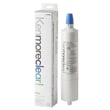
| Slow water, weak ice production | Restricted filter or valve issue | Kenmore refrigerator water filter 9990 5231JA2006E |
Once a refrigerator gets past the 10-year mark, small airflow, defrost, or water-supply issues can make it run longer and hotter than normal. That extra strain shortens the life of major components and increases energy use.
- Use the 79577573600 owner's manual for care, cleaning, and troubleshooting guidance.
- If your display shows an error, use Kenmore 795 model bottom freezer refrigerator error codes to narrow down the likely failure.
Last updated: February 2026
Why is my Kenmore Elite refrigerator leaking water out of the bottom?
Water leaking from the bottom of your Kenmore Elite 79577573600 refrigerator is usually caused by a defrost drain problem (water cannot reach the drain pan), a leak in the water supply line to the ice maker or dispenser, or ice melting and overflowing from the ice bin. Check the drain path and all water line connections first using the 79577573600 owner's manual.
- Clogged or frozen defrost drain: Water from the defrost cycle backs up and spills into the fresh food section, then runs down to the floor.
- Loose or leaking water line connection: The manual notes to check for dripping at water line connections and tighten any that leak.
- Cracked or pinched tubing: Look for wet spots along the tubing run, especially where it passes through cabinets or behind drawers.
- Ice maker left on with ice in the bin: The manual warns that ice can melt and leak onto the floor if the ice maker is turned off with ice still in the bin.
- Water hammer in home plumbing: Banging pipes can stress the inlet valve and fittings and lead to leaks.
- Unplug the refrigerator and pull it out enough to inspect behind it.
- Look for the source: Is the water coming from the back (water line area) or from inside the cabinet (defrost drain area)?
- Inspect the water supply connections at the shutoff valve and at the refrigerator; tighten fittings that seep.
- Check tubing condition; replace damaged lines with the correct tubing for this model, such as refrigerator water tubing MJU62070602.
- If the leak is tied to ice maker use, empty the ice bin and confirm the ice maker is operating normally.
| Leak symptom | Most likely area | Part that often applies |
|---|---|---|
| Water on floor near back of unit | Supply connection or valve | Refrigerator water inlet valve MJX41178908 |
| Slow seep, wet tubing path | Tubing/fittings | Refrigerator water tubing MJU62070602 |
| Puddle after defrost cycle | Defrost drain/drain pan path | Drain system cleaning (no part required first) |
A small leak can turn into floor damage and can also cause ice buildup, poor cooling airflow, and repeated ice maker or dispenser problems. Fixing the drain path or a dripping connection early prevents bigger repairs.
Last updated: February 2026
What are the common problems with Kenmore Elite refrigerators?
Common problems on the Kenmore Elite 79577573600 bottom-mount refrigerator include warm temperatures from restricted airflow, frost buildup from door sealing or defrost issues, and ice maker or water dispenser problems tied to freezer temperature and water supply. Many are resolved with cleaning, leveling, and a few targeted checks.
- Not cooling well: dirty condenser coils, blocked air vents, weak evaporator fan, or frost blocking airflow.
- Frost or ice crystals on frozen food: door not closing fully or frequent door openings letting in humid air.
- Doors hard to open or poor seal: dirty or sticky gaskets; pressure needs time to equalize after closing.
- Ice tastes bad or smells: old ice, unwrapped foods, or water quality issues.
- Slow ice or small cubes: freezer not cold enough, door left open, or restricted water flow.
- Set temperatures correctly; allow 24 hours after changes or first hookup.
- Confirm doors close tightly; remove items that block closure.
- Clean gaskets and the surfaces they touch; apply a thin coat of wax after cleaning.
- Level the refrigerator if it wobbles or doors don’t align.
- Dump old ice, rewrap foods, and clean interior surfaces to reduce odor transfer.
| Symptom | What to check | Example part for this model |
|---|---|---|
| Bad taste/odor, slow dispensing | Clogged water filter | Kenmore refrigerator water filter 9990 5231JA2006E |
| No water to dispenser | Inlet valve not opening, supply restriction | Refrigerator water inlet valve MJX41178908 |
| No ice fill or weak fill | Ice maker valve circuit issue | Refrigerator ice maker water inlet valve 5221JB2006K |
Cooling, frost, and ice maker symptoms are connected. A door seal leak or frost-restricted airflow can warm the freezer, which slows ice production and can cause temperature swings.
- Use the 79577573600 owner’s manual for troubleshooting tables on doors, frost, and ice performance.
- For display codes, use Kenmore 795 model bottom freezer refrigerator error codes.
Last updated: February 2026