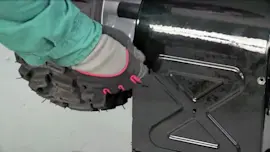
Owner’s manual
 View engine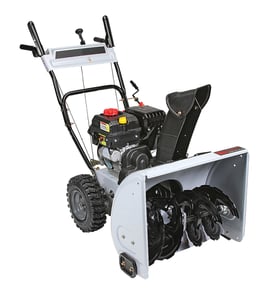


Can I use 5W30 instead of SAE 30 in my snowblower?
Yes. For Craftsman snow thrower model 247887791, we recommend 5W-30 engine oil; using SAE 30 is not the best choice for typical snowblower temperatures because it can be thicker during cold starts. For oil type, capacity, and change intervals, follow the 247887791 operator's manual.
What to use in this model
The manual for model 247887791 specifies:
- Engine oil type: 5W-30
- Oil capacity: 20 oz (approx.)
- Use a quality 4-stroke detergent motor oil meeting common service classifications (as listed in the manual)
Why 5W-30 is usually better for snowblowers
Snowblowers often start and run in cold weather. Compared with SAE 30, 5W-30 typically:
- Flows faster at cold start, helping reduce wear
- Makes pull-starting and electric starting easier
- Lubricates upper engine components sooner after startup
- Helps the engine reach stable operation more quickly
Quick comparison
| Oil type | Cold-start flow | Best use case | Fit for 247887791? |
|---|---|---|---|
| 5W-30 | Better | Cold weather operation | Yes (recommended) |
| SAE 30 | Worse | Warm weather operation | Not preferred for snow use |
Why it matters
Using the correct oil viscosity helps your engine start easier, reduces cold-start wear, and supports consistent performance when clearing heavy snow.
Last updated: January 2026
How long should a gas snowblower last?
A gas snowblower typically lasts 10 to 15 years with normal residential use and consistent maintenance. For the Craftsman 247887791, the operator’s manual also notes an average useful life of 7 years or 60 operating hours, which is a safety and inspection benchmark rather than a “fails at” date (see the 247887791 operator's manual).
What to expect for the Craftsman 247887791
The 7-year/60-hour figure is best used as a reminder to inspect wear items and safety systems more often as the machine ages.
- Many units run well beyond 7 years if belts, skid shoes, and shear pins are maintained
- Short seasons can mean low hours even after many calendar years
- Heavy, wet snow and gravel driveways increase wear on the auger housing area and drive system
- Storage practices (fuel and corrosion control) strongly affect engine life
Maintenance that most affects lifespan
Use these habits to get the longest life from your Craftsman gas snowblower:
- Use fresh fuel and avoid fuel that has been sitting for more than about 30 days
- Check engine oil before each use; change oil after the first 5 hours, then about every 50 hours/season
- Inspect and replace worn belts before they slip or shred
- Replace shear pins after an impact (never substitute bolts or hardened pins)
- Keep tire pressure in range and equal side-to-side for better drive performance
- End-of-season storage: run the engine out of fuel and protect metal surfaces from rust
Quick “life stage” guide
| Snowblower condition | What it usually means | Best next step |
|---|---|---|
| Starts easily, throws well | Normal wear | Keep up with seasonal maintenance |
| Hard starting, surging, stalls | Fuel or ignition maintenance due | Tune-up steps from the manual |
| Poor throwing distance, clogging | Belt wear, chute/auger issues | Inspect belts, auger engagement |
| Vibration or banging | Possible auger damage or shear pin issue | Stop and inspect before running |
Why it matters
Knowing the expected lifespan helps you plan preventive maintenance and replace wear parts before they cause bigger problems (like belt failure mid-storm or auger damage after an impact).
Last updated: January 2026
Where is the serial number on a snowblower?
On the Craftsman snow thrower model 247887791, the serial number is typically printed on the model and serial number ID label (a sticker or metal tag) mounted on the machine frame. On many units, you will find it toward the rear of the snowblower near the handle or back panel; confirm the exact label location using the 247887791 operator's manual.
Where to look on the machine
Check these common label locations first (with the engine off and cool):
- Rear of the unit near the handles or handle mounting brackets
- Back of the frame behind the engine area
- Side of the frame near the wheels
- Near the auger housing on the main chassis (not inside the chute)
- Under or behind a protective panel where the label is still visible
What numbers you should write down
For ordering parts and matching diagrams, we recommend recording all ID information shown on the label.
| What you see on the label | What it’s used for | Example format |
|---|---|---|
| Model number | Identifies the snowblower version | 247887791 |
| Serial number | Identifies your specific unit | Letters/numbers |
| Date code (if shown) | Helps match production run | Varies |
Tips if the label is hard to read
If the label is dirty, faded, or peeling:
- Wipe it gently with a damp cloth and mild soap; avoid harsh solvents
- Use a flashlight at an angle to make faint printing easier to see
- Take a close-up photo and zoom in
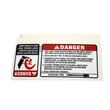
- If the label is damaged, consider replacing it with a matching decal such as the snowblower auger housing safety decal 777S32636 if your safety labels are missing (this is separate from the model/serial ID label)
Why it matters
The serial number helps confirm the exact production version of your Craftsman 247887791 snowblower, which can prevent ordering the wrong parts (especially for wear items like belts, skid shoes, and shear pins).
Last updated: January 2026