 Owner’s manual


How to hard reset a Kenmore Elite washer?
To hard reset a Kenmore Elite washer model 11047701800, we power the washer off, fully remove power for a short time, then restore power and cancel any stuck cycle using the control panel. This clears many control glitches and lets you restart a cycle normally.
Recommended reset steps (11047701800)
- Press POWER to turn the washer off.
- Unplug the washer (or switch the breaker off) for 1 minute.
- Plug the washer back in (or turn the breaker on).
- Press POWER.
- Press STOP twice to cancel any active or stuck cycle (the manual uses STOP twice as the standard cancel method).
- Select a cycle, then press and hold START for about 1 second to begin.
For the exact button names and cycle-cancel behavior on your control panel, use the 11047701800 owner's manual.
If the washer still will not respond
These checks fix the most common “looks dead” or “won’t start” situations after a reset:
- Confirm the outlet has power (test with a lamp) and the breaker is not tripped.
- Make sure the door is fully closed and latching; a failed door lock can prevent starting.
- If the washer shows a fill-related code (often tied to no water), verify both faucets are fully open.
- Check inlet hose screens for clogs and make sure hoses are not kinked.
- If the tub is full of water and the door stays locked, run DRAIN & SPIN after canceling the cycle.
| Symptom after reset | What to try next | Likely area |
|---|---|---|
| Powers on but won’t start | Cancel with STOP twice, then restart | Control state/cycle not cleared |
| Door won’t unlock | Wait for auto-drain, then try DRAIN & SPIN | High water level or temperature |
| Fill problem or “no water” behavior | Check faucets, screens, kinks | Water supply/inlet |
Why it matters
A “hard reset” clears a stuck cycle state and reinitializes the washer’s control logic. Using STOP twice (the model’s normal cancel method) prevents repeated lockups and helps you diagnose whether the issue is power, door lock, draining, or water supply.
Last updated: February 2026
Where to find model number on Kenmore Elite washer?
On the Kenmore Elite washer model 11047701800, the model number is printed on a rating label attached to the cabinet. On most units, you will find it around the door opening (door jamb) or on the cabinet near the lower front or side; confirm the exact label location in the 11047701800 owner's manual.
Common places to check first
- Door opening/door jamb: Open the washer door and look along the frame.
- Behind the door: Check the inner edge area near the hinge side.
- Lower cabinet area: Look near the bottom front corner or lower side panel.
- Back of the control panel: Some labels are placed on the rear of the console.
- Rear panel: Less common, but worth a quick look if you do not see it up front.
What the label usually shows (and what to write down)
When you find the rating label, record these items so we can match parts like a door seal or drain components correctly:
- Model number (for example, 11047701800)
- Serial number
- Electrical rating (volts/amps)
- Manufacturing code/date (varies by unit)
Model number vs. part numbers (quick comparison)
| Item | Example format | Used for |
|---|---|---|
| Model number | 11047701800 | Identifying the exact washer version |
| Part ID | WP8182119 | Ordering the correct replacement part |
| Part number | W10003800 | Manufacturer reference for the same part |
Why it matters
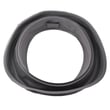
Kenmore Elite washers often have multiple revisions that look similar. Using the exact model number helps us match the correct diagrams and parts, such as the bellow WP8182119 or the washer water inlet valve WPW10156253, and prevents ordering a part that does not fit.
Last updated: February 2026
What is the life expectancy of a Kenmore washer?
Most Kenmore washers last 10 to 15 years under normal household use. For the Kenmore Elite 11047701800, regular preventive care (using HE detergent, avoiding oversudsing, and keeping the drain system clear) helps you stay in that range and reduces mid-life breakdowns.
Typical lifespan (what to expect)
Here’s a practical way to think about washer life expectancy:
- 10 to 15 years is the standard lifespan for most residential washers.
- Heavy weekly use, frequent large loads, and chronic oversudsing shorten life.
- Good habits (correct detergent, balanced loads, routine cleaning) extend life.
- If repairs start stacking up, comparing repair cost to the washer’s age is the fastest way to decide what makes sense.
What matters most for the 11047701800
Your 11047701800 is designed for years of dependable operation, and the manual notes cycle time can increase when oversudsing or unbalanced loads occur. Those same conditions also increase wear on key drive and suspension components.
- Use HE detergent only and measure carefully.
- Keep loads balanced to reduce vibration and stress.
- Address slow draining quickly; drain restrictions can lead to longer cycles and more strain.
- Follow the care and maintenance guidance in the 11047701800 owner's manual.
Quick “repair vs. replace” guide
Use this simple age-and-cost check:
| Washer age | If it needs a repair, our rule of thumb |
|---|---|
| 0 to 5 years | Repair is usually the best value |
| 6 to 10 years | Repair if the cost is reasonable and performance is otherwise solid |
| 11 to 15 years | Repair only if it’s a smaller fix and the washer is in good overall condition |
Parts that commonly affect longevity
When these wear items start failing, you’ll often see leaks, noise, or poor spinning:
- Belt WPW10388414 (slipping, squealing, no/weak spin)
- Bellow WP8182119 (door boot leaks, mildew odors, visible tears)
- Washer water inlet valve WPW10156253 (slow fill, fill errors, hot/cold mix issues)
- Washer water-level pressure switch WPW10415587 (overfilling, underfilling, level sensing problems)
Why it matters
Knowing the typical 10 to 15 year lifespan helps you plan: routine maintenance can prevent nuisance failures, and age-based decisions keep you from over-investing in a washer that is already near the end of its expected service life.
Last updated: February 2026
Where is the filter located on a Kenmore Elite washing machine?
On Kenmore Elite washer model 11047701800, the drain pump filter is typically located at the lower front of the washer, behind a small access panel (or behind the lower toe/kick panel). Use the steps in the 11047701800 owner's manual to access the lower front area safely and control water spills.
How to find and access the filter (most common setup)
- Unplug the washer to prevent accidental starting.
- Look along the bottom front edge for a small rectangular access door; if you do not see one, the lower toe panel usually comes off with a few screws.
- Place a shallow pan and towels under the opening; some water will drain out.
- Slowly open the filter cap (turn counterclockwise) and let water drain in stages.
- Remove lint, coins, hair pins, and small socks; then reinstall the cap snugly.
What this “filter” does (and why it clogs)
In front-load washers like this Kenmore Elite, the “filter” is part of the drain pump cleanout. It catches debris before it reaches the pump impeller, helping prevent no-drain problems and loud pump noise.
Quick symptom-to-check table
| Symptom | What to check first | Common related part |
|---|---|---|
| Washer will not drain | Pump filter cleanout for blockage | Filter WPW10730972 |
| Slow drain, water left in tub | Coins, lint, small items in filter | Hose WPW10467168 |
| Leaks at the door area | Door boot tears or loose fit | Bellow WP8182119 |
Why it matters
A clogged pump filter can extend cycle time, leave water in the drum, and strain the drain system. Cleaning it periodically helps your washer drain correctly and reduces odor-causing residue.
Last updated: February 2026
Is the Kenmore Elite a HE washer?
Yes. The Kenmore Elite washer model 11047701800 is a high-efficiency (HE) washer; it’s designed to use HE detergent only and manages water levels and cycle action to clean well with less water and energy. For cycle and detergent details, use the 11047701800 owner's manual.
How to tell it’s HE (and what to use)
- Use HE detergent only; standard detergent can cause oversudsing and longer cycle times.
- Measure detergent carefully; more soap does not mean cleaner clothes.
- Expect lower water levels than older washers; that’s normal for HE performance.
- If you see a SUD routine or extended time, it’s often correcting oversudsing.
- Use the warmest safe water temperature for fabrics; follow garment care labels.
What HE changes in day-to-day washing
HE washers rely on controlled water levels, higher spin speeds, and longer wash action to lift soil efficiently.
| If you notice | Most common cause | What to do |
|---|---|---|
| Excess suds, longer cycle | Too much detergent or non-HE detergent | Switch to HE detergent; reduce dose |
| Poor rinsing | Overdosing detergent | Use less detergent; consider an extra rinse |
| Vibration or “walking” | Unbalanced load | Redistribute items; avoid single heavy items |
Why it matters
Using the correct HE detergent amount helps protect key components (like the drain system and door seal area) and keeps cycles running at the intended time and performance.
Last updated: February 2026
What does F70 mean on a Kenmore washer?
On the Kenmore Elite washer model 11047701800, the F70 code points to a communication problem between the main control and the motor control (often called the motor controller or MCU). Reset power first; if the code returns, focus troubleshooting on wiring connections and the motor control circuit.
Quick checks we recommend first
- Press STOP twice to cancel the cycle.
- Unplug the washer (or switch off the breaker) for 1 minute, then restore power.
- Run a short cycle (such as Express Wash) to see if the code returns.
- If there is water in the tub, select Drain & Spin before restarting.
- Review the error-code and reset steps in the 11047701800 owner's manual.
What usually causes an F70 code
F70 is most often triggered by an intermittent connection or a failed control component. Common causes include:
- Loose or oxidized wire harness connections between the main control and motor control
- Pinched or damaged wiring (especially after vibration or moving the washer)
- Motor control board failure
- Main control board failure
- Power supply issues (outlet, cord, or internal noise) that interrupt communication
Parts that are commonly involved (when symptoms match)
If you find damaged wiring or repeated communication faults, these model-listed parts are often checked during diagnosis:
| Symptom you notice | What to inspect | Example part for this model |
|---|---|---|
| Stops mid-cycle, won’t continue | Harness plugs and locking tabs | Washer wire harness W10167278 |
| Intermittent codes after vibration | Harness routing, rub points | Washer wire harness W10167287 |
| Code appears with heavy loads | Connections plus drive system drag | Belt WPW10388414 |
Why it matters
When the controls cannot reliably “talk” to the motor controller, the washer may stop for safety, leave water in the tub, or fail to spin. Catching a loose connector early can prevent repeat shutdowns and reduce strain on the drive system.
Last updated: February 2026
How many cubic feet is my Kenmore Elite washer?
Your Kenmore Elite washer model 11047701800 has a 4.5 cu. ft. capacity. This is the tub volume used to compare washer sizes and to choose compatible accessories such as pedestals and stacking kits; confirm the spec listing in the 11047701800 owner's manual.
How to verify capacity on your washer
Use these quick checks to make sure you are matching the correct specifications for model 11047701800.
- Find the model tag around the door opening and confirm it reads 11047701800
- Check the specifications section in the 11047701800 owner's manual for the listed capacity
- Compare capacity (cu. ft.) when shopping for a replacement washer, not just exterior dimensions
- If you plan to stack, confirm the correct kit and installation clearances
What 4.5 cu. ft. means for load size
A 4.5 cu. ft. front-load washer is designed for family-size loads and many bulky items.
| Capacity | Typical use | Loading tip |
|---|---|---|
| 4.5 cu. ft. | Family loads, towels, many comforters | Load loosely; leave space for tumbling |
Why it matters
Using the correct capacity helps prevent overloading (vibration, longer cycle times, poor rinsing) and helps you choose compatible accessories. If you are stacking a matching dryer, use the correct kit for safe fitment, such as the laundry appliance stacking kit 8541503.
Helpful performance tips
- Use HE detergent only to reduce oversudsing and extended cycle time
- Wash bulky items in smaller batches to keep the load balanced
- If the washer shakes, redistribute the load and run Drain & Spin
Last updated: February 2026





