Owner’s manual
 Error Codes


How to remove bottom grill from KitchenAid refrigerator?
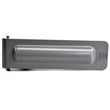
On KitchenAid model KRMF706ESS01, the bottom grill (base grille) is designed to snap on and off. Open the freezer drawer for access, grasp the grille with both hands, and pull it straight toward you to release the retaining clips.
Steps to remove the bottom grill (base grille)
- Open the freezer drawer so you can reach the lower front edge.
- Place both hands near the ends of the grille for better control.
- Pull the grille straight toward you (do not twist) until the clips release.
- Lift the grille away and set it on a soft surface to prevent scratches.
Reinstalling the grill
- Align the ends of the grille with the openings near the leveling and brake-foot areas.
- Push the grille straight back until it snaps into place.
- Confirm it sits flush and even across the front.
What’s behind the grill (and why it matters)
Removing the base grille on KRMF706ESS01 gives access to components you may need for routine care and door-closing issues.
- Brake feet and front rollers (used for leveling and stability)
- Front condenser area (may need periodic cleaning in dusty or pet-heavy homes)
- Floor clearance points (helps prevent vibration and rubbing)
Quick reference
| Term you might hear | What it means | Where it is |
|---|---|---|
| Base grille | Bottom grill | Lower front of the refrigerator |
| Toe grille | Another name for base grille | Same part, same location |
Parts note (if the grill is cracked or won’t stay on)
If the grille tabs are broken or it will not snap back securely, the model-matched replacement is the refrigerator grille: refrigerator grille W10871842. For the exact removal and leveling procedure for this refrigerator, follow the KRMF706ESS01 refrigerator user manual.
Last updated: January 2026
What is the most common problem with a KitchenAid refrigerator?
For the KitchenAid KRMF706ESS01, the most common issues we see are ice maker and water dispensing problems (slow or no ice, clumping, low water flow) and cooling complaints (too warm, temperature swings). Many of the first checks are outlined in the KRMF706ESS01 user manual.
Most common symptoms (and what they usually point to)
- Ice maker not making ice or making small/hollow cubes: water supply not fully on, kinked line, low pressure, or a clogged/incorrectly installed filter
- Ice dispenser jams or clumps: humidity and ice buildup in the chute or bin
- Water dispenser flow is weak or drips: air in the line after a filter change, low pressure, or a restricted filter
- Refrigerator section too warm: blocked air vents, frequent door openings, warm food load, or control settings
- Noisy operation: normal valve, fan, and defrost sounds; sometimes items vibrating on the cabinet
Quick checks we recommend first (KRMF706ESS01-SPECIFIC basics)
- Confirm cooling is ON (not in Cooling Off or Showroom mode).
- Verify doors and drawers close and seal fully.
- Check that air vents are not blocked by food packages.
- If ice or water is affected, confirm household water pressure is in the typical operating range (the manual notes 35 to 120 psi for dispenser/ice maker operation).
- After any filter replacement, flush the water system to purge air.
Parts that commonly relate to these problems
If troubleshooting points to a failed component (not just a setting or blockage), these model-compatible parts are often involved:
| Symptom | What to inspect | Model-compatible example |
|---|---|---|
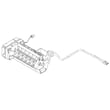
| No ice, slow ice, dispenser issues | Ice maker assembly | Refrigerator ice maker W11658802 |
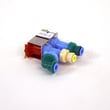
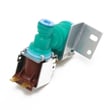
| Low water flow, no fill to ice maker | Water inlet valve | Refrigerator water inlet valve assembly WPW10341329 |
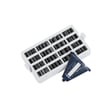
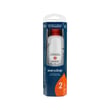
| Odors in fresh food section | Air filter | Refrigerator air filter W10311524 |
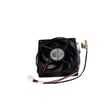
| Warm temps, poor airflow | Evaporator fan and sensor | Refrigerator evaporator fan and temperature sensor assembly W11087438 |
Why it matters
Ice and cooling problems can look serious, but on the KRMF706ESS01 they often trace back to water flow, airflow, or maintenance items. Catching those early helps protect food temperatures, improves ice quality, and can prevent unnecessary part replacement.
Last updated: January 2026
Why is water collecting in the bottom of my KitchenAid refrigerator?
Water collecting at the bottom of your KitchenAid KRMF706ESS01 refrigerator is usually caused by moisture or water entering the fresh-food compartment and not evaporating fast enough. For this model, our best model-specific starting points are door sealing, humidity, and dispenser or water-line related dripping noted in the troubleshooting guidance.
What to check on KRMF706ESS01 first
Use the troubleshooting and care guidance in the KRMF706ESS01 refrigerator user manual as your baseline, then check these common sources:
- Door gaskets and door closing: dirty or sticky gaskets can prevent a full seal
- Doors or drawers not fully closed: warm, humid air can create excess moisture
- Dispenser dripping: a few drops after dispensing can be normal, but frequent dripping is not
- Water filter recently changed: air in the lines can cause dripping until the system is flushed
- Water line connections: loose fittings can leak and run down into the cabinet
Quick isolation steps (no disassembly)
- Dry the pooled water and place a paper towel where water first appears.
- Avoid using the dispenser for a few hours; see if the puddle stops.
- Inspect and clean the gasket contact surfaces with mild soap and warm water; dry fully.
- If the filter was recently installed, flush the system per the manual.
Symptom guide
| What you notice | Most likely area to focus | What to do next |
|---|---|---|
| Water near dispenser area | Dispenser drip, filter seating, air in lines | Flush system; recheck filter installation |
| Moisture and droplets inside | Humid air from frequent openings or poor seal | Clean gaskets; confirm doors close fully |
| Water seems to start from rear/bottom | Water line connection or drain pan overflow | Check rear connections and pan area |
Parts that may be involved
If you confirm the issue is tied to water supply (leaking at the back, slow fill, or inconsistent dispensing), the inlet valve can be a suspect. For this model, see the refrigerator water inlet valve assembly WPW10341329.
Why it matters
Standing water can lead to odors, slippery shelves, and intermittent icing that affects airflow and temperature stability.
Last updated: January 2026