Error Codes


How do I tell what model Kenmore stove I have?
To identify your Kenmore stove model, look for the model/serial tag on the range itself; on Kenmore electric ranges like model 970-445341, it’s commonly on the oven door frame (door jamb), behind the storage or warming drawer, or on the back panel near the vent.
Where to look on a Kenmore range (most common spots)
- Open the oven door and check the frame around the opening (door jamb).
- Pull out the storage drawer or warming drawer and look on the frame behind it.
- Check the back panel of the range near the vent area.
- Look along the side frame behind the lower drawer opening.
- If the range is slide-in, check the side trim areas after pulling the unit forward (only if safe to do so).
What the label looks like (and what to write down)
The tag is usually a sticker or metal plate and may say Model, Mod, or MOD. NO.
Write down:
- Model number (example: 970-445341)
- Serial number (helps confirm production run and compatible parts)
- Any revision or suffix characters if shown
Quick check: model number vs. part number
| Item | What it identifies | Example |
|---|---|---|
| Model number | The exact range version | 970-445341 |
| Part number / part ID | A replaceable component | 316538904 |
Why it matters
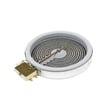
We use the exact model number to match the correct diagrams and manufacturer-approved parts for your Kenmore range. Even small model differences can change which oven sensor, surface element, or control parts fit.
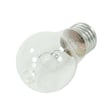
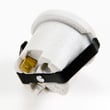
If you’re replacing the oven light, confirm the model first, then match the replacement to a compatible part such as the bulb 316538904.
Last updated: January 2026
Can you replace the oven heating element in a Kenmore oven?
Yes. On the Kenmore 970-445341 electric range, you can replace an oven heating element if you use the correct replacement part and follow safe electrical shutoff steps; the basic process is removing mounting screws, transferring wires, and reinstalling the element.
Before you start (safety and prep)
- Turn off power at the breaker (electric ranges can be hard-wired or plugged in).
- Let the oven cool completely.
- Pull the range forward only as needed; avoid stressing the power cord.
- Use work gloves; sheet metal edges inside the oven can be sharp.
- If wiring looks burned or brittle, stop and plan to repair the connection before installing the new part.
Which “heating element” are we talking about?
Kenmore ranges typically have more than one oven heating element. For model 970-445341, common element types include:
- Bake element (bottom heat for baking)
- Broil element (top heat for broiling)
- Convection element (rear element on convection models)
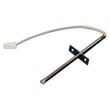
If your issue is “no heat” or uneven baking, we also recommend checking the oven temperature sensor because it can cause heating problems even when an element looks fine; see sensor probe 316217002.
Quick comparison
| Part type | Where it is | Common symptom when failed |
|---|---|---|
| Bake element | Oven bottom | Oven won’t bake or takes very long to preheat |
| Broil element | Oven top | No broil, weak broil |
| Convection element | Rear wall (behind cover) | Convection bake weak or uneven |
Basic replacement steps (most Kenmore electric ranges)
- Shut off power at the breaker.
- Remove oven racks for access.
- Remove the element mounting screws (usually at the rear of the oven cavity).
- Gently pull the element forward a few inches.
- Disconnect the wires (note positions); do not let wires fall back through the insulation.
- Connect the new element, reinstall screws, and restore power.
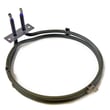
For a model-matched broil element option, see oven broiler element 318255605.
Why it matters
A failing element can cause long preheat times, poor temperature control, and inconsistent cooking. Replacing the correct element for Kenmore 970-445341 restores proper heat output and helps prevent overheating at damaged terminals.
Last updated: January 2026
How many amps does a Kenmore oven use?
For the Kenmore 970-445341 electric range, the exact amp draw can vary by which heating elements are on (bake, broil, convection, surface burners), so we can’t give one single model-specific number without the unit’s electrical rating details. Most electric ovens are on a 240V circuit and commonly use a 40A or 50A range circuit.
What to expect for a 970-445341 electric range
Your range’s current draw changes with load. For example, preheating with bake plus convection can pull more current than maintaining temperature.
Typical situations that increase amp draw:
- Oven preheat (bake element running continuously)
- Broil on high (broil element at full power)
- Multiple surface elements on at the same time
- Convection element and fan running together
- Self-clean cycle (often the highest sustained load)
Quick estimate: amps from watts (general guidance)
If you can find the wattage on the range’s rating label, you can estimate amps:
| What you know | Formula | Example |
|---|---|---|
| Total watts at 240V | Amps = Watts ÷ 240 | 10,000W ÷ 240V ≈ 41.7A |
| Single element watts at 240V | Amps = Watts ÷ 240 | 3,000W ÷ 240V ≈ 12.5A |
Why it matters
Knowing approximate amps helps you confirm the home circuit (breaker size and wire gauge) is appropriate and helps troubleshoot issues like tripping breakers or weak heating.
When to suspect a heating problem (not a wiring-size issue)
If the circuit is correct but the oven heats poorly, a failed component is more likely than “low amps.” Common suspects include:
- A weak or open broil element (for broil or preheat assist)
- A temperature sensor reading incorrectly
- A loose or overheated power connection
If broil performance is poor, check the oven broiler element 318255605. If temperatures are inaccurate or you see related fault codes, the sensor probe 316217002 is a common fix.
For display fault codes and what they mean on many Kenmore electric ranges, use Kenmore 2004 and newer self-cleaning electric range error codes.
Last updated: January 2026
What does F9 mean on a Kenmore oven?
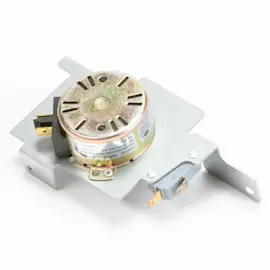
On Kenmore range model 970-445341, an F9 (and related F90–F95) error typically points to a problem with the oven door lock system, most often during or after self-clean. The issue is usually the latch motor, door lock switch alignment, or wiring to the lock.
What to do first (safe checks)
- Press Cancel/Off and let the oven cool completely.
- If the code appeared after self-clean, wait 60 to 90 minutes for the lock to cool and attempt to unlock.
- Power reset: turn the range breaker off for 1 minute, then back on.
- Check that the oven door is fully closed and not binding on the frame.
- If the door is stuck locked, avoid forcing it; the latch can bend and create a repeat failure.
Parts that commonly cause an F9 door lock error
For this model, the most common repair path is inspecting the lock motor and its connections. A failed motor or a jammed latch can prevent the control from sensing the correct lock position.
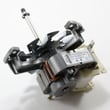
- Latch motor 318095956
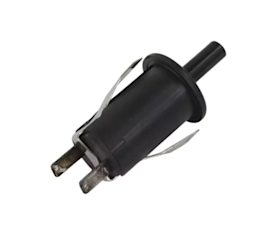
- Door lock switch or latch alignment (varies by revision)
- Wiring harness connections at the latch and control
Quick symptom-to-likely-cause table
| What you notice | Most likely cause | What we recommend |
|---|---|---|
| F9 right after self-clean | Latch not returning to unlock | Cool down, reset power, inspect latch movement |
| Door stays locked, won’t open | Latch motor stuck or switch not changing state | Check/replace latch motor, verify switch alignment |
| F9 comes and goes | Loose connection or failing motor | Reseat connectors, inspect wiring, replace motor if intermittent |
Why it matters
The control uses the door lock feedback to keep self-clean safe. If the latch position signal is wrong, the oven may disable baking or keep the door locked to prevent unsafe operation.
Helpful reference
If you want a broader list of Kenmore range fault codes and what they mean, use our Kenmore 2004 and newer self-cleaning electric range error codes guide to compare symptoms and next steps.
Last updated: January 2026