Owner’s manual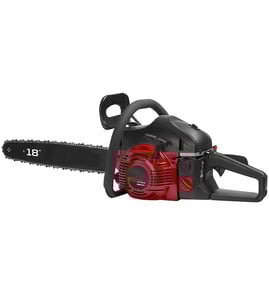





Where is the model number on a chainsaw?
On the Craftsman chainsaw model 358350982, the model number is typically printed on the product identification label (often near the rear handle, starter housing, or engine housing). If the label is worn or missing, the model number may also appear on a separate ID tag; confirm the exact location using the 358350982 manual.
Look over the saw carefully with the engine off and cool:
- Rear handle area (near the throttle trigger and safety lock)
- Starter/recoil housing side (near the pull cord cover)
- Engine housing or crankcase area
- Under the top cover (near the air filter cover)
- Bottom of the chassis/frame (less common)
Model/serial information is usually on a sticker or metal tag. Here is what you may see:
| What you see | What it means | What to do |
|---|---|---|
| Clear sticker with model and serial | Best case | Write down both numbers for parts lookup |
| Sticker is scratched or oil-stained | Partially readable | Clean gently and use a flashlight at an angle |
| Sticker missing | No ID label present | Check for an ID tag or stamped marking; use the manual diagrams |
- Wipe dirt and oil with a rag (avoid soaking the label)
- Use a flashlight from the side to highlight raised print
- Take a close-up photo and zoom in
- Check more than one surface; some saws have both a label and an ID tag
We use the full model number to match the correct diagrams and compatible parts (for example, fuel system and starting components). Even a single digit difference can change which parts fit.
Last updated: January 2026
Can I scrap a chainsaw?
Yes. You can scrap a Craftsman gas chainsaw model 358350982; most of the unit is metal and can be recycled as scrap after you safely drain and remove all fuel and bar oil, and separate any non-metal pieces. For model-specific safety steps, follow the 358350982 owner’s manual.
- Let the engine cool completely and wipe off excess oil and sawdust.
- Drain the fuel tank and run the engine briefly (if it will run) to help empty the carburetor.
- Drain the bar-and-chain oil tank.
- Remove the spark plug lead so the saw cannot accidentally start.
- Remove the bar and chain; handle the cutters carefully.
Most scrap yards want “clean” metal. Separate items that are not metal or that contain fluids.
| Item | Typical handling | Notes |
|---|---|---|
| Engine and metal chassis | Scrap metal | Drain all fluids first |
| Guide bar and chain | Scrap metal | Sharp edges; wrap for transport |
| Plastic covers/handles | Trash or plastics recycling (if accepted) | Varies by facility |
| Fuel, mixed gas, bar oil | Household hazardous waste | Do not pour into drains or soil |
If you are scrapping because the saw is worn out, it can still be worth removing easy-to-sell or reusable components.
- Chainsaw chain 577180501 (remove for safe transport)
- Air filter, fuel cap, and other external service parts
- Starter components if they are in good shape
Gas chainsaws can hold gasoline and bar oil that contaminate recycling loads and create fire risk. Draining fluids and separating materials helps the scrap yard accept the saw and keeps disposal safe.
Last updated: January 2026
Should I use 40 1 or 50 1 fuel for a chainsaw?
For the Craftsman 358350982 gas chainsaw, use the fuel-to-oil mix ratio specified in the 358350982 owner’s manual. If you cannot confirm the exact ratio for your saw, the safest default for most modern 2-cycle chainsaws is 50:1 using a quality 2-cycle oil; avoid switching ratios unless the manual calls for it.
We treat the manual as the final authority because the carburetor tuning and engine design are matched to a specific oil ratio.
- Use 50:1 when the manual specifies it; it is the most common modern spec.
- Use 40:1 only when the manual specifies it (or for certain older designs that require more oil).
- If you are unsure, do not guess; confirm the ratio first to prevent piston and cylinder damage.
- Always use fresh, ethanol-free fuel when possible and a 2-cycle oil rated for air-cooled engines.
- Mix accurately using a marked mixing bottle; “a little extra oil” is not a reliable strategy.
| Ratio | 2-cycle oil per 1 gallon gas | Common use case |
|---|---|---|
| 50:1 | 2.6 oz | Most modern homeowner and pro saws |
| 40:1 | 3.2 oz | Some older saws or manual-specified applications |
A wrong mix ratio can show up as hard starting, rough idle, bogging, or excessive smoke. If fuel system issues are suspected (especially on older fuel), these parts are commonly involved:
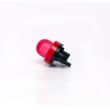
- Ayp lawn & garden equipment engine carburetor primer bulb 530047721 (cracked bulb pulls air)
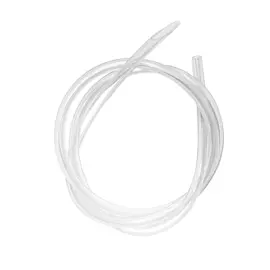
- Chainsaw fuel line kit 580727101 (leaks or soft lines cause lean running)
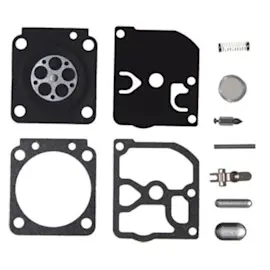
- Ayp chainsaw carburetor 573952201 (varnish or diaphragm issues)
- Ayp chainsaw air filter 575296301 (restricted airflow changes mixture)
For step-by-step fuel system guidance, use tips for a hard to start chainsaw.
On a 2-cycle engine like the Craftsman 358350982, the oil in the fuel provides critical lubrication for the crankshaft bearings, piston, and cylinder. Too little oil risks rapid wear and seizure; too much oil can increase deposits and reduce performance.
Last updated: January 2026