 Owner’s manual


How to tell if a Whirlpool drain pump is bad?
A bad drain pump on your Whirlpool LSB6200KQ0 washer usually shows up as standing water left in the tub, a drain cycle that only hums, or grinding noises while draining. We confirm it by ruling out clogs first, then checking whether the pump actually moves water during drain.
- Water remains in the tub after the cycle ends
- Washer stops mid-cycle when it should be draining
- Loud grinding or rattling during drain (debris hitting the impeller)
- Humming sound but little or no water flow
- Slow drain that improves briefly after you clear the hose (recurring restriction or weak pump)
- Unplug the washer (electrical shock hazard).
- Verify the drain hose is not kinked, crushed, or shoved too far down the standpipe.
- Check for a clog in the drain hose or tub-to-pump hose (coins, socks, lint).
- Listen during drain: your manual notes that you can hear air being pulled through the pump near the end of draining when water drains quickly; that sound can be normal. Use the LSB6200KQ0 owner's manual to compare normal drain sounds versus abnormal grinding.
| What you notice | More likely cause | What we do next |
|---|---|---|
| Pump hums, no water moves | Jammed impeller or failed pump motor | Inspect hoses and pump inlet for debris; then test pump electrically |
| Water drains but very slowly | Partial blockage or weak pump | Clear restrictions; check for recurring debris |
| Loud grinding during drain | Debris in pump | Remove debris; re-test drain |
| Drains fine, then won’t spin | Not always the pump | Check lid switch and drive system components |
If the hoses are clear and the pump still will not drain, we test the pump motor for continuity/resistance with a multimeter (exact readings vary by pump design). A reading that is open (no continuity) points to a failed pump motor.
A washer that cannot drain will not complete the cycle correctly and can leave clothes soaking wet. Catching a weak or jammed pump early helps prevent repeated mid-cycle stoppages and reduces strain on the drive system.
Last updated: February 2026
How do I fix a low flow error on my washing machine?
A low flow (slow fill) problem on your Whirlpool LSB6200KQ0 washer is usually caused by restricted water supply to the washer. We fix it by confirming both faucets are fully open, straightening any kinked inlet hoses, and cleaning the inlet valve screens where the hoses connect.
- Turn both hot and cold water faucets fully on.
- Make sure the inlet hoses are not kinked, crushed, or pinched behind the washer.
- Unscrew the hoses at the back of the washer and clean the small inlet screens (sediment often blocks them).
- Check that the cycle control knob is properly lined up with a cycle and pulled to start.
- If your home hot water has not been used for 2 weeks or more, run hot water at a faucet for several minutes before washing (this also follows the safety guidance in the owner's manual).
- Unplug the washer.
- Turn off both water faucets.
- Place a towel or shallow pan under the hose connections.
- Remove the hot and cold inlet hoses from the washer.
- Carefully rinse or brush debris off the screens in the washer inlet ports.
- Reconnect hoses, turn faucets on, and test a fill.
If the screens are clean and water pressure to the hoses is strong, the water inlet valve can still be restricted internally.
| Symptom | Most likely cause | Common fix |
|---|---|---|
| Slow fill on both hot and cold | Clogged inlet screens or low supply pressure | Clean screens; verify faucets fully open |
| Slow fill on one temperature only | Debris in that side of valve or hose | Clean screens; swap hoses to confirm supply |
| No fill but washer has power | Valve not opening or control issue | Test/replace inlet valve if needed |
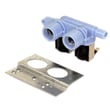
For this model, the replacement part is the washer inlet valve 285805.
Low flow can prevent proper wash action, cause long cycle times, and lead to poor rinsing. Restoring normal fill protects the drive system and helps the washer clean consistently.
Last updated: February 2026
What is the most common problem with Whirlpool washers?
The most common Whirlpool washer problems are failure to drain or spin, leaking, and poor agitation. On a direct-drive top-load model like Whirlpool LSB6200KQ0, these symptoms often trace back to a worn drive coupling, a failing lid switch, or a water inlet valve issue; start with the simplest checks in the owner's manual.
- Won’t drain or spin: lid switch not closing, drive coupling worn, or a mechanical drive issue
- Won’t agitate or weak agitation: worn agitator dogs or a drive coupling problem
- Leaking: loose fill hoses, inlet valve seepage, or tub seal/gasket issues
- Loud noise or burning smell: clutch or gearcase wear, or a slipping drive component
- Overfilling or wrong water level: pressure hose/switch problems
- Confirm the lid closes firmly and the washer starts only with the lid shut.
- Check fill and drain hoses for kinks, cracks, and loose clamps.
- Run a small load to rule out an unbalanced or overloaded basket.
- Listen during agitation and spin: a rattling or grinding sound points to drive components.
- Inspect common wear parts if symptoms match.
| Symptom | Common cause | Part on this model page |
|---|---|---|
| Agitator moves poorly or “clicks” | Worn agitator dogs | Agitator dog 80040 |
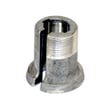
| Washer won’t spin or agitate | Worn motor coupling | Washer motor coupling 285753A |
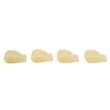
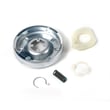
| Spins weakly, smells hot, noisy in spin | Worn clutch | Clutch 285785 |
| Won’t fill or fills slowly | Inlet valve problem | Washer inlet valve 285805 |
Catching a drain/spin, leak, or agitation problem early helps prevent secondary damage to the gearcase, basket drive, and tub components. It also keeps loads from coming out overly wet, so you avoid extra wear on clothing and longer dry times.
Last updated: February 2026
How do I reset the lid lock on my Whirlpool washer?
On the Whirlpool LSB6200KQ0 washer, the most reliable lid lock or lid switch reset is a power reset: stop the cycle, unplug the washer for 5 minutes, then restore power and restart with the lid fully closed. This clears temporary control interruptions and rechecks lid status.
- Push the Cycle Control knob in to stop the washer.
- Unplug the washer for 5 minutes.
- Plug the washer back in.
- Close the lid firmly; press down near the lid switch area.
- Pull the Cycle Control knob out to restart.
- Wait for the tub to stop moving before attempting to open the lid.
For the exact start, stop, and restart procedure for LSB6200KQ0, follow the LSB6200KQ0 owner's manual.
A reset helps with temporary issues; persistent problems usually point to a lid switch, alignment, or cycle completion problem.
- Make sure the lid closes squarely and is not bent or loose on the hinges.
- Listen for a click when the lid closes; no click often indicates a lid switch problem.
- If the washer will not advance, verify it is draining; many washers will not proceed to spin until water level is safe.
- Check for a broken lid switch actuator (the small plastic piece that presses the switch).
- If the cycle stalls during agitation or spin, a drive issue can prevent the washer from finishing the cycle.
| What you notice | What to check | Part example for LSB6200KQ0 |
|---|---|---|
| Washer will not run when lid is closed | Lid switch circuit and mounting | Switch 3949247V |
| Agitates but will not spin or complete cycle | Drive connection between motor and transmission | Washer motor coupling 285753A |
| Agitator movement is weak or slips | Agitator dogs | Agitator dog 80040 |
The lid switch system is a safety feature. If the washer cannot confirm the lid is closed, it can stop agitation or spin to prevent injury and reduce the chance of water spills.
Last updated: February 2026





