Owner’s manual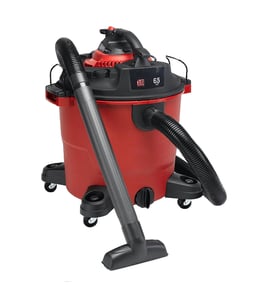




Why is my Craftsman vacuum not suctioning?
Reduced suction on the Craftsman 12512009 wet/dry vacuum is usually caused by a clogged or missing cartridge filter, a blockage in the hose/nozzle/tank inlet, or the float shutting off airflow when the tank is full during wet pickup. Use the steps in the 12512009 owner's manual to restore normal airflow.
- Unplug the vacuum, then check the nozzle, hose, and tank inlet for a clog (packed debris, fine dust, or a stuck object).
- Confirm the cartridge filter is installed correctly for dry pickup; running without it can damage the motor.
- Clean or replace the cartridge filter if it is loaded with fine dust.
- If you were vacuuming liquid, empty the tank; the float valve can stop suction when the tank reaches capacity.
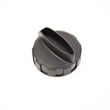
- Make sure the drain cap is installed tightly after draining.
- Verify the switch is set to ON and the outlet has power (breaker/fuse).
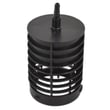
For dry vacuuming, this model is designed to use a cartridge filter on the filter cage; a clogged filter reduces airflow and a missing filter can let dust blow out of the motor cover.
For wet vacuuming, suction can stop when the float rises as the tank fills. Drain the tank, then continue.
| Symptom | Most likely cause | What to do |
|---|---|---|
| Strong motor sound but weak pickup | Clogged cartridge filter or hose blockage | Clean/replace filter; clear hose/nozzle |
| Suction stops during wet pickup | Tank full; float valve activated | Turn off, unplug, drain tank |
| Dust blowing from motor cover | Cartridge filter missing or damaged | Install/replace filter |
If the filter mounting area is loose or damaged, inspect the filter cage components.
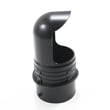
- Shop vacuum filter cage assembly 551006104 (supports the cartridge filter fit on the cage)
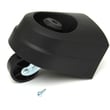
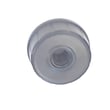
- Float 551005103 (shuts off suction when the tank is full during wet pickup)
Low suction is almost always an airflow restriction or a safety shutoff. Clearing blockages and keeping the correct filter installed protects the motor, improves pickup, and helps prevent dust from escaping.
Last updated: February 2026
What is the list of vacuum cleaner parts?
For the Craftsman 12512009 wet/dry vacuum, the parts list centers on the power head (motor and switch), collection tank, hose and vacuum port, filters, and the wet pickup safety float. Common accessories include nozzles and tools; common service parts include filter supports and storage racks (see the 12512009 operator’s manual).
- Power head (motor housing, switch, cord)
- Collection tank and latches
- Hose and vacuum port connection
- Cartridge filter system (filter and filter support/cage)
- Float (shuts off suction when liquid level rises)
- Attachments and nozzles (utility nozzle, crevice tool, squeegee)
- Storage accessories (hose storage rack)
These are examples of parts we commonly replace on the Craftsman 12512009:
| Part type | What it does | Example part for this model |
|---|---|---|
| Filter support | Holds the cartridge filter in place | Shop vacuum filter cage assembly 551006104 |
| Wet pickup safety | Helps prevent overfilling during liquid pickup | Float 551005103 |
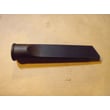
| Narrow cleaning tool | Reaches tight spaces | Shop vacuum crevice tool 16902 |
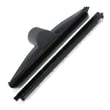
| Floor wet pickup | Helps pull liquid off hard floors | Shop vacuum squeegee 551006117 |
- Match the model number exactly: 12512009
- Identify whether you are vacuuming dry debris or liquids (filter and float setup matters)
- Check for symptoms: reduced suction often points to a clogged hose/nozzle or a dirty/missing cartridge filter
- Replace worn accessories (nozzles, squeegee) when they no longer seal or pick up well
- Order by part number or part ID when possible to avoid fit issues
Wet/dry vacuums rely on the correct filter and wet pickup components for safe operation. For example, the manual calls out that dry vacuuming requires the cartridge filter installed correctly, and troubleshooting notes dust leakage and reduced efficiency when the cartridge filter is missing, damaged, or clogged.
Last updated: February 2026
Which wet dry vacuum has the best suction?
For the strongest suction in a wet/dry vacuum, we look at airflow and sealed suction together, plus how well the filter and hose stay clear under load. For the Craftsman 12512009 (20-gallon), you get strong shop-vac style pickup for wet and dry debris when the hose path is clear and the cartridge filter is installed and clean (as outlined in the 12512009 operator’s manual).
Suction claims vary by brand, so we recommend comparing these practical factors:
- Hose diameter and restrictions: wider, smoother paths clog less and keep suction steadier.
- Filter condition: a clogged cartridge filter reduces airflow quickly.
- Tank and inlet blockages: debris at the nozzle, hose, or tank inlet causes immediate drop-off.
- Wet pickup protection: a working float helps prevent overfill issues that can interrupt performance.
- Real-world load: fine dust and drywall debris stress filters more than larger chips.
If your Craftsman 12512009 feels underpowered, these checks restore suction most often:
- Check the nozzle, hose, and tank inlet for a blockage.
- Remove and clean the cartridge filter; replace it if torn or missing.
- Confirm the power switch is in the ON position.
- For wet pickup, make sure the float moves freely and the tank is not overfilled.
- Use the correct extension cord gauge for the length you are using (undersized cords reduce performance).
| Symptom | Most common cause | Best next step |
|---|---|---|
| Reduced suction + vibration | Hose/nozzle clog | Clear the obstruction |
| Dust blowing from motor cover | Filter missing/damaged | Reinstall or replace filter |
| Suction drops fast on fine dust | Filter loading up | Clean filter more often |
These model-matched parts commonly tie to airflow and wet pickup:
- Shop vacuum filter cage assembly 551006104 (supports proper filter fit)
- Float 551005103 (helps shut off airflow when the tank is full during wet pickup)
“Best suction” is not only motor power; it is how consistently the vacuum maintains airflow as the filter loads and as debris moves through the hose. Keeping the filter system sealed and the airflow path clear is what delivers top performance day to day.
Last updated: February 2026