Installation guide
 Owner’s manual
 Error Codes


What is the capacity of the Maytag MEDC465HW0?
The Maytag MEDC465HW0 dryer is a 7.0 cu. ft. capacity model. That capacity helps you dry larger loads (like towels or jeans) while still allowing enough room in the drum for proper tumbling and airflow; see the MEDC465HW0 use & care manual for cycle and loading guidance.
What “7.0 cu. ft.” means for everyday drying
A 7.0 cu. ft. Maytag electric dryer like the MEDC465HW0 is typically sized for:
- Full loads of everyday clothing
- Medium to large loads of towels
- Bulky items (best dried one or two at a time for airflow)
- Better tumbling space, which supports more even drying
Loading tips that help this model dry correctly
Even with a 7.0 cu. ft. drum, drying performance depends heavily on airflow and load size.
- Do not pack the drum tight; items should tumble freely
- Clean the lint screen before every load
- Use Sensor Dry/Automatic Dry when possible to avoid overdrying
- If drying times are long, check venting length and restrictions
- For very small loads, use Timed Dry to prevent early shutoff
Quick reference
| Spec | Maytag MEDC465HW0 |
|---|---|
| Dryer capacity | 7.0 cu. ft. |
| Dryer type | Electric dryer |
| Common cycle types | Sensor Dry/Automatic Dry, Timed Dry |
Why it matters
Capacity affects how much you can dry at once, but it also impacts results. Overloading reduces airflow, which can cause longer dry times, higher energy use, and more wear on components like the drum support system.
Last updated: January 2026
What's the average lifespan of a Maytag washer?
We can’t confirm an “average lifespan” for a Maytag washer from the model-specific information we have for Maytag dryer model MEDC465HW0. Washer life varies widely by design, usage, and maintenance; many households see roughly a decade of service, but results can be shorter or longer.
What we can confirm for MEDC465HW0 (and what we can’t)
The documents we have for MEDC465HW0 are for a Maytag dryer, not a washer, so they don’t provide a verified washer lifespan figure.
- Confirmed: MEDC465HW0 is a Maytag dryer model
- Confirmed: Dryer care and troubleshooting guidance is available
- Not confirmed here: Maytag washer lifespan by years
- Not confirmed here: Washer-specific warranty terms or duty-cycle expectations
For dryer maintenance practices that help any laundry setup run more reliably, use the MEDC465HW0 use and care manual.
General factors that most affect washer lifespan
Even across different Maytag washer models, these items usually matter most:
- Load size and balance (chronic overloading increases wear)
- Detergent use and residue buildup (can contribute to odors and component stress)
- Water quality (hard water can accelerate scale and valve issues)
- Installation and leveling (excess vibration shortens component life)
- How quickly small problems are fixed (leaks, grinding, draining issues)
Washer vs. dryer wear drivers (quick comparison)
| Appliance | What typically wears fastest | What helps most |
|---|---|---|
| Washer | suspension, bearings, drain components | correct loading, cleaning, leveling |
| Electric dryer (like MEDC465HW0) | heating and airflow-related components, drum support parts | lint and vent maintenance |
Why it matters
A realistic lifespan range helps you decide whether to repair or replace. If your washer is older and repairs are stacking up, comparing repair cost to replacement value is often the most practical next step.
Last updated: January 2026
What is the most common problem with Maytag dryers?
For the Maytag MEDC465HW0 dryer, the most common issues we see are clothes taking too long to dry (often tied to airflow), no heat, the dryer not starting, and the drum not turning. The best model-specific starting point is the troubleshooting and venting guidance in the MEDC465HW0 use and care manual.
Most common symptoms and what usually causes them
- Long dry times or damp clothes: lint screen buildup, restricted exhaust vent, or poor vent installation
- No heat (but drum turns): power supply issue on electric models, or a heat-system component problem
- Won’t start: door not fully closed, tripped breaker/blown fuse, or a failed start or door switch
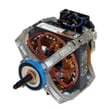
- Drum won’t tumble: belt or drum support wear, or a motor-related issue
- Unusual noise or vibration: worn rollers, pulley, or blower wheel; dryer not level
Quick checks we recommend first (fast, no tools)
- Clean the lint screen before every load.
- Check for strong airflow at the outside exhaust hood.
- Make sure the load is not overpacked; clothes should tumble freely.
- Confirm the cycle and temperature match the fabric.
- For electric dryers, verify the dryer has full 240V supply (the drum can run even if heat is out).
Symptom-to-check guide (MEDC465HW0)
| Symptom | Best first check | Next likely area |
|---|---|---|
| Long dry times | Venting and lint screen | Blower airflow, thermostats, heating circuit |
| Won’t start | Door fully shut, power | Door switch, push-to-start circuit |
| Drum not turning | Belt condition | Rollers, motor, pulley |
Parts that may be involved (only when the symptom matches)
Because exact part usage can vary by production run, we recommend matching by model and symptom rather than guessing. For MEDC465HW0, these are commonly involved components we can help you source when needed:
- No-start checks often include the dryer door switch WP3406107
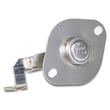
- No-heat or overheating protection can involve the amana dryer thermal cut-off fuse kit, 309-degree f W10900067
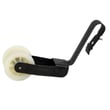
- Drum support noise can involve the support WPW10314173
Why it matters
Airflow problems are the most common root cause behind “dryer not drying” complaints; restricted venting increases drying time and energy use and can overheat the dryer, which may lead to heat shutdowns.
Last updated: January 2026