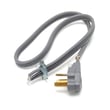
Installation guide
 Owner’s manual
 Error Codes
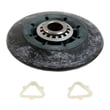


How do I reset my Kenmore Elite dryer?
To reset your Kenmore electric dryer model 11068132410, we recommend a simple power reset: turn the dryer off, unplug it (or switch off both dryer breakers) for 5 minutes, then restore power and start a cycle. This clears most control glitches after a pause or power interruption.
- Hard reset (best first step): Power off, unplug for 5 minutes, then plug back in.
- Start/Pause reset: Touch and hold START/PAUSE for up to 3 seconds to start or resume a cycle (this also clears some paused states).
- Clear a PF message (power failure): Touch START to clear the display, then press and hold START to resume.
- Clear an L2 message (low line voltage): Touch any pad to clear the code from the display, then address the power supply issue.
- If the dryer will not turn off after opening the door during Wrinkle Guard: Touch Power to turn off, or touch START/PAUSE to continue.
Many “needs a reset” complaints are caused by airflow or power problems that immediately bring the issue back.
- Clean the lint screen before starting a new cycle (the Check Lint Screen light is a reminder).
- Check the house power: electric dryers typically use two fuses or breakers; one tripped breaker can let the drum run but stop heat.
- Confirm the door closes fully and latches.
- If you see a Check Vent indicator, inspect the vent for clogs, crushing, kinks, or too many turns.
| Display/indicator | What it points to | What we do next |
|---|---|---|
| PF | Power interruption | Clear PF, then restart/resume |
| L2 | Low or no line voltage to heater | Check breakers, cord install, try Timed Dry |
| Check Vent | Restricted airflow | Clean lint screen and venting |
A reset can clear the control, but restricted venting and low voltage can keep triggering shutdowns, long dry times, or no-heat symptoms. Fixing airflow and power prevents repeat problems and protects key heating components.
For cycle and control details specific to this dryer, use the 11068132410 owner’s manual.
Last updated: February 2026
How do I tell what model my Kenmore dryer is?
Your Kenmore dryer’s model number is printed on the appliance ID label; on most Kenmore dryers (including the 110-series), it’s typically inside the door opening on the cabinet frame. Once you have the full number (for example, 11068132410), we can match the correct parts and specs.
Check these common spots first:
- Inside the dryer door opening on the front frame (most common)
- On the back panel of the dryer cabinet
- Near the lint screen housing (some designs place the label nearby)
- On the side panel edge near the door opening
- On the lower front area behind a small access panel (less common)
For diagrams and model-specific identification details, use the 11068132410 owner's manual.
Kenmore model numbers often start with a 3-digit prefix that helps identify the manufacturer family. For example, many Kenmore dryers begin with 110, and the remaining digits narrow down the exact design so we can select the right drum belt, thermal fuse, or control parts.
| What you have | What it means for parts lookup | What to do next |
|---|---|---|
| Full model number (example: 11068132410) | Exact match for parts and diagrams | Use it as-is when ordering |
| Only a partial number | Can pull the wrong parts | Re-check the label and write every digit |
| Model number plus a color code/variant | Same core model, different finish/trim | Record the full string shown |
- Copy the model number exactly as printed (include all digits)
- Take a clear photo of the label before you start shopping
- If the label is worn, use a flashlight and view from an angle
- Match parts by model first, then confirm by part name (belt, idler pulley, support roller)
Kenmore dryers can look similar across series, but internal components (like the heating circuit, drum support system, and door hardware) vary by model. Using the exact model number ensures the replacement part fits and the dryer operates safely and correctly.
Last updated: February 2026
How much does it cost to replace a heating element in a Kenmore dryer?
For Kenmore electric dryer model 11068132410, replacing the heating element typically costs $20 to $120 for the part and about $100 to $350 total if a technician does the repair (labor is the biggest variable). Use the 11068132410 owner's manual to confirm access steps and safety notes before pricing parts.
- DIY (part only): $20 to $120
- DIY (extras you may also need): $10 to $90 (wire kit, thermostat, thermal fuse)
- Professional repair (parts + labor): about $100 to $350
- Higher end totals: when multiple heat-control parts are replaced at the same time
| Scenario | What you pay for | Typical total |
|---|---|---|
| DIY element swap | Heating element only | $20 to $120 |
| DIY “heat system refresh” | Element plus safety/control parts | $40 to $200 |
| Pro replacement | Diagnosis, labor, parts | $100 to $350 |
If the dryer is not heating, the element is not the only possible cause. These model-compatible parts often get checked or replaced during a no-heat repair:
- Thermal fuse W10909685 (opens if the dryer overheats)
- Dryer high-limit thermostat WP8557403 (limits heater temperature)
- Dryer thermistor WP8577274 (helps regulate temperature)
- Dryer heating element wire kit 279457 (repairs heat-damaged wiring)
A “no heat” symptom can come from airflow problems (lint buildup, crushed vent) or a failed safety device, not just a bad element. Pricing the repair correctly means confirming the failure and fixing the root cause so the new part does not fail again.
- Clean the lint screen every load and keep the vent run short and open.
- If the dryer overheated, inspect wiring and thermostats along with the element.
- Compare replacing individual wear items versus a bundled approach when multiple parts test bad.
- Follow the electrical safety and access guidance in the installation guide.
Last updated: February 2026
What are common problems with Kenmore dryers?
Common problems we see on the Kenmore 11068132410 electric dryer include no heat, won’t start, long dry times, drum not turning, and loud squealing/thumping. Most of these trace back to airflow restrictions, power-supply issues, or normal-wear drive parts like the belt, rollers, and idler pulley (see the 11068132410 owner's manual).
- Dryer won’t start: door not fully closed, Start/Pause not held long enough, tripped breaker or blown fuse
- Drum turns but no heat: one leg of power missing (electric dryers need 240/208V), tripped breaker, blown fuse
- Takes too long to dry: crushed or blocked venting, lint buildup, weak airflow
- Loud squeal or rumble: worn drum support rollers, worn idler pulley, worn belt
- Burning smell on first uses after install: normal “new heater” odor that fades with use
- Run a Timed Dry, heated cycle (not Air Only) and start the dryer.
- Confirm the door closes and latches firmly.
- Check the home electrical supply:
- Electric dryers commonly use two fuses or two breakers
- Reset both breakers fully (OFF then ON)
- Inspect venting for restrictions if you see a “Check Vent” style airflow warning.
- Clean the lint screen and verify strong airflow at the outside vent hood.
If the dryer runs but squeals, thumps, or the drum struggles to turn, these wear items are frequent fixes:
| Symptom | Common wear part | Example part for this model |
|---|---|---|
| Squealing/rumbling | Drum support roller | Dryer drum support roller WPW10314173 |
| Squealing or belt slack | Idler pulley | Dryer idler pulley W10837240 |
| No tumble or slipping | Drum belt | Belt-4 rib, W10849499 |
| Multiple wear items at once | Maintenance kit | Dryer repair kit 4392065 |
Dryer problems often stack up: restricted airflow can cause overheating and shutdowns, while worn rollers or an idler pulley can damage the belt and strain the motor. Catching the root cause early keeps drying times normal and helps prevent repeat failures.
Last updated: February 2026
What is the average life of a Kenmore dryer?
Most Kenmore dryers, including model 11068132410, last 10 to 13 years under normal household use. With consistent airflow maintenance (lint screen and venting) and timely replacement of wear parts like the drum belt and rollers, it’s common to reach the high end of that range.
A dryer’s life is mainly driven by heat stress, airflow restriction, and mechanical wear.
- Vent restriction (long runs, crushed duct, lint buildup) shortens life and increases heat-related failures
- Heavy loads and overloading accelerate belt, roller, and idler pulley wear
- Skipping lint screen cleaning reduces airflow and raises operating temperatures
- Noisy operation often signals roller or idler wear that should be addressed early
- Electrical issues (loose terminal connections, poor power supply) can damage controls over time
Use these habits for Kenmore electric dryers like 11068132410:
- Clean the lint screen every load
- Check airflow at the outside vent hood; strong, steady flow matters
- Clean the full vent path at least yearly (more often with long vents or pets)
- Avoid over-drying; use auto-dry cycles when available
- If you hear squealing or thumping, service the drum support system promptly
These parts are frequent “life-extenders” because they prevent secondary damage (belt breakage, drum wear, motor strain):
| Symptom | Most common wear area | Example part for this model |
|---|---|---|
| Squealing or chirping | Idler pulley, rollers | Dryer idler pulley W10837240 |
| Thumping, rumbling | Drum support rollers | Dryer drum support roller WPW10314173 |
| Drum not turning | Belt, idler system | Belt-4 rib, W10849499 |
| Dryer runs but overheats or stops | Airflow restriction, safety devices | Thermal fuse W10909685 |
A dryer that maintains proper airflow runs cooler and more efficiently; that reduces stress on the heating system, motor, and controls, which is the biggest factor in reaching a full 10 to 13 year service life.
For model-specific operating and care guidance, follow the 11068132410 use & care manual.
Last updated: February 2026