 Owner’s manual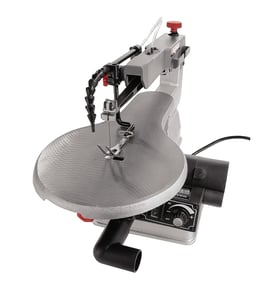


What size blade for 16 scroll saw?
For the Craftsman 113236110 16-inch scroll saw, we use 5-inch long, pin-end type scroll saw blades. Choose the blade width and tooth style based on your material thickness and how tight of a curve you need to cut; see the owner's manual for blade guidance.
Blade size and fit for model 113236110
This model is designed for one blade format:
- Length: 5 inches
- End type: pin-end (pinned)
- Use: wood and wood products
If you try to install plain-end (pinless) blades, they will not clamp correctly in the blade holders and you will get poor tracking, vibration, or the blade can pop out.
How to choose the right blade for your cut
We match blade style to the job more than the saw size.
- Thin wood (about 1/4 inch or less): use a very fine, narrow blade for cleaner scroll cuts
- Thicker wood (over 1/4 inch): use a wider blade for better control and straighter cutting
- Tight curves: use narrower blades (they turn tighter)
- Straighter cuts: use wider blades (they resist twisting)
- Thick stock (over 1 inch): feed very slowly to avoid bending or twisting the blade
Quick selection guide
| What you’re cutting/doing | Blade direction to choose | What to expect |
|---|---|---|
| Thin stock, fine detail | Narrow, fine-tooth | Best control on small radii |
| Medium thickness general work | Medium width | Balanced turning and stability |
| Thick stock or straighter lines | Wider blade | Less wandering, larger curve radius |
| Plywood | Any appropriate width, plan extras | Blades dull faster in abrasive layers |
Why it matters
Using the correct 5-inch pin-end blade and matching width to thickness reduces blade breakage, improves cut accuracy (less “following the grain”), and helps the saw run smoother. Scroll saw blades are consumables; for best results, replace them often as they dull.
For replacement parts and accessories for your Craftsman 113236110, start with the model’s parts list, or search by model number on Sears PartsDirect.
Last updated: February 2026
How do I know which scroll saw blade to use?
For the Craftsman 113236110 16-inch scroll saw, use 5-inch, pin-end scroll saw blades and choose blade width based on your wood thickness and how tight your curves are. Fine, narrow blades are best for thin stock and tight detail; wider blades handle thicker wood and straighter cuts.
Blade type and fit for model 113236110
This saw is designed for a specific blade style, so start here:
- Use 5-inch long, pin-end type blades only.
- Install the blade with the teeth pointing downward toward the table.
- Set blade tension so slack is removed; correct tension helps prevent blade breakage.
For the exact blade installation and tensioning steps, follow the 113236110 owner's manual.
How to pick the right blade for the cut
Match the blade to both the material thickness and the cut shape.
- Thin wood (about 1/4 inch or less): choose a very fine, narrow blade for control and detail.
- Wood over 1/4 inch thick: choose a wider blade for stability.
- Tight curves: use a narrower blade (it turns in a smaller radius).
- Straighter cuts and thicker stock: use a wider blade (tracks straighter).
- Thicker than 1 inch: feed the wood very slowly and avoid twisting the blade.
Quick selection guide
| What you are cutting | Best blade choice | What to expect |
|---|---|---|
| Thin wood, fine detail | Fine, narrow blade | Tight turns, smoother control |
| Medium thickness wood | Medium width blade | Balanced control and speed |
| Thicker wood, straighter cuts | Wider blade | Better tracking, larger curve radius |
| Plywood or abrasive material | Fresh blade more often | Faster dulling, more frequent changes |
Why it matters
Using the right blade reduces tear-out, improves accuracy, and prevents premature blade wear or breakage. Blades dull quickly in normal use (often within about 1/2 hour to 2 hours of cutting), so keeping spares on hand helps maintain clean cuts.
Parts and blade shopping tip
When you are ready to replace blades or other items for your Craftsman 113236110, start with the model parts list, or search by model number on Sears PartsDirect.
Last updated: February 2026
Which way do the teeth go on a scroll saw blade?
On the Craftsman 113236110 16-inch scroll saw, the blade teeth must point downward when installed. Downward-facing teeth cut on the downstroke, keep the workpiece against the table, and help prevent lifting and loss of control (see the blade installation steps in the 113236110 owner's manual).
How we recommend installing and verifying blade direction
- Unplug the saw and remove the switch key before changing the blade.
- Install the blade so the teeth point down toward the table.
- Thread the blade through the blade guard and the table access hole, then seat the pins in the upper and lower blade holders.
- Tighten blade tension until the slack is removed.
- Use 5-inch, pin-end scroll saw blades on this model.
Quick troubleshooting if the cut feels wrong
| What you notice | Most likely cause | What to do |
|---|---|---|
| Workpiece lifts, chatters, or bounces | Teeth facing up | Reinstall blade with teeth pointing down |
| Blade breaks often | Too much feed pressure or incorrect tension | Feed slower; tension until slack is removed |
| Cutting wanders | Dull blade or wrong blade width for material | Replace blade; choose a blade suited to thickness and curve radius |
Why it matters
With teeth pointing down, the saw’s cutting action pulls the workpiece into the table instead of trying to lift it. That improves control, reduces vibration at the cut, and helps extend blade life.
For replacement blades and other compatible parts, use the parts list for model 113236110 or search by model number on Sears PartsDirect.
Last updated: February 2026
How do I change the blades on a scroll saw?
On the Craftsman 113236110 16-inch scroll saw, change the blade by turning the saw OFF, removing the switch key, unplugging the cord, releasing blade tension, then unhooking the pin-end blade from the upper and lower blade holders. Install the new blade with teeth pointing downward.
Safety first
- Turn the switch OFF and wait for a complete stop
- Remove and store the switch key
- Unplug the power cord before touching the blade holders
- Keep fingers clear of the blade path
- Clear the table of tools and scraps
Blade change steps (113236110)
- Release tension: turn the tension knob counterclockwise until the blade is slack.
- Remove old blade: unhook the blade pin from the bottom holder; press down slightly on the upper arm if needed and unhook from the top holder.
- Install new blade:
- Feed the blade through the blade guard slot and the table access hole.
- Hook the bottom pin into the bottom holder recess.
- Seat the top pin into the top holder recess.
- Set direction: teeth point downward for downstroke cutting.
- Re-tension: turn the tension knob clockwise just until slack is removed, then fine-tune to prevent flutter.
For diagrams of the blade holders, blade guard, and tension knob, use the 113236110 owner's manual.
Quick checks after installation
- Pins fully seated in both holder recesses
- Blade centered in the table access hole, not rubbing the guard
- Tension firm enough to track straight, not so tight it snaps
Blade setup at a glance
| What to verify | Correct | If wrong |
|---|---|---|
| Tooth direction | Down | Grabs, cuts poorly |
| Blade type | 5-inch pin-end | Won’t seat safely |
| Tension | Slack removed, no flutter | Breaks or wanders |
Why it matters
Correct blade type, tooth direction, and tension reduce blade breakage and help the saw cut smoothly, especially when cutting thicker wood.
You can also look up diagrams and replacement items by model number on Sears PartsDirect.
Last updated: February 2026