Installation guide
 Owner’s manual


How to figure out dryer model number?
For Kenmore dryer model 11074832400, the model number is printed on the model and serial label located at the top inside the dryer door well. Open the door and look along the top inside edge of the door opening for the tag.
Where to look on this Kenmore dryer
Check these common label locations in this order:
- Top inside the dryer door well (most common for 11074832400)
- Inside the door opening on the door frame
- Back of the dryer cabinet
- Behind the lower front panel (common on some gas dryers)
What the label looks like and what to write down
The tag typically includes both a model and serial number. Record both so we can match parts and diagrams correctly.
| What to record | Example format | Why we need it |
|---|---|---|
| Model number | 11074832400 | Ensures correct parts list and diagrams |
| Serial number | Letters and numbers | Helps confirm production series and compatible revisions |
Tips to avoid mix-ups
- Copy the model number exactly, including all digits (no spaces).
- If the tag starts with “110,” keep the full number that follows.
- If the label is worn, use a flashlight and take a close-up photo to zoom in.
Why it matters
Kenmore dryers can look similar across multiple series; the exact model number (like 11074832400) is what ensures you get the right replacement parts such as a belt, door switch, or thermostat.
For diagrams and additional identification notes, use the 11074832400 owner’s manual.
Last updated: January 2026
What is the average life of a Kenmore dryer?
Most Kenmore dryers, including model 11074832400, typically last 10 to 13 years. With consistent care (especially lint and vent cleaning) and avoiding overheating or overloading, it’s common for a dryer to run longer before major parts like the motor or timer need replacement.
Typical lifespan and what affects it
A dryer’s life depends more on heat, airflow, and load size than the brand badge.
- Vent restriction (long runs, crushed duct, lint buildup) shortens life by overheating components
- Heavy loads and overloading strain the drum belt, idler pulley, and motor
- High heat use accelerates wear on thermostats and gas ignition parts
- Maintenance frequency (lint screen, cabinet lint, exhaust vent) is a major factor
- Installation conditions matter; for example, garages need proper clearances and safe placement
Maintenance schedule we recommend for longer life
The Kenmore 11074832400 manual calls out routine lint screen cleaning and periodic deeper cleaning. Use the 11074832400 owner’s manual for the exact care instructions.
| Task | How often | Why it helps |
|---|---|---|
| Clean lint screen | Every load | Improves airflow and drying performance |
| Clean exhaust vent (duct to outside) | About every 2 years (more with heavy use) | Reduces heat buildup and drying time |
| Clean inside dryer cabinet | About every 2 years (qualified service) | Prevents lint accumulation around moving and heating parts |
| Keep dryer level | At install and after moving | Helps proper tumbling and sensor cycle performance |
Signs your dryer is nearing end-of-life
These symptoms often show up as parts wear, not necessarily a “dead” dryer.
- Takes much longer to dry (after vent is confirmed clear)
- Loud squealing or thumping (belt, rollers, idler pulley wear)
- Drum stops turning but motor runs (belt failure)
- Intermittent heat on gas models (ignition system or coils)
- Timer or cycle behavior becomes inconsistent
If the drum won’t turn, a common wear item is the dryer drum belt 341241.
Why it matters
A dryer that runs hot or with poor airflow dries slower, uses more energy, and wears out safety and temperature-control parts faster. Keeping airflow strong is the simplest way to extend the service life of your Kenmore dryer.
Last updated: January 2026
What are common problems with Kenmore dryers?
Common problems on Kenmore dryer model 11074832400 include no heat, the dryer will not run, long dry times, and unusual noises. Most causes trace back to airflow restrictions (lint buildup or venting), a door not fully closed, or a worn drive system; our 11074832400 owner's manual troubleshooting section helps narrow it down fast.
Most common symptoms and what usually causes them
- Dryer will not run: tripped breaker or blown fuse, door not fully closed, failed door switch
- No heat (gas or electric): wrong cycle selected (Air/No Heat), tripped breaker (electric can tumble with no heat), gas supply valve closed (gas)
- Takes too long to dry: clogged lint screen, crushed or blocked vent, restricted airflow
- Loud thumping/squealing/grinding: worn belt, idler pulley, drum support components, blower wheel obstruction
- Burning smell or overheating: lint buildup in cabinet or venting, restricted airflow, thermostat or high-limit issue
Quick checks we recommend first (5 to 10 minutes)
- Clean the lint screen; if you use dryer sheets, wash the screen with hot water and a nylon brush to remove residue.
- Confirm the door closes firmly; if it feels loose or intermittent, test the switch and latch.
- Verify power: check both fuses/breakers (many dryers use two); a dryer can run but not heat if one trips.
- Check venting behind the dryer for kinks, crushing, or heavy lint.
- For gas models, confirm the gas shutoff valve is fully open.
Parts that commonly fix these issues on this model
| Symptom | Common fix | Example part for 11074832400 |
|---|---|---|
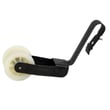
| Drum not turning, squeal | Belt or idler pulley | Dryer drum belt 341241, dryer idler pulley WP691366 |
| Dryer will not start | Door switch | Dryer door switch WP3406107 |
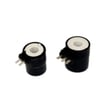
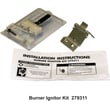
| No heat on gas dryer | Ignition components | Dryer gas valve coil kit 279834, dryer radiant sensor WP338906, igniter 279311 |
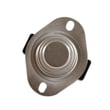
| Overheats or shuts off | High-limit protection | Dryer high-limit thermostat W11050897 |
Why it matters
Airflow problems are the most common root cause behind long dry times, overheating, and repeated heat-related failures. Keeping the lint screen and venting clear protects the motor, thermostats, and burner/heater system.
Last updated: January 2026
What is the cubic foot of my Kenmore dryer model 11074832400?
The cubic-foot drum capacity for Kenmore dryer model 11074832400 is found in the specifications section of the 11074832400 owner's manual. For planning loads, most Kenmore full-size 110-series dryers are in the 6.0 to 7.0 cu. ft. range.
Where to find the exact capacity for model 11074832400
Look in these common spots in the 11074832400 owner's manual:
- Specifications or product features section
- A page listing dimensions and other key specs
- The model and serial label information pages (sometimes paired with specs)
- Any cycle guide notes that reference load size or drum size
What capacity range is typical for this style of Kenmore dryer
Use this as a practical comparison when shopping for parts, estimating load size, or comparing dryers.
- Compact dryers: 3.4 to 4.0 cu. ft.
- Standard full-size dryers (most common): 6.0 to 7.0 cu. ft.
- Extra-large dryers: 7.2 cu. ft. and up
| Dryer size class | Typical capacity (cu. ft.) | Common use |
|---|---|---|
| Compact | 3.4 to 4.0 | Small spaces, smaller loads |
| Full-size | 6.0 to 7.0 | Everyday family laundry |
| Extra-large | 7.2+ | Bulky items, large loads |
Why it matters
Drum capacity affects airflow and dry time. Overloading a dryer restricts airflow, which increases drying time and can contribute to overheating symptoms.
Related setup tip
Proper venting has as much impact on drying performance as drum size; venting requirements and safety clearances are covered in the 11074832400 installation guide.
Last updated: January 2026