 Installation guide
 Owner’s manual


How do I know if a dryer heating element is bad?
On the Kenmore 11067322600 dryer, a bad heating element usually shows up as the drum tumbling normally but clothes staying cool or taking much longer to dry. Confirm it by checking airflow first, then testing the heater circuit for continuity with the power disconnected.
- Clothes stay damp after a full cycle on a heat setting
- Dryer runs but there is no heat
- Drying times suddenly get much longer
- A burning smell (often from lint buildup or a failing heater)
- Breaker trips or a fuse blows when heat should turn on
- Disconnect power (unplug; electric dryers can have 240V).
- Verify the dryer is getting proper power: many electric dryers can tumble with only one leg of power, but won’t heat.
- Check venting and lint path for restrictions (blocked airflow can overheat and damage heater components).
- Access the heater terminals and use a multimeter to check continuity across the heating element.
- If the element is open (no continuity), replace the heating element.
For model-specific access and safety notes, follow the 11067322600 owner’s manual.
Even with a good element, these issues can stop heat:
- One household fuse blown or one breaker tripped (electric dryers often use two)
- Crushed or blocked venting (poor airflow)
- Failed thermal safety device (thermal cut-off)
- Temperature control issue (operating thermostat)
| What it affects | Part to check/replace | When it’s likely |
|---|---|---|
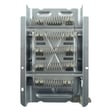
| Heat generation | Dryer element 279838 | No continuity through the element |
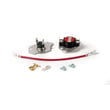
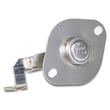
| Overheat protection | Dryer thermal cut-off fuse kit | Dryer overheated due to restricted airflow |
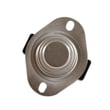
| Temperature regulation | Dryer operating thermostat | Heat is erratic or cycles off too soon |
A dryer that tumbles but does not heat is often a power-supply or airflow problem, not just the heater. Fixing venting and confirming correct voltage helps prevent repeat failures of the heating element and thermal cut-offs.
Last updated: January 2026
How to hard reset a Kenmore dryer?
To hard reset your Kenmore dryer model 11067322600, disconnect power (unplug the cord or switch the breaker off) for about 1 to 5 minutes, then restore power and try a Timed Dry cycle. A reset clears many control glitches, but it will not fix a no-start caused by a door or power issue.
- Turn the cycle selector to Off.
- Unplug the dryer (or turn the circuit breaker Off).
- Wait 1 to 5 minutes.
- Restore power.
- Close the door fully.
- Select Timed Dry with heat (not Air Only).
- Press Push to Start firmly.
For model-specific operating steps and stop/restart instructions, use the 11067322600 owner's manual.
The installation checks for this Kenmore dryer point to a few common causes that look like a “needs reset” problem:
- Confirm the controls are set to a running position (not Off).
- Press the Start button firmly.
- Verify the dryer is plugged in and the outlet has power.
- Check the household fuse or circuit breaker.
- Make sure the dryer door is fully closed.
- Inspect the vent path; a crushed or kinked vent can contribute to overheating and shutdowns.
If you are seeing an L2 code during first-run diagnostics, it points to a home power supply issue that can prevent the heater from turning on; follow the electrical and setup guidance in the 11067322600 installation guide.
| Symptom | Reset helps? | What to check next |
|---|---|---|
| Control panel acting “stuck” | Yes | Power cycle, then reselect cycle |
| Dryer will not start | Sometimes | Door closed, breaker/fuse, Start pressed |
| Runs but no heat | Sometimes | L2 code, power supply, venting |
| Stops mid-cycle | Sometimes | Airflow restriction, overheating protection |
A hard reset is a fast way to clear a temporary control issue, but a dryer that will not start often has a basic condition preventing operation (door not closed, breaker tripped) or an airflow problem that needs correction.
Last updated: January 2026
Is it worth replacing the heating element in a dryer?
Yes, it’s usually worth replacing the heating element in your Kenmore dryer model 11067322600 when the dryer runs but has no heat, because the part cost is typically far less than replacing the whole dryer. Before buying parts, we recommend confirming power and airflow issues first using the 11067322600 owner's manual.
- Replace the heating element when the drum tumbles normally but clothes stay cold or damp.
- Fix airflow problems first; a crushed or blocked vent can cause poor drying and overheating symptoms.
- Check your home power supply; electric dryers need full 240V, and one tripped breaker can leave the drum running with no heat.
- If the dryer is otherwise quiet and mechanically sound, a heater repair is a strong value.
- If the dryer also has loud squealing, thumping, or a slipping drum, consider a maintenance kit at the same time.
| What you observe | Most common cause | What we recommend first |
|---|---|---|
| Drum turns, no heat | One breaker tripped or a failed heater circuit | Reset both breakers, then test heat |
| Long dry times, hot cabinet | Vent restriction | Clear/repair venting, then retest |
| No heat after vent is clear and power is correct | Failed heating element or safety cut-off | Replace heater-related parts as needed |
A heating problem is often tied to safety components that protect the heater circuit. If you’re already opening the cabinet, these are the most common related items to inspect.
- Dryer element 279838 (the heater itself)
- Dryer thermal cut-off fuse kit 279816 (opens the heater circuit if temperatures get too high)
- Dryer operating thermostat WP3387134 (helps regulate drum temperature)
- Dryer high-limit thermostat WP3977767 (backup overheat protection)
A dryer that tumbles with no heat is frequently a power-supply or heater-circuit issue. The manual notes that electric dryers can run with the drum turning even when heat is missing if one fuse or breaker is open, so checking power and venting first prevents unnecessary parts replacement.
Last updated: January 2026
How to test a dryer temperature switch?
To test the dryer temperature switch (thermostat) on your Kenmore dryer model 11067322600, we use a multimeter to check continuity across the switch terminals at room temperature, then verify it opens or closes as temperature changes. Always disconnect power before testing. See the 11067322600 owner's manual.
- Unplug the dryer (or switch off the breaker) before opening any panels.
- Access the temperature switch on the blower housing or heater box (location varies by design).
- Pull the wire connectors off the switch terminals (grab the connector, not the wire).
- Set your multimeter to continuity (or the lowest ohms setting).
- Touch one probe to each terminal you want to test.
- Read the meter:
- 0 to a few ohms or a beep: the switch is closed (continuity)
- OL or no beep: the switch is open (no continuity)
Most dryer operating thermostats are closed at room temperature and open when they reach their cut-out temperature, then close again as they cool.
| Meter result (room temp) | Typical meaning | What to do next |
|---|---|---|
| Continuity (beep/low ohms) | Switch is closed as expected | Continue troubleshooting airflow or heat circuit if dryer still overheats or won’t heat |
| Open (OL/no beep) | Switch may be failed open | Inspect wiring and replace the thermostat if wiring is good |
| Intermittent readings | Loose terminal, heat damage, failing switch | Check connectors, then replace if readings won’t stabilize |
A temperature switch helps regulate exhaust temperature during automatic drying; if it fails, the dryer can overheat, shut down on a safety device, or run with poor heat control. Airflow problems are a common root cause, so we check venting and lint buildup before replacing parts.
If you’re diagnosing heat or overheating issues, these parts are commonly involved:
- Dryer operating thermostat WP3387134 (temperature regulation)
- Dryer high-limit thermostat WP3977767 (overheat protection)
- Dryer thermal cut-off fuse kit 279816 (opens if temperatures get unsafe)
Last updated: January 2026








