Owner’s manual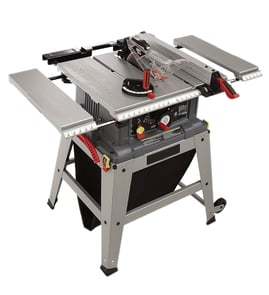
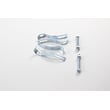
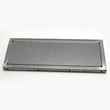
What are the parts of a table saw?
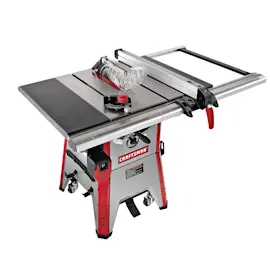
On the Craftsman 113299040 10 inch table saw, the main parts include the table (work surface), rip fence system, miter gauge, blade guard assembly, and the stand components (steel legs and table extensions). For the exact names and diagrams used for this model, use the owner's manual.
Core parts you will see on the 113299040
- Table top: Flat cast work surface where you support the workpiece.
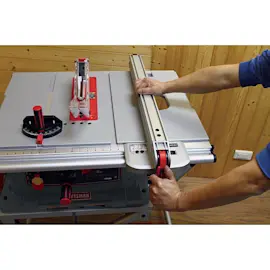
- Rip fence assembly: Guides rips parallel to the blade; locks at the front and aligns at the rear.
- Miter gauge assembly: Guides crosscuts and angled cuts in the miter slot.
- Guard assembly: Helps shield the blade area during cutting.
- Stand and support parts: Steel legs, leg stiffeners, and leveling feet.
- Table extensions: Expand the work surface to support wider stock.
Model-specific examples (from the 113299040 parts lists)
These are common assemblies called out for this Craftsman model:
| Assembly | What it does | Example identifiers from the manual |
|---|---|---|
| Rip fence assembly | Parallel guiding for ripping | Fence assembly 62581; fence channel 62582 |
| Miter gauge assembly | Angle and crosscut guidance | Miter gauge assembly 62325 |
| Guard assembly | Blade-area guarding | Guard assembly 62579 |
| Legs (stand) | Supports saw; levels it | Leg 62552; leveling foot 803835 |
| Table extension | Adds table width | Extension assembly 62589 |
Why it matters
Knowing the correct part names helps you match symptoms to the right assembly. For example, a fence that will not lock usually points to the fence lock, handle, or alignment pads, while inaccurate crosscuts often point to the miter gauge setup.
Ordering and identification tips
- Confirm the model number is 113299040 on the ID plate.
- Use the exploded diagrams in the manual to identify the assembly first, then the small hardware.
- Replace missing fasteners with the same size and type listed for the assembly.
- If your saw was disassembled for moving, re-check fence alignment and miter gauge fit before cutting.
- For additional parts lookups by model number, use Sears PartsDirect.
Last updated: February 2026
Where is the reset button on a Craftsman table saw?
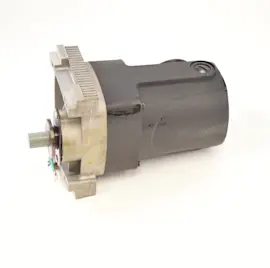
On the Craftsman 113299040 10-inch table saw, there is not a single external “reset button” like you might see on some newer tools. Resetting is typically done at the motor’s overload reset; on many Craftsman saw motors it’s located on the motor housing (often under small caps) and is pressed after the motor cools.
What to check first (safe, fast steps)
- Turn the switch OFF and unplug the saw before touching the motor or wiring.
- Let the motor cool for 15 to 30 minutes if it stopped during a cut.
- Check that the blade spins freely by hand (with the saw unplugged).
- Verify the circuit is not overloaded (avoid running a shop vac or heater on the same circuit).
- Inspect the power cord for cuts or crushed spots.
Where the reset is usually located
Most Craftsman table saw motors used on models like 113299040 have a manual overload reset on the motor body. Common locations:
| Motor style | Typical reset location | What it looks like |
|---|---|---|
| Belt-drive motor mounted behind/under the saw | End bell or side of motor housing | Small button, or under 1 to 2 plastic caps |
| Direct-drive bench style motor | Rear of motor housing | Small push button or recessed reset |
If you see two small plastic caps on the end of the motor, remove them and look for a spring-loaded reset mechanism you can press.
Why it matters
An overload reset protects the motor windings from overheating. If the saw is binding (dull blade, misaligned fence, pinching kerf), the overload can trip repeatedly until the underlying cause is corrected.
Helpful references for this model
- Use the 113299040 owner's manual for switch safety steps, maintenance guidance, and parts diagrams.
- If you need to look up replacement parts by model number, start with the parts list for this saw, or search on Sears PartsDirect.
Last updated: February 2026
What are the common table saw mistakes?
Common mistakes on a Craftsman 113299040 10-inch table saw include cutting freehand, using the rip fence for crosscuts (or the miter gauge for ripping), running without the blade guard when it should be installed, and standing in line with a potential kickback. Our goal is consistent control of the workpiece and keeping hands out of the blade path.
Most common mistakes (and what to do instead)
- Cutting freehand: Always guide the work with the rip fence (ripping) or miter gauge (crosscutting).
- Using the fence and miter gauge incorrectly: Do not use the rip fence for crosscutting, and do not use the miter gauge for ripping.
- Reaching over or behind the blade: Never pull a board through from behind the blade; reposition and support the work correctly.
- Picking up offcuts while the blade is moving: Push small cutoffs off the table with a stick after the blade stops.
- Blade set too high: Keep the blade as low as practical for the cut.
- Operating without proper inserts/guards: Use the correct table insert and keep guards in place whenever possible.
Quick safety checklist before you cut
Use this as a fast setup check for the 113299040:
| Item to check | What “right” looks like | Why it helps |
|---|---|---|
| Work guidance | Rip fence for ripping; miter gauge for crosscutting | Prevents twisting and binding |
| Operator position | Not in line with the blade and potential kickback path | Reduces kickback injury risk |
| Blade height | Low, just enough to complete the cut | Improves control and reduces exposure |
| Offcut handling | Remove only after stopping; push away with a stick | Prevents thrown pieces |
Kickback mistakes to avoid
Kickback is one of the biggest table saw hazards. These habits reduce risk:
- Feed the work against the blade’s rotation direction.
- If the blade stalls or jams, switch OFF before freeing the work.
- Provide rear and side support for long or wide stock so it cannot lever or twist.
- If cutting slick materials (some plastics or hardboard), stay extra alert because anti-kickback pawls may not stop a kickback.
Why it matters
Most table saw injuries and ruined cuts come from the same root causes: the workpiece is not guided, supported, or controlled. Following the operating rules in the 113299040 owner's manual helps you cut straighter, reduce binding, and avoid kickback.
For replacement parts and diagrams for your Craftsman 113299040, start with the model parts list, or search by model number on Sears PartsDirect.
Last updated: February 2026
Does Craftsman make a good table saw?
Yes. Craftsman table saws, including the Craftsman 113299040 10-inch table saw, are good, practical saws for DIY and hobby use; they deliver reliable cutting performance when the fence, miter gauge, and guard system are set up correctly and maintained per the owner's manual.
What “good” means on the 113299040
A good table saw stays accurate, runs smoothly, and can be used safely. On this model, those results come from tune-up and upkeep as much as raw power.
- Fence alignment and lock feel drive rip accuracy
- Miter gauge fit affects crosscut squareness
- Blade guard and anti-kickback pawls support safer feeding
- Dust buildup inside the cabinet can stress the motor
- A waxed table helps stock slide and reduces burning
Strengths most owners notice
| Area | Typical benefit | Why it matters |
|---|---|---|
| Serviceability | Straightforward assemblies | Easier long-term upkeep |
| Everyday cutting | Handles plywood and dimensional lumber well | Great for home projects |
| Documentation | Clear parts breakdowns (fence, miter gauge, guard, legs) | Faster troubleshooting |
Limitations to plan for
- A fence that does not lock parallel causes inconsistent rips
- Miter gauge play can lead to out-of-square crosscuts
- Dull anti-kickback pawls reduce bite and control
- Packed sawdust can contribute to overheating and rough operation
Maintenance that makes the biggest difference
- Turn the switch OFF and unplug before maintenance
- Blow out dust from the cabinet and motor area regularly
- Apply an automobile-type wax to the table surface
- Keep anti-kickback pawl teeth sharp (small smooth-cut round file)
- Replace a worn or damaged power cord promptly
Why it matters
Most “bad saw” complaints come from a misaligned fence, sloppy miter gauge, or neglected cleaning. When those are dialed in, the 113299040 typically feels much more precise and safer to run.
Getting the right parts
Match parts by the exact model number 113299040 and the diagram section; for broader model searches, use Sears PartsDirect.
Last updated: February 2026