Installation guide
 Owner’s manual
 Error Codes

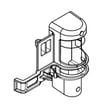
What are the common problems with Roper washing machines?
Common Roper washer problems (including model RTW4440VQ1) are no spin/no drain, weak or no agitation, excessive vibration, and fill issues. Most causes trace to an unbalanced load, leveling or drain-hose setup, or a failed wear part such as the lid switch, drain pump, coupling, or clutch; see the RTW4440VQ1 owner's manual for model-specific checks.
Most common symptoms and what usually causes them
- Won’t drain or won’t spin: lid not fully closed, drain hose clogged or installed too high, excessive suds, or a failing drain pump
- Won’t agitate: lid switch issue, worn agitator dogs, or a drive coupling problem
- Shakes or vibrates during spin: washer not level, load not balanced, suspension spring wear
- Won’t fill or fills slowly: hot/cold faucets off, kinked inlet hoses, inlet screens clogged, or a failing inlet valve
- Cycle seems stuck (fills and drains repeatedly): drain hose positioned too low or siphoning due to standpipe fit
Quick checks we recommend first (fast, no parts)
- Confirm the lid is fully closed; this washer will not agitate or spin with the lid open.
- Balance the load (mix large and small items) and avoid overloading.
- Level the washer and tighten the front leveling feet nuts; reset rear leveling legs if needed (details in the RTW4440VQ1 installation guide).
- Verify both water faucets are on; straighten any kinked inlet hoses.
- Check drain hose routing: keep the end below 96 in. (244 cm) above the floor and prevent siphoning.
Parts that commonly fix these problems on RTW4440VQ1
| Symptom | Likely part to check | Part anchor |
|---|---|---|
| No drain / no spin | Drain pump | Washer drain pump WP3363394 |
| No spin / intermittent operation | Lid switch | Washer lid switch assembly WP8318084 |
| Agitates poorly (top agitator “ratchets”) | Agitator dogs | Agitator dog 80040 |
| Won’t agitate/spin, motor runs | Motor coupling | Coupling 285753A |
| Weak spin, burning smell, slow basket ramp-up | Clutch | Clutch 285785 |
Why it matters
Catching simple setup issues (leveling, hose routing, oversudsing) prevents repeat out-of-balance spins and reduces strain on the drive system, clutch, and pump, which helps avoid bigger repairs.
Last updated: February 2026
What is the capacity of Roper RTW4440VQ1?
The Roper RTW4440VQ1 is a standard 27-inch top-load washer; washers in this direct-drive style run about 3.2 to 3.6 cu. ft. of wash basket capacity. For the exact published capacity for your specific unit, confirm it in the RTW4440VQ1 owner's manual.
How we recommend confirming the exact capacity
Look for a “Specifications” or “Features” section in the RTW4440VQ1 owner's manual. Capacity may be listed as “wash basket,” “tub,” or “cu. ft.”
- Check the model and serial label under the lid to ensure you are matching RTW4440VQ1
- Scan the manual for “capacity,” “cu. ft.,” or “basket”
- Use the cycle and load-size guidance in the manual to match real-world load sizes
- If you are comparing washers, note that usable capacity changes with bulky cycles and water level selections
Quick load-sizing guide (works well for this washer style)
| Load type | Fill level target | What to do |
|---|---|---|
| Mixed everyday clothes | Loosely filled, items move freely | Choose the correct water level for the load |
| Towels/jeans | About 1/2 to 2/3 full | Avoid packing; distribute evenly |
| Bulky items | 1 large item or 2 small bulky items | Wash bulky items separately |
Why capacity matters
Correct load sizing improves turnover during agitation, rinses detergent out better, and reduces out-of-balance spinning that can stress the clutch, suspension, and drive components.
Signs the load is too large
- Poor agitation (items stay on top)
- Excessive vibration during spin
- Detergent residue on clothes
- Slow draining because items crowd the outlet
If you are setting up the washer, verify drain and standpipe requirements in the RTW4440VQ1 installation guide.
Last updated: February 2026
What is the most expensive part to replace on a washing machine?
On the Roper RTW4440VQ1 top-load washer, the most expensive repair is typically a major drive-system rebuild, most often the gear case (transmission) or the spin basket and related tub components, because the job requires significant disassembly and setup. Use the RTW4440VQ1 owner’s manual to match symptoms before committing to a big repair.
Biggest-cost repairs on a top-load washer
These repairs usually drive the highest total cost because they combine a high-cost assembly with longer labor time:
- Gear case (transmission): internal drive components; deep teardown to access
- Spin basket and tub-related components: major disassembly; often tied to loud spin, wobble, or leaks
- Drive motor: higher-cost electrical/mechanical component
- Timer/control components (on mechanical-timer models): misdiagnosis is common, so confirm symptoms first
Lower-cost parts that can mimic “major failure”
Before replacing a gear case or basket, we rule out common, less expensive failures that cause similar symptoms:
- Lid not sensing closed (no spin for safety)
- Drain restriction or weak pump (won’t spin because it won’t drain)
- Worn motor coupling (motor runs but agitation/spin is weak or absent)
- Worn clutch (poor or slipping spin)
- Agitator dogs stripped (agitator issues that look like drive problems)
Model-matched examples include the coupling 285753A and the washer drain pump WP3363394.
Symptom-to-part quick guide (RTW4440VQ1)
| Symptom you notice | Most likely area to check first | Why it matters |
|---|---|---|
| Won’t spin but will drain | Lid switch, clutch, coupling | Avoids unnecessary drive-system teardown |
| Won’t drain, then won’t spin | Drain pump, drain hose, blockage | A drain issue can stop the spin cycle |
| Loud grinding or oil leak under washer | Gear case/drive system | Often points to internal drive wear |
| Basket wobbles badly even when level | Suspension, basket/drive block | Prevents repeated out-of-balance damage |
Why it matters
The “most expensive part” is usually the one that takes the longest to access. Confirming the failure first helps prevent replacing a major assembly when a simpler part is actually causing the problem.
Last updated: February 2026
Why is my Roper washer not washing?
If your Roper RTW4440VQ1 washer fills but won’t wash (no agitation), the most common causes are a lid not fully closed or a failed lid switch, a timer setting/start issue, or a drive problem that prevents the agitator from moving. Use the RTW4440VQ1 owner's manual troubleshooting checks first.
Quick checks that fix many “won’t wash” complaints
- Confirm the lid is fully closed; this washer will not agitate with the lid open.
- Set the Timer to a wash cycle, turn the knob slightly to the right, then pull to start.
- Avoid extension cords; plug into a grounded 3-prong outlet.
- Check the home breaker or fuse and reset/replace if needed.
- Reduce load size if overloaded; smaller loads agitate more reliably.
Likely part failures on RTW4440VQ1 (when the basics check out)
If the washer runs but the tub and agitator do not move, these parts are common suspects:
| Symptom you see | Most likely area | What it points to |
|---|---|---|
| Won’t agitate, may still drain | Lid safety circuit | Failed lid switch or lid not engaging switch |
| Motor runs, no agitation/spin | Drive connection | Worn motor coupling |
| Weak or slipping agitation | Agitator mechanism | Worn agitator dogs |
| Agitates but won’t spin well | Spin drive | Worn clutch |
Helpful model-matched parts to check include the washer lid switch assembly WP8318084, coupling 285753A, and agitator dog 80040.
Why it matters
A “not washing” complaint is usually a safety interlock (lid switch) or a mechanical drive issue (coupling, agitator dogs). Fixing the correct root cause prevents repeat failures and avoids replacing higher-cost assemblies unnecessarily.
When to use the installation guide
If the washer seems to stop, pause, or act “stuck,” confirm the drain hose setup is correct (height and standpipe fit). An incorrect drain hose installation can cause odd cycle behavior. Use the RTW4440VQ1 installation guide for the proper drain hose configuration.
Last updated: February 2026