Owner’s manual


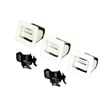
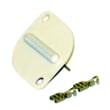
How do I know if my Kenmore dryer thermal fuse is blown?
On Kenmore electric dryer model 11066912692, a blown thermal fuse commonly shows up as a dryer that will not start or runs but will not heat. The sure way to know is to unplug the dryer and test the fuse for continuity using the steps in the 11066912692 owner's manual.
Quick symptoms to look for
- Dryer runs (tumbles) but clothes stay cold and damp (no heat)
- Dryer will not start even though the door is closed
- Cycle seems normal but drying performance is poor (often paired with restricted venting)
- You recently had overheating signs (very hot cabinet, burning smell, repeated shutdowns)
Confirm it with a continuity test (best method)
- Unplug the dryer (or switch off the breaker) before opening any panels.
- Access the thermal fuse (location varies by design; it is commonly on the blower housing or exhaust duct).
- Remove at least one wire from the fuse terminal.
- Set a multimeter to continuity or ohms.
- Touch probes to the fuse terminals.
How to read the meter
| Meter result | What it means | What to do next |
|---|---|---|
| Beep or near 0 ohms | Fuse is good | Check airflow, thermostat, heating circuit |
| No beep or OL/infinite | Fuse is blown | Replace the fuse and fix the overheating cause |
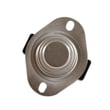
A common replacement for this model family is the dryer thermal fuse WP3390719.
Why it matters (and what usually causes it)
A thermal fuse is a one-time safety device that opens when the dryer overheats. Overheating is often caused by poor airflow. Our manual troubleshooting guidance for “not drying satisfactorily” focuses on checking airflow at the outside hood and correcting crushed or kinked venting. Use the venting and care guidance in the 11066912692 owner's manual to prevent repeat failures.
Airflow checks that prevent repeat fuse blowouts
- Clean the lint screen before every load
- Confirm strong airflow at the outside exhaust hood
- Replace plastic or thin foil venting with heavy metal or flexible metal vent
- Remove crushed, kinked, or excessively long vent runs
- Clean lint buildup from the entire exhaust system
Last updated: February 2026
How do I tell what model my Kenmore dryer is?
Your Kenmore dryer’s model number is printed on the model and serial number plate; on model 11066912692, that plate is typically found in the door opening area. Once you have the full model number and serial number, you can match the correct parts, wiring, and operating instructions.
Where to look for the model number plate
Check these common locations on Kenmore electric dryers:
- Inside the dryer door opening (around the frame)
- On the back panel of the dryer cabinet
- Near the lint screen housing area (depending on the exact configuration)
- On a metal plate or durable label marked “Model” and “Serial”
If you are using the documentation, the 11066912692 owner's manual references the “Model and Serial Number Plate” and recommends recording both numbers for future parts and service needs.
What the model number tells you (and why it matters)
Kenmore model numbers are the key to getting the right replacement parts and correct troubleshooting steps.
- Ensures you order the correct Kenmore-compatible parts (heating, drive, controls)
- Helps confirm the correct wiring and installation requirements for your exact dryer
- Prevents mismatches when multiple Kenmore dryers look similar
- Speeds up diagnosis when the dryer will not start, will not heat, or runs too hot
Quick checklist: what to write down
Record these exactly as shown on the plate:
- Model number (example: 11066912692)
- Serial number
- Date of purchase (if available)
Common examples of what you might see
Here is how the information is usually presented:
| Item on plate | What it looks like | Why you need it |
|---|---|---|
| Model number | 11066912692 | Matches parts and manuals |
| Serial number | Letters and numbers | Identifies production run |
Related tip for parts matching
If you are diagnosing a symptom after identifying the model, common wear items for this dryer family include the heating circuit and safety cutoffs, such as the dryer thermal fuse WP3390719 (a blown fuse can stop heat or stop operation depending on the design).
Last updated: February 2026
What is the average lifespan of 11066912692?
A Kenmore electric dryer like model 11066912692 typically lasts 13 years with normal household use. Keeping airflow strong (clean lint screen and venting) and replacing wear parts promptly helps this dryer reach its full service life; see the maintenance steps in the 11066912692 owner's manual.
Typical lifespan and what affects it
Most dryers reach their expected lifespan when heat, airflow, and drum support components stay in good condition.
- Heavy weekly loads shorten lifespan faster than light use
- Restricted venting causes longer run times and extra heat stress
- Overheating can damage wiring and safety devices
- Worn drum support parts increase vibration and motor strain
- Regular cleaning reduces fire risk and improves drying performance
Maintenance that extends dryer life
The manual specifically calls out lint screen cleaning and checking for obstructed airflow.
- Clean the lint screen every load; wash it periodically to remove residue buildup
- Check the rear ventilation slots and the outside exhaust hood for blockage
- Disconnect and clean the exhaust vent periodically to remove accumulated lint
- Avoid crushing or kinking the exhaust pipe behind the dryer
Quick airflow check
| What you check | What “good” looks like | What it prevents |
|---|---|---|
| Lint screen | Clear mesh, no film | Long dry times, overheating |
| Exhaust hood | Flapper opens freely | Backpressure, moisture buildup |
| Vent run | Minimal lint, no sags | Heat stress, nuisance shutdowns |
Parts that commonly limit lifespan (and are replaceable)
If drying performance drops or the dryer stops heating, these model-compatible parts are common fixes:
- Dryer thermal fuse WP3390719 (opens if the dryer overheats)
- Dryer heating element WP3387747 (restores heat when the element fails)
- Dryer operating thermostat WP3387134 (helps regulate drum temperature)
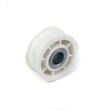
- Dryer idler pulley 279640 (reduces squealing and belt slip)
Why it matters
A dryer that runs with poor airflow or failing heat controls works harder per load, which increases run time, energy use, and wear on the motor, drum supports, and wiring.
Last updated: March 2026