Installation guide
 Owner’s manual


How to do a hard reset on a Kenmore dishwasher?
To hard reset a Kenmore Elite dishwasher model 66513963K017, we recommend resetting the control by pressing CANCEL/DRAIN twice to clear the current cycle and reboot the control logic. If the dishwasher is unresponsive, turn power off at the breaker for 5 minutes, then restore power.
Use the least disruptive option first.
- Reset the control (most common): Open the door, then press CANCEL/DRAIN twice.
- Cancel and drain: Press CANCEL/DRAIN once, then close the door to start the drain.
- Power reset (hardest reset): Turn the dishwasher circuit breaker OFF for 5 minutes, then back ON.
- Resume after an interruption: Close the door and press START/RESUME.
- Unlock controls (if locked): Press and hold CONTROL LOCK for 3 seconds.
For the exact button names and indicator behavior on your console, use the 66513963K017 use & care manual.
A reset can look different depending on what the dishwasher was doing.
| Reset method | What it does | What you may notice |
|---|---|---|
| CANCEL/DRAIN twice | Resets the control so you can select a new cycle | Lights change, cycle clears |
| Breaker OFF 5 minutes | Clears many “glitch” conditions after a power interruption | Display/lights reboot |
| CONTROL LOCK hold 3 sec | Re-enables buttons | “Lock” light turns off |
A “reset” won’t fix a mechanical failure. If the unit won’t drain, won’t fill, or stops mid-cycle, check these common causes:
- Door not fully latched
- Suds from using the wrong detergent type
- Drain hose kink or disposer knockout plug not removed
- Clogged filter area in the tub bottom
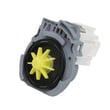
- Failed drain component such as the dishwasher drain pump WPW10348269
Resetting the control is a fast way to clear a stuck cycle, recover from a door-open or power interruption, and get the dishwasher ready to start a new wash cycle without guessing at button combinations.
Last updated: January 2026
Is it worth repairing a Kenmore dishwasher?
Yes, repairing a Kenmore Elite 66513963K017 dishwasher is usually worth it when the problem is a common wear item (like a door seal or rack parts) or a single failed component, and the tub and racks are still in good shape. If multiple major components are failing, replacement often makes more sense.
Use these practical checkpoints before you spend money on parts or service:
- Age and condition: If the unit is within its typical service life and the racks and tub are solid, repair is usually the better value.
- Type of failure: Leaks, poor draining, or door issues are often straightforward repairs.
- Number of symptoms: One clear symptom usually points to one part; multiple symptoms can indicate broader electrical or wash-system issues.
- Cost comparison: If the repair estimate is under about half the cost of a comparable new dishwasher, repair is typically the smarter move.
- Downtime: If you can fix it quickly with a known part, repair saves time versus shopping and installing a new unit.
These are frequent, fixable issues on many Kenmore Elite undercounter dishwashers:
| Symptom | Often involved area | Example compatible part for this model |
|---|---|---|
| Water leaking at the door | Door gasket/seal | Dishwasher door seal W11177741 |
| Water left in tub | Drain system | Dishwasher drain pump WPW10348269 |
| Won’t fill or fills slowly | Water supply/inlet | Dishwasher water inlet valve W11175771 |
(We recommend confirming the diagnosis before ordering parts.)
A targeted repair can restore cleaning and drying performance without the cost and hassle of replacing an undercounter dishwasher. For the 66513963K017, routine maintenance and a single-part repair can keep the wash system running reliably.
- Use the troubleshooting and care sections in the 66513963K017 use & care manual to narrow down symptoms (draining, drying, detergent not dispensing, noise).
- If the issue is related to installation (drain hose routing, electrical connection, leveling), follow the 66513963K017 installation instructions.
Last updated: January 2026
What are the common problems with Kenmore dishwashers?
Common problems we see on the Kenmore Elite 66513963K017 dishwasher include poor cleaning, water not draining, leaks at the door, and cycles that will not start or finish. Many of these issues trace back to filter maintenance, loading habits, water supply problems, or a worn seal or pump component.
- Dishes still dirty or gritty: clogged filter, blocked spray arm holes, or incorrect loading
- Water left in the tub: drain hose kink, disposer plug not removed, or a failing drain pump
- Leaks: door seal wear, lower door seal wear, or oversudsing from the wrong detergent
- Won’t start or stops mid-cycle: door not latched, control lock enabled, or power interruption
- Detergent not dispensing: dispenser blocked by tall items (cutting boards, cookie sheets)
For model-specific operating and troubleshooting steps (including filter care and cycle behavior), follow the guidance in the 66513963K017 use & care manual.
- Confirm the door is fully closed and latched; then press START/RESUME and close the door within a few seconds.
- Run hot water at the sink until it is hot before starting a cycle (helps cleaning and cycle time).
- Clean the filter system and reinstall it fully seated.
- Check that spray arms spin freely and are not blocked by large dishes.
- Use only automatic dishwasher detergent; hand soap can cause suds and leaks.
If the basic checks do not fix the problem, these model-compatible parts are common solutions:
| Symptom | Part to inspect/replace | Why it matters |
|---|---|---|
| Not draining, water remains | Dishwasher drain pump WPW10348269 | The pump pushes water out; a weak or jammed pump leaves standing water |
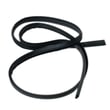
| Leaking at the door edge | Dishwasher door seal W11177741 | A worn seal lets water escape during wash and drain |
| Poor cleaning, debris recirculating | Dishwasher filter W10872845 | A clogged or damaged filter reduces wash performance |
| Not filling or fills slowly | Dishwasher water inlet valve W11175771 | Low incoming water reduces spray pressure and cleaning |
Catching these issues early helps prevent repeat wash cycles, reduces water damage risk, and keeps the wash system (pump, heater, and filtration) working efficiently.
Last updated: January 2026