Installation guide
 Owner’s manual




How to hard reset a Kenmore dryer?
To hard reset your Kenmore dryer model 11067622600, we recommend a simple power reset: disconnect power for 2 minutes, then restore power and start a Timed Dry heated cycle. This clears most control glitches and helps confirm the dryer is ready to run. See the 11067622600 owner's manual.
Hard reset steps (safe and effective)
- Turn the cycle selector to Off.
- Unplug the dryer (or switch the breaker off).
- Wait 2 minutes.
- Restore power.
- Close the door fully.
- Select Timed Dry with heat (not Air Only).
- Press Push to Start firmly.
If it still will not start after the reset
Use this quick checklist from the installation and use guidance:
- Controls are set to a running or On position
- The Start button was pushed firmly
- Dryer is plugged in and power is connected
- House fuse is good or breaker is not tripped
- Dryer door is fully closed (a failed door switch can prevent starting)
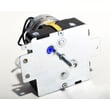
If the door feels “closed” but the dryer acts like it is open, the dryer door switch WP3406107 is a common fix on this model.
What a reset can and cannot fix
| Symptom | Reset helps most when | Likely next step if it returns |
|---|---|---|
| Dead panel or odd behavior | Control got “stuck” after a power blip | Check power supply, then timer/control issues |
| Won’t start | Door not fully latched or control not set | Check door switch, start circuit, timer |
| Runs but no heat | Power issue affecting heater (often shows as L2 during first-cycle diagnostics) | Verify supply voltage, then heating circuit parts |
Why it matters
A hard reset is the fastest way to separate a temporary control glitch from a real problem such as a door switch failure, a tripped breaker, or a heating circuit issue. It also gets you back to a known-good starting point before replacing parts.
Last updated: February 2026
What is the average life of a Kenmore dryer?
A Kenmore dryer like model 11067622600 typically lasts 10 to 13 years. You can push that lifespan longer by keeping airflow strong (clean lint, correct venting) and replacing normal-wear parts such as belts, thermostats, and thermal fuses before they cause overheating or strain.
Typical lifespan and what changes it
Most dryers fall into a predictable range, and the biggest difference is maintenance and venting.
- 10 to 13 years is the typical service life for a household dryer
- Heavy loads, long cycles, and poor venting shorten life
- Good airflow and routine cleaning extend life
- Replacing wear parts early prevents bigger failures
Maintenance that extends dryer life
The installation instructions for this dryer emphasize that overly long exhaust runs reduce performance and can shorten dryer life. Use these habits to keep your Kenmore 11067622600 running efficiently.
- Clean the lint screen before every load
- Vacuum lint from the lint screen housing periodically
- Keep the exhaust vent run as short and straight as possible
- Use rigid metal venting when possible
- Check outside vent hood for strong airflow
- Avoid overloading; it strains the drive motor and drum support parts
| What you do | How often | Why it matters |
|---|---|---|
| Clean lint screen | Every load | Maintains airflow and drying performance |
| Inspect/clean vent line | At least yearly | Reduces heat buildup and cycle time |
| Listen for squeal/thump | Ongoing | Catches belt/roller wear early |
Parts that commonly affect longevity
If the dryer runs but performs poorly, overheats, or stops mid-cycle, these are common wear or protection parts to check.
- Dryer drum belt 341241 (drum won’t turn, burning rubber smell)
- Dryer thermal cut-off fuse kit 279816 (no heat or dryer stops due to overheating protection)
- Dryer operating thermostat WP3387134 (temperature control issues, inconsistent drying)
Why it matters
A dryer that is forced to run hot or run long (usually from restricted venting) wears out heating and safety components faster and can also stress the drive motor, belt, and blower wheel. Keeping airflow correct is the simplest way to protect performance and extend service life.
For model-specific care and venting limits, follow the 11067622600 installation guide and the 11067622600 owner's manual.
Last updated: February 2026
How do I tell what model my Kenmore dryer is?
Your Kenmore dryer’s model number is printed on the model and serial number label; for Kenmore model 11067622600, that label is located at the top inside the dryer door well. Write down the full model number and serial number so we can match the correct parts and instructions.
Where to look on the dryer
Check these common label locations (start with the first one):
- Top inside the dryer door well (most common on Kenmore 110-series dryers)
- Inside the door opening on the cabinet frame
- On the back panel of the dryer
- Near the lint screen housing (on some designs)
What to record (and why)
Use this checklist so you capture everything needed for parts lookup and service:
- Model number (example: 11067622600)
- Serial number (unique to your unit)
- Purchase date (helpful for your records)
- Any suffixes or extra digits printed with the model number
Quick guide: model vs. serial
| Item | What it tells us | Used for |
|---|---|---|
| Model number | Exact design family and compatible parts | Ordering parts, manuals, diagrams |
| Serial number | Production run details | Service history, some revisions |
Why it matters
Kenmore dryers often share similar styling across multiple model numbers, but internal components like the heating system, timer, and door switch can differ. Using the exact model number helps ensure you get the right replacement part the first time.
Helpful next step
Once you have the model number, compare operating and safety details in the 11067622600 owner’s manual.
Last updated: February 2026
What does F mean on a Kenmore dryer?
On a Kenmore dryer, an “F” code means the control detected a fault. On model 11067622600, the exact meaning depends on the full code shown (for example, F1/F01). Use the troubleshooting section in the 11067622600 owner's manual to match the code to the failed circuit or sensor.
What to do first (quick checks)
- Unplug the dryer for 1 minute, then restore power and try a cycle again.
- Make sure the door closes firmly; a bad door switch can stop operation.
- Confirm the lint screen is clean before every load.
- Check airflow: crushed venting and clogged ducts can trigger overheating-related faults.
- If the code returns immediately, stop the cycle and troubleshoot before continued use.
Common causes behind “F” fault codes
Many Kenmore electronic-control dryers use “F” codes for control, sensor, or temperature-related problems. These are the most common categories:
- Control or timer issues (intermittent beeping, won’t start, erratic cycle behavior)
- Temperature sensing problems (thermistor/thermostat circuit faults)
- Overheating protection trips (restricted venting, high-limit events)
- Door circuit problems (door not sensed as closed)
If you suspect a door-sensing issue, the dryer door switch WP3406107 is a common wear item on this platform.
Venting and heat safety checks (important)
Proper venting is required for safe, efficient drying. Our Kenmore documentation calls for heavy metal venting (not plastic or foil), a 4-inch vent path, sealed joints with clamps, and periodic vent cleaning.
Venting checklist
- Use 4 in. metal or flexible metal vent
- Use the straightest path possible
- Seal joints with clamps (avoid screws into the duct)
- Clean the exhaust vent at least every 2 years
“F” code lookup guide
| What you see | What it means | Best next step |
|---|---|---|
| F + number (example F1) | A specific fault is stored | Look up the exact code in the manual troubleshooting table |
| F flashes with beeps | Fault is active now | Power reset, then check door and airflow |
| F returns after reset | Ongoing electrical/sensor issue | Test components and wiring; replace the failed part |
Why it matters
An “F” fault code is the dryer telling you it cannot run safely or correctly. Addressing airflow, door sensing, and temperature control issues prevents repeat shutdowns, long dry times, and overheating.
Last updated: February 2026
How do I know if my Kenmore dryer thermal fuse is blown?
On Kenmore dryer model 11067622600, a blown thermal fuse commonly shows up as a dryer that will not start or runs but has no heat. The sure way to confirm is a continuity test with a multimeter after unplugging the dryer; an open reading means the fuse has blown.
Quick symptoms to look for
- Dryer will not run even with a cycle selected and the door closed
- Drum tumbles but there is no heat (electric dryers can still tumble if one side of the 240V supply is lost)
- Dryer stops mid-cycle and will not restart until it cools (often tied to overheating issues)
- You recently noticed restricted airflow (long dry times, very hot cabinet, burning smell)
Rule out power and door-switch issues first
Your 11067622600 is an electric dryer and needs a full 240V supply. If one household fuse trips, the dryer can tumble but not heat.
Use this quick check list from the 11067622600 owner's manual:
- Confirm the dryer is plugged in and power is connected
- Check both household fuses or circuit breakers
- Make sure the dryer door is firmly closed
- Press Start firmly and verify a cycle is selected
How to test the thermal fuse (basic steps)
- Unplug the dryer (or shut off the breaker).
- Access the fuse (commonly on the blower housing or exhaust duct area).
- Remove at least one wire from the fuse terminal.
- Measure continuity across the fuse.
Interpreting the meter
| Meter result | What it means | What to do next |
|---|---|---|
| Beep or near 0 ohms | Fuse is good | Keep troubleshooting (airflow, thermostat, heater circuit) |
| No beep or OL/infinite | Fuse is blown | Replace the fuse and correct the overheating cause |
Why it matters
A thermal fuse is a one-time safety device. If it blows, the dryer usually overheated due to poor venting, a blocked lint screen, or a failed thermostat. Replacing the fuse without fixing airflow often leads to repeat failures.
Parts that are often involved
If you are diagnosing a no-heat or overheating condition on this model, these parts are commonly checked:
- Dryer thermal cut-off fuse kit 279816 (includes safety cut-off components)
- Dryer operating thermostat WP3387134
- Dryer high-limit thermostat WP3977767
- Dryer element 279838
Last updated: February 2026
How much does it cost to replace a heating element in a Kenmore dryer?
For Kenmore dryer model 11067622600, heating-element replacement typically runs $50 to $350 total: about $50 to $120 for the part plus $100 to $250 for labor if you hire service. If the dryer is not heating due to a power-supply issue (common with an L2 code), the “repair” may be electrical, not a new element; see the 11067622600 installation guide.
Typical cost breakdown
- Heating element part: commonly $50 to $120
- Service call and labor: commonly $100 to $250
- Related safety parts (as needed): thermal cut-off, high-limit thermostat, operating thermostat
- DIY cost: usually the part cost only (plus basic tools)
| Scenario | What you pay for | Typical total |
|---|---|---|
| DIY element replacement | Part only | $50 to $120 |
| Pro element replacement | Part + labor | $150 to $350 |
| Not heating due to L2 power issue | Electrical fix (outlet/breaker/cord) | Varies |
Parts that commonly get replaced with the element
If your Kenmore 11067622600 tumbles but will not heat, we often see heat-related parts replaced together to prevent repeat failures.
- Dryer element 279838 (the heater itself)
- Dryer thermal cut-off fuse kit 279816 (overheat protection parts)
- Dryer high-limit thermostat WP3977767 (limits heater temperature)
- Dryer operating thermostat WP3387134 (regulates normal cycling heat)
Why the price varies (and what to check first)
A “no heat” complaint is not always a bad heating element. The installation diagnostics for this model note that an L2 code points to a home power-supply problem that can keep the heater from turning on (for example, a tripped breaker on one leg of a 240V circuit). Checking power and airflow first can prevent buying parts you do not need.
Before you replace parts, we recommend:
- Confirm the dryer is getting proper power (breaker/fuses, cord, outlet).
- Make sure the door fully closes and the cycle is actually running.
- Check venting for crushing or blockage (restricted airflow can overheat and blow fuses).
Last updated: February 2026
How much does it cost to replace a temperature sensor on a dryer?
On Kenmore dryer model 11067622600, “temperature sensor” usually means a thermostat or thermal cut-off in the heating circuit. Typical pricing is $25 to $80 for the part and $150 to $350 for professional labor, so the installed total is commonly $175 to $430. Confirm the exact component in the 11067622600 owner’s manual.
Typical cost breakdown
- Part price: thermostat, high-limit thermostat, or thermal cut-off kit
- Service call/diagnosis: verifying the failure is not airflow, wiring, or control issues
- Labor time: opening the cabinet and accessing the heater housing or blower area
- Optional add-ons: vent cleaning, lint removal, replacing heat-damaged terminals
| Cost item | Typical range | Notes |
|---|---|---|
| Part | $25 to $80 | Varies by which temperature-control part is used |
| Labor | $150 to $350 | Depends on local rates and access |
| Total installed | $175 to $430 | Diagnosis and any extra repairs can change the total |
Common temperature-control parts used on this model
Many Kenmore 110-series dryers regulate and protect heat using thermostats and thermal cut-offs rather than one standalone “sensor.” These are common replacements when the dryer overheats, shuts off early, or has no heat.
- Dryer operating thermostat WP3387134
- Dryer high-limit thermostat WP3977767
- Dryer thermal cut-off fuse kit 279816
What to check before replacing parts
- Clean the lint screen and confirm strong airflow at the outside vent hood
- Inspect the vent duct for crushing, long runs, or lint blockage
- If the dryer will not run, verify both breakers/fuses are on (many dryers use two)
Why it matters
Restricted venting is the top cause of overheating; it can repeatedly trip a thermal cut-off and shorten the life of thermostats and the heating element.
Last updated: February 2026