


Is a 20 gallon air compressor big enough for air tools?
Yes; a 20-gallon air compressor is big enough for many air tools in DIY and light-duty use, especially when you run the tool in short bursts. For continuous-use tools (like sanders or many paint sprayers), the limiting factor is usually CFM at 90 PSI, not tank size.
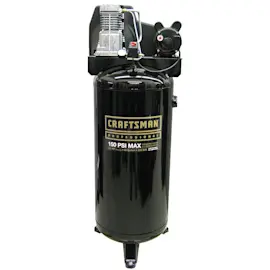
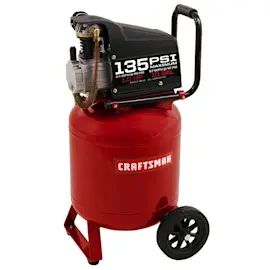
A 20-gallon setup (like many Craftsman units, including model 919167770) typically works best for intermittent demand.
- Brad/finish nailers and staplers
- Tire inflation and blow guns
- Small impact wrench use (with pauses)
- Light ratchet use (short bursts)
- Occasional air chisel use (brief duty cycles)
If the tool needs steady airflow, the compressor will run frequently, pressure can sag, and recovery time becomes the bottleneck.
- DA/orbital sanders (often continuous)
- Die grinders (often continuous)
- HVLP or conventional spray guns (steady draw)
- Media blasting (high, constant CFM)
Use the tool’s required SCFM at 90 PSI and compare it to the compressor’s delivered SCFM at 90 PSI.
| Tool type | Air demand pattern | 20-gallon experience |
|---|---|---|
| Nailers | Short bursts | Usually a good match |
| Impact wrench | Bursty | Often OK with pauses |
| Ratchet | Semi-continuous | Mixed results |
| Sander/grinder | Continuous | Usually frustrating |
| Paint spraying | Continuous | Often undersized |
Tank size mainly affects how long you can run before pressure drops; CFM output determines whether the compressor can keep up. Matching CFM to the tool prevents constant running, overheating, and inconsistent tool performance.
If your Craftsman 919167770 struggles with a specific tool, use our troubleshooting flow for air compressor won't build tank pressure to rule out leaks, valve issues, or pump wear that can mimic an “undersized compressor.”
Last updated: February 2026
What is the most common cause of air compressor failure?
The most common cause of failure on a Craftsman air compressor like model 919167770 is poor maintenance that leads to heat and wear: dirty intake filtration, restricted cooling airflow, and neglected seals/valves can cause overheating, air leaks, and premature pump or motor damage.
Most “dead” compressors are really a few common problems that snowball:
- Overheating from blocked cooling fins, poor ventilation, or long run times
- Restricted intake airflow from a dirty or missing air filter, which makes the pump work harder
- Air leaks at fittings, drain valve, regulator, or tank check valve, which increases run time and heat
- Pressure switch or electrical issues (burned contacts, loose wiring, weak capacitor on some units)
- Pump wear (reed valves, piston seal, cylinder wear) that reduces compression and raises operating temperature
Use these as a simple maintenance routine for the 919167770:
- Drain tank moisture after use to reduce internal corrosion and water carryover
- Keep the compressor in open air; do not run it in a tight cabinet or against a wall
- Listen for hissing after shutoff; fix leaks before the next run
- Watch how long it takes to build pressure; a sudden increase points to leaks or pump valve wear
- Keep the unit clean so the motor and pump can shed heat
| What you notice | Most likely cause | What to do next |
|---|---|---|
| Won’t start | Power/pressure switch, motor issue, stuck check valve | Follow air compressor won't start |
| Runs but won’t build pressure | Pump valves, piston seal, major leak | Follow air compressor won't build tank pressure |
| Cycles too often | Small leaks, faulty check valve | Follow air compressor air leaks |
| Safety valve pops | Overpressure, bad pressure switch, restriction | Follow air compressor safety valve keeps popping open |
When a compressor runs hot or runs longer than normal, the motor and pump wear faster. Fixing airflow and leaks early typically prevents the expensive failures (pump rebuild or motor replacement).
Last updated: February 2026
How to check compressor size?
To check the right compressor size for your Craftsman 919167770 air compressor setup, we match your tools’ air demand to the compressor’s output: required airflow (CFM) at a given pressure (PSI), plus a safety margin so the compressor does not run nonstop.
Most customers mean one of these:
- Air delivery (CFM at PSI): the most important sizing number for air tools
- Tank size (gallons): affects how long you can run before pressure drops
- Motor power (HP/amps): affects recovery time and electrical needs
- Duty cycle: how long it can run without overheating
- List every air tool you plan to run.
- Find each tool’s required CFM at its working PSI (often printed on the tool or in its manual).
- Use the highest-demand tool as your baseline (or add CFM if tools run at the same time).
- Add 25% to 50% extra CFM so the compressor can keep up without constant running.
- Confirm the regulator range covers the PSI your tools need.
| Use case | Typical tool demand | What to target |
|---|---|---|
| Brad nailer, stapler | ~0.5 to 2 CFM @ 70 to 100 PSI | Small compressor is usually fine |
| Impact wrench (auto) | ~4 to 8 CFM @ 90 PSI | Mid-size CFM with reserve |
| Die grinder, sander | ~8 to 15+ CFM @ 90 PSI | High CFM, larger pump |
| HVLP spray (varies) | ~6 to 14 CFM @ 20 to 40 PSI | Match gun spec closely |
If CFM is too low for the PSI you need, you will see pressure drop, weak tool performance, and longer recovery times. Correct sizing also reduces heat buildup and helps the pressure switch cycle normally.
If your compressor used to keep up but now struggles, use these checks:
- Listen for air leaks at fittings, hose, drain valve, and check valve
- Watch whether the tank pressure gauge rises smoothly
- Confirm the regulator actually changes outlet pressure
- If it won’t build tank pressure, inspect the pump and valves
- If it won’t start, check power supply and pressure switch behavior
For guided diagnostics and repair steps, use air compressor won't build tank pressure and air compressor won't start.
Last updated: February 2026
Is it worth it to repair a compressor?
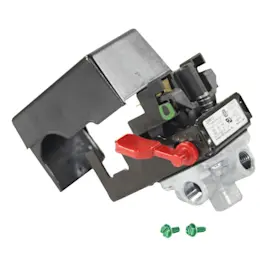
Yes; repairing your Craftsman air compressor model 919167770 is worth it when the failure is a common service item (pressure switch, check valve, regulator, gauges, fittings) and the tank and pump are sound. It is not worth it when the tank is damaged or the pump has major internal wear.
- Repair when it still builds pressure but has a control problem (won’t start/stop correctly, short-cycles).
- Repair when the issue is a leak at a fitting, hose, drain valve, or check valve.
- Repair when outlet pressure won’t adjust due to a regulator or gauge problem.
- Replace the unit when the tank won’t hold air or shows heavy rust, dents, or weld damage.
- Replace the unit when the pump is seized, knocks loudly, or has heavy blow-by and a rebuild cost is high.
| What failed | Common symptom | Typical fix | Usually worth it? |
|---|---|---|---|
| Pressure switch/unloader | Won’t start, won’t shut off | Replace switch, verify unloader line | Yes |
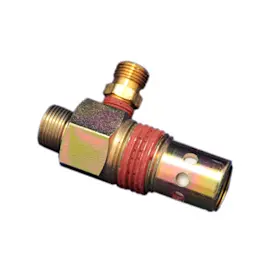
| Check valve | Hard restart after shutdown | Replace check valve | Yes |
| Regulator/gauge | Can’t adjust outlet pressure | Replace regulator/gauge | Yes |
| Pump wear | Won’t build tank pressure | Rebuild pump | Sometimes |
| Tank integrity | Tank won’t hold air | Replace compressor (do not repair tank) | No |
The tank and pressure-control parts (pressure switch, safety valve, check valve) determine safe, predictable operation. Fixing a small control or leak issue restores performance; a compromised tank or worn-out pump does not.
- Air compressor won't start
- Air compressor won't build tank pressure
- How to replace an air compressor pressure switch
- How to replace an air compressor check valve
- How to rebuild an air compressor pump
Last updated: February 2026