Owner’s manual
 Error Codes
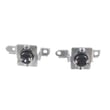


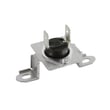
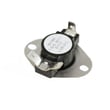
How do I know if my Kenmore dryer thermal fuse is blown?
On the Kenmore Elite 79681022900 dryer, a blown thermal fuse commonly shows up as a dryer that will not start or runs but won’t heat. The sure way to confirm it is a continuity test with a multimeter after unplugging the dryer, then correcting the venting issue that caused the overheat.
Quick symptoms to look for
- Dryer won’t turn on at all (no tumble)
- Dryer tumbles but clothes stay damp (no heat)
- Drying times suddenly get much longer (often from restricted venting)
- Vent indicator is blinking (airflow restriction warning)
How we test the thermal fuse (safe, reliable method)
- Unplug the dryer (or switch off the breaker).
- Access the thermal fuse area (location and panel removal steps are shown in the 79681022900 owner’s manual).
- Pull at least one wire off the fuse terminal.
- Set a multimeter to continuity or lowest ohms.
- Test across the fuse terminals:
- Good fuse: continuity (near 0 ohms)
- Blown fuse: no continuity (open circuit)
Why venting matters (and what the manual says)
Your dryer’s manual calls out that vent ductwork should be checked for lint buildup and cleaned at least once per year, and to check ductwork immediately if drying performance drops. A restricted vent is the most common reason a thermal fuse opens.
Fix the cause before replacing parts
Use this airflow checklist before you put the dryer back in service:
- Clean the lint screen and lint screen housing
- Inspect the entire vent run for lint, crushed duct, or too many turns
- Confirm the outside wall damper opens freely and is not blocked
- Keep the duct run as short and straight as practical
| What you observe | Most likely issue | What to do next |
|---|---|---|
| Won’t start | Blown thermal fuse, door switch, power issue | Test fuse for continuity; verify outlet/breaker |
| Runs, no heat | Blown thermal fuse, heating circuit issue, airflow restriction | Check venting; test heating components |
| Long dry times | Vent restriction, dirty lint path | Clean vent and lint path; recheck airflow |
Why it matters
A thermal fuse is a one-time safety device. If you replace it without fixing the airflow restriction, the dryer can overheat again and the new fuse can open quickly.
Last updated: February 2026
How much does it cost to replace a heating element in a Kenmore dryer?
For the Kenmore Elite dryer model 79681022900, replacing the heating element typically costs $250 to $600 total: about $150 to $350 for the part(s) plus $100 to $250 for labor. If you do it yourself, your cost is usually the heating element and any related thermostats or wiring that test bad.
What you usually pay (DIY vs. pro)
- DIY parts-only: heating element plus any failed safety parts
- Professional repair: service call, labor, and parts
- Extra cost drivers: restricted venting, multiple failed heat components, or damaged wiring/connectors
| Replacement approach | Typical total cost | What’s included |
|---|---|---|
| DIY (parts only) | $150 to $350 | Heating element, possibly thermostat(s) or sensor(s) |
| Professional repair | $250 to $600 | Labor, diagnostics, parts, reassembly/testing |
Parts that commonly get replaced with the element
On model 79681022900, we often see heat complaints tied to airflow or temperature-sensing parts. If the element failed from overheating, replacing only the element can lead to repeat failures.
- Dryer heating element 5301EL1001J
- Dryer high-limit thermostat 6931EL3003D
- Dryer thermistor AGM30045804
- Dryer blower thermostat 6931EL3002M
Why venting affects the final cost
Your manual calls for checking vent ductwork for lint buildup and cleaning it at least once per year; poor airflow can overheat the heater housing and trip thermostats or shorten element life. Use the venting and heating test steps in the 79681022900 owner’s manual after any heat-related repair.
- Clean the lint screen every load
- Inspect the vent run for kinks, crushed flex duct, or long runs
- Clean the entire vent path (dryer outlet to exterior hood)
- Confirm the exhaust air is warm a few minutes after starting an electric cycle
Quick decision guide
| Symptom | Most likely area | What to check first |
|---|---|---|
| Runs but no heat | Heater circuit | Element continuity, thermostats, wiring |
| Long dry times | Airflow | Lint screen housing, vent restriction |
| Overheats or shuts off | Temperature control | High-limit thermostat, thermistor |
Why it matters: A heating element can fail because of normal wear, but restricted airflow is the most common reason a new element fails early. Fixing venting at the same time protects the new part and restores normal drying performance.
Last updated: February 2026
What are the codes for Kenmore Elite dryer?
Kenmore Elite dryer error codes are the letter and number messages shown on the display when the dryer detects a specific problem (power interruption, control failure, heating circuit issue, or temperature-sensing fault). For model 79681022900, use the code list in the 79681022900 owner's manual and match the code to the symptom.
Common Kenmore Elite dryer codes and what they mean
These are the most common codes customers see on Kenmore Elite dryers, along with the usual cause:
- PF: Power failure or power interruption during a cycle
- F:01: Main electronic control board problem
- F:02: Keypad or user interface problem
- F:20: Heater relay problem (heating circuit control)
- F:22 / F:23: Outlet thermistor (temperature sensor) problem
- F:24 / F:25: Inlet thermistor (temperature sensor) problem
- TE1 / TE2: Temperature sensing failure (service is typically required)
Quick checks to try before replacing parts
Always unplug the dryer or switch off the breaker before opening panels.
- Reset power: unplug for 1 minute (or reset the breaker) to clear a PF or a temporary control glitch
- Confirm airflow: clean the lint screen and make sure the vent is not restricted (a restriction can trigger overheating symptoms)
- Check the display lights: the manual describes indicators like Check Vent, Control Lock, and Add Water (steam models)
- If the dryer runs but does not heat: verify the house breaker is not tripped on one leg (electric dryers can sometimes run with no heat)
- If you see TE1/TE2 repeatedly: stop using the dryer until the temperature-sensing issue is corrected
Code-to-action guide (simple)
| Code family | What it points to | What we do next |
|---|---|---|
| PF | Power supply interruption | Reset power; check outlet and breaker |
| F:01, F:02 | Control or keypad issue | Try a power reset; inspect for stuck keys |
| F:20 | Heating control issue | Check venting and heat operation; test heating circuit |
| F:22-F:25, TE1/TE2 | Thermistor or temperature sensing | Inspect wiring connections; test sensor resistance |
Why it matters
Using the right error code list for Kenmore Elite 79681022900 helps us avoid replacing good parts. For example, a vent restriction can cause heat-related symptoms, while TE1/TE2 points to a true temperature-sensing failure.
For model-family code details and definitions, we also reference Kenmore elite dryer error codes.
Last updated: February 2026
What is the capacity of Kenmore 79681022900?
The Kenmore Elite dryer model 79681022900 has a drying capacity of 7.4 cu. ft. (IEC). This is a large-capacity drum size designed to handle bulky items and bigger loads while still drying evenly when airflow and venting are in good shape (see the 79681022900 owner's manual).
Where the capacity spec comes from
In the specifications section, the manual lists “Drying Capacity: IEC 7.4 cu. ft.” for this Kenmore Elite dryer.
What 7.4 cu. ft. means in everyday use
A 7.4 cu. ft. dryer typically handles:
- King or queen bedding (check care labels and avoid overstuffing)
- Large mixed loads of towels
- Full family laundry loads
- Bulky items that need room to tumble for faster drying
Capacity vs. drying performance (why loads still matter)
Even with a 7.4 cu. ft. drum, drying time increases if airflow is restricted or the load is packed too tightly.
| What you notice | Common cause | What to do |
|---|---|---|
| Long dry times | Restricted exhaust venting | Clean/inspect vent path and outside hood |
| Clothes feel hot but still damp | Overloaded drum | Reduce load size so items tumble freely |
| Lint buildup around door area | Lint screen area not sealing well | Inspect lint screen housing and seals |
Why it matters
Using the correct load size for the 79681022900 helps prevent overheating, reduces cycle time, and lowers wear on key drive parts like the belt and idler pulley.
Last updated: February 2026
Where is the model number on Kenmore Elite dryer?
On the Kenmore Elite dryer model 79681022900, the model number is printed on the identification plate inside the dryer door opening. Open the door and look along the door frame or cabinet opening for the label that also lists the serial number.
Where to look first (fastest checks)
- Open the dryer door and inspect the cabinet frame around the opening
- Check the identification plate for both model and serial numbers
- Wipe dust off the label so the characters are readable
- Take a photo of the label before ordering parts or scheduling service
What the label is used for
The identification plate is the reference for ordering Kenmore parts like a drum belt, thermistor, or heating element, and for matching the correct wiring, gas requirements, and venting instructions in the documentation.
| What you need | Where it’s found | Why it matters |
|---|---|---|
| Model number (79681022900) | Inside the dryer door on the ID plate | Ensures correct parts diagrams and parts fit |
| Serial number | Same ID plate | Helps confirm production details for service |
Why it matters
Kenmore Elite dryers often share similar styling across model families, but parts and procedures can differ by model. Using the exact model number from the door label prevents ordering the wrong component and speeds up troubleshooting.
Helpful reference
For the exact wording and record-keeping section, use the 79681022900 owner’s manual.
Last updated: February 2026