Owner’s manual


What is the lifespan of a Maytag washer?
Most Maytag washers last 10 to 13 years with normal household use. Your Maytag MVWB450WQ0 can reach the high end of that range when it’s used with HE detergent, not overloaded, and kept clean and level; see the MVWB450WQ0 owner's manual for the care and operating basics.
Typical lifespan and what changes it
A washer’s life is mostly driven by load size, cycle frequency, and how well it drains and spins.
- Longer life: moderate loads, correct HE detergent amount, good ventilation, periodic cleaning
- Shorter life: frequent overloading, chronic out-of-balance spinning, hard-water scale, repeated drain clogs
- Big wear areas: drive system, suspension, lid lock, and drain pump
Quick maintenance that adds years
These habits reduce strain on the motor, hub, and pump.
- Use HE (High Efficiency) detergent only; too many suds can cause errors and longer cycles.
- Keep loads evenly distributed; mix large and small items.
- Avoid packing the basket tight; leave room for items to move.
- Run a periodic cleaning cycle (or the model’s clean washer routine if equipped).
- Check pockets to prevent coins and debris from reaching the drain system.
When “age” is really a repairable issue
If the washer is not agitating well, won’t spin, or makes grinding noises, a few common parts often restore performance.
| Symptom | Common cause | Example part for MVWB450WQ0 |
|---|---|---|
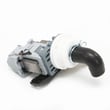
| Won’t drain or leaves water | Drain pump issue or blockage | Water pump W10536347 |
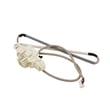
| Lid won’t lock, won’t start/spin | Lid lock failure | Washer lid lock WPW10619844 |
| Poor agitation or slipping | Worn drive hub | Hub W10820039 |
Why it matters
Knowing the typical 10 to 13 year lifespan helps you decide whether to maintain, repair, or replace. On MVWB450WQ0, fixing a drain, spin, or lock problem early prevents secondary damage (for example, repeated out-of-balance events that wear suspension and drive components).
Last updated: February 2026
What is the capacity of the Maytag MVWB450WQ0?
The Maytag MVWB450WQ0 top-load washer has a 4.0 cu. ft. capacity, which is designed to handle everyday family-size loads while still allowing enough room for proper wash action and rinsing. For cycle and feature details, use the MVWB450WQ0 owner's manual.
What 4.0 cu. ft. means in real use
A 4.0 cu. ft. capacity is a common “large capacity” size for a top-load washer like the MVWB450WQ0. It typically works well for:
- Mixed loads of shirts, jeans, and towels
- Medium to large towel loads (avoid packing the basket tight)
- Bulky items (wash one large item at a time so it can move freely)
- Bedding like sheets (spread items evenly around the washplate)
Loading tips that help performance
How you load affects cleaning, spin, and vibration more than the number on the spec sheet.
- Load items loosely; do not compress or “ram” laundry into the basket
- Keep the load balanced; mix large and small items
- For bulky items, add a few smaller items to help balance
- Use the right cycle and options for the fabric type
- If you see excess suds, reduce detergent (especially with HE detergent)
Quick reference
| Item | MVWB450WQ0 typical spec |
|---|---|
| Washer type | Top-load |
| Capacity | 4.0 cu. ft. |
| Best practice | Leave space for items to circulate |
Why it matters
Capacity is only part of the story; proper circulation is what gets clothes clean. Overloading can lead to poor rinsing, off-balance spinning, and extra wear on drive components such as the washplate and hub (for example, the hub W10820039).
Last updated: February 2026
What is the most common problem with Maytag washer top loader?
On Maytag top-load washers like model MVWB450WQ0, the most common day-to-day problem is a load that will not balance for the final spin, which leaves clothes wetter than expected and can trigger an unbalanced-load routine or code. Many “won’t spin” complaints trace back to loading, leveling, or a lid lock issue.
What we see most often (and what to check first)
- Unbalanced or overloaded load: the washer may try to correct it before final spin; redistribute items.
- Washer not level: rocking or uneven feet increases vibration and can prevent a stable spin.
- Too many suds (wrong detergent or too much): suds can interrupt normal draining and spinning.
- Lid not locking: if the lid is not closed and locked, the washer will not run properly.
- Drain path issues: a slow/clogged household drain can cause backup and poor draining.
For MVWB450WQ0, the MVWB450WQ0 owner's manual specifically calls out the uL (unbalanced load) condition and instructs you to open the lid, redistribute the load, close the lid, and press Start/Pause.
Quick fixes that solve most “won’t spin” calls
- Cancel the cycle, then redistribute items in loose heaps evenly around the basket wall.
- Reduce the load size if you see overload behavior.
- Confirm the washer is level and the feet are firmly on the floor.
- Use only HE detergent and measure carefully (especially with 2X or higher concentrates).
- Make sure the lid closes fully; if the lock is unreliable, inspect the washer lid lock WPW10619844.
Common symptoms and likely causes
| Symptom | Most likely cause | What to do next |
|---|---|---|
| Loud banging, vibration, stops before final spin | Unbalanced load or washer not level | Redistribute load; level the washer |
| Wet clothes at end of cycle | Unbalanced load correction never completes | Reduce load; avoid bulky single items |
| Humming with gurgling during drain | Normal drain-pump sound | Monitor for slow drain or backups |
| Suds message/long cycle | Too much or non-HE detergent | Drain and spin; switch to HE |
Why it matters
A stable, high-speed spin is what removes most water. When the load is unbalanced or the cabinet is not level, MVWB450WQ0 may slow down or stop the final spin to protect the drive system, which directly leads to “not spinning” and “still wet” complaints.
Last updated: February 2026
Can I wash a king size comforter in a Maytag washer?
Yes. In your Maytag MVWB450WQ0 top-load washer, you can wash a king-size comforter using the Bulky cycle, which the manual lists for large items such as comforters, sleeping bags, and blankets. Follow the loading guidance in the MVWB450WQ0 owner's manual to prevent tangling and out-of-balance spinning.
Best cycle and loading method for MVWB450WQ0
The MVWB450WQ0 manual calls out Bulky for large items; correct loading is what makes the cycle work well.
- Select Bulky for comforters and other oversized items.
- Drop the comforter in loose heaps evenly around the basket wall.
- Keep the load height at or below the top row of basket holes.
- Wash the comforter by itself (adding pillows or extra laundry commonly causes imbalance).
- Use the recommended detergent amount for a single bulky item; too much can leave residue.
If it bangs, pauses, or finishes too wet
Bulky items can shift as they absorb water. Use these steps to finish the load without stressing the washer.
| What you notice | What it means | What to do next |
|---|---|---|
| Thumping or repeated rebalancing in spin | Comforter shifted to one side | Pause, redistribute evenly, restart |
| Comforter still very wet at the end | Spin speed reduced to control balance | Run Drain & Spin, then redistribute and spin again |
| Tangling or “balling up” | Item was loaded in a tight wad | Reload in loose heaps around the basket wall |
Why it matters
Using the Bulky cycle and loading the comforter loosely helps the washer maintain balance and complete a stronger final spin. That improves cleaning and reduces the chance of excessive vibration during the spin portion of the cycle.
Last updated: February 2026