Owner’s manual



How to force a Kenmore Elite washer to drain?
To force-drain a Kenmore Elite washer model 79641473210, we first try a cancel/drain cycle; if the washer will not pump out, we manually drain through the pump filter area and then clear the most common drain restrictions (filter, hose, or pump). See the exact control steps in the 79641473210 owner's manual.
- Press Pause/Cancel (or Stop) and select Drain/Spin (or Spin Only) if your cycle list includes it.
- If the tub stays full, unplug the washer for 1 minute, plug it back in, then try Drain/Spin again.
- If it still will not drain, manually drain from the pump filter access area (front lower panel area on most front-load designs).
- Keep a shallow pan and towels ready; water can release quickly.
- After draining, check for a clogged filter, kinked drain hose, or a blocked standpipe/sink drain.
- Unplug the washer.
- Remove the lower front access panel (if equipped).
- Place towels and a pan under the pump area; slowly open the pump filter cap (or drain tube, if present) to let water out.
- Remove debris from the filter (coins, lint, socks).
- Reinstall the cap tightly, then run Drain/Spin to confirm normal pumping.
| Symptom | Most likely cause | What to check next |
|---|---|---|
| Hums but won’t drain | Pump jammed or failing | Inspect filter; consider drain pump motor (4681EA2001T) - washer part by lg electronics 4681EA2001T |
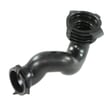
| Drains slowly | Partial clog | Check filter and washer tub-to-pump hose 4738ER1002A for obstructions |
| Stops and shows a drain-related code | Drain restriction | Clear hose/standpipe; then retry Drain/Spin |
A forced drain is a short-term fix; clearing the restriction prevents repeat drain errors, protects the drain pump, and helps the washer reach high-speed spin so loads do not come out soaking wet.
Last updated: February 2026
How to reset a Kenmore Elite washing machine?
To reset your Kenmore Elite washer model 79641473210, we recommend doing a power reset first: turn the washer off, unplug it for 1 minute, then plug it back in and try a normal cycle. For model-specific button sequences, use the 79641473210 owner's manual.
- Power reset: Power off, unplug 60 seconds, plug back in.
- Control reset: With the washer powered on, press and hold Power for about 10 seconds.
- Pause/Cancel reset: Press and hold Start/Pause (or Cancel, if present) for about 10 seconds.
- Cycle reset: Select Drain/Spin (or Rinse/Spin) and start the cycle.
- Hard reset: Unplug 5 minutes to clear a stubborn control glitch.
A reset clears many control-board glitches, but it will not correct a mechanical or water-flow problem. If the washer will not drain, will not fill, or will not unlock, check these common causes:
- Clogged drain path or a failing drain pump
- Kinked drain hose or standpipe backing up
- Water supply valves not fully open
- Door not latching or lock not engaging
- Load imbalance causing the cycle to stop
| Symptom | Most likely area to check | Common next step |
|---|---|---|
| Won’t drain / stops mid-cycle | Drain system | Inspect filter/hoses; consider the drain pump motor (4681EA2001T) - washer part by lg electronics 4681EA2001T if the pump hums or is dead |
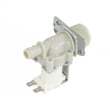
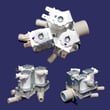
| Won’t fill / fills slowly | Water inlet | Verify hot/cold supply; screens; consider lg washer single-solenoid water inlet valve 5220FR2006H |
| Door won’t lock/unlock | Door lock | Check latch alignment; consider lg washer door lock assembly EBF49827801 |
Resetting is the fastest way to clear a temporary control error and get your Kenmore Elite washer running again. If the same symptom returns after a reset, it usually points to a part (drain pump, inlet valve, or door lock) or an installation issue that needs attention.
Last updated: February 2026
What does F21 mean on a Kenmore Elite washer?
On Kenmore Elite washer model 79641473210, the F21 code means a long drain condition: the washer is taking too long to pump water out. This is usually caused by a drain restriction (coin trap, hose, standpipe) or a failing drain pump.
- Unplug the washer for 5 minutes to reset the control, then try Drain/Spin.
- Check the drain hose for kinks, crushing, or freezing.
- Confirm the drain hose is not shoved too far down the standpipe (it can siphon or restrict flow).
- If you see heavy suds, run a Rinse/Spin with no detergent; use HE detergent going forward.
- Listen during drain: a loud hum with little or no water flow points to a clog or pump issue.
| What you notice | Likely cause | What we do next |
|---|---|---|
| Water drains slowly, then F21 | Partial clog in tub-to-pump hose or drain hose | Inspect hoses for lint, socks, debris |
| Pump runs but little water moves | Pump impeller jammed or worn | Check/replace the drain pump |
| No pump sound at all | Pump not getting power or failed | Check wiring, then replace pump if needed |
| Suds plus long drain | Too much detergent or wrong detergent | Switch to HE detergent, reduce amount |
If you confirm the pump is weak, noisy, or jammed, the drain pump motor is a frequent repair for long-drain complaints on this style of Kenmore Elite washer.
- Consider the drain pump motor (4681EA2001T) - washer part by lg electronics 4681EA2001T if the pump hums, grinds, or will not move water.
- If the pump is fine, inspect the tub-to-pump hose for obstructions (small items often lodge there).
A long-drain condition can stop the cycle, leave clothes soaking wet, and strain the pump. Clearing restrictions early helps prevent repeat F21 errors and reduces the chance of leaks from backed-up water.
For model-specific access steps, error-code notes, and drain routing guidance, use the 79641473210 manual.
Last updated: February 2026
What is the average lifespan of a Kenmore washer?
A Kenmore washer typically lasts 10 to 15 years. For the Kenmore Elite 79641473210, reaching the high end of that range comes down to load size, detergent use (HE detergent), and routine cleaning and inspection outlined in the 79641473210 owner's manual.
Most washers fall into a predictable window, but day-to-day use makes a big difference.
- Light use (1 to 3 loads/week): often closer to 15 years
- Average use (4 to 7 loads/week): commonly 10 to 15 years
- Heavy use (multiple loads/day): often closer to 8 to 12 years
- Hard water and frequent hot washes can shorten seal and valve life
- Overloading accelerates wear on bearings, shocks, and the drive system
On front-load style Kenmore Elite washers, the most common wear items are tied to draining, filling, and door sealing.
| Symptom | Common area involved | Why it matters |
|---|---|---|
| Won’t drain, drains slowly | Drain pump, hoses, filter/coin trap | Standing water leads to odors and repeat failures |
| Won’t fill or fills slowly | Water inlet valve, screens | Long fill times can stop cycles and strain components |
| Leaks at the door | Door boot, clamps | Water damage risk and mold/odor issues |
| Excess vibration or banging | Shock absorbers, load balance | Can damage the tub, bearings, and cabinet |
If your washer is not draining and you have verified the drain path is clear, the drain pump motor (4681EA2001T) - washer part by lg electronics 4681EA2001T is a common replacement part for this model.
These habits reduce stress on the tub, pump, and seals.
- Use HE detergent and measure carefully (too much causes residue and odors)
- Run a monthly tub clean cycle (or hottest cycle with washer cleaner)
- Leave the door slightly open between loads to dry the door boot
- Check pockets to prevent coins, screws, and pins from damaging the pump
- Level the washer and keep loads balanced to protect shocks and bearings
Knowing the typical lifespan helps you decide when a repair is worth it. If your 79641473210 is under 10 years old, fixing a drain, fill, or door-seal issue is often a practical way to restore reliable performance.
Last updated: February 2026
What model is my Kenmore Elite washer?
Your Kenmore Elite washer’s model number is printed on the appliance’s rating label. On Kenmore Elite front-load washers like model 79641473210, the label is most often in the door opening (door jamb) or just behind the door; it can also be on the back or side of the cabinet.
Check these common label locations (in this order):
- Door opening (door jamb) around the front frame
- Behind the door, along the inner edge of the front panel
- Back of the control panel area
- Left or right side panel near the bottom edge
- Rear panel of the washer cabinet
The rating label usually includes several identifiers. For parts lookup and manuals, the model number is the key item.
| Label item | What it’s used for | Example format |
|---|---|---|
| Model number | Matching parts and diagrams | 796.4147XXXX or 7964147XXXX |
| Serial number | Production date and service history | Letters and numbers |
| Electrical ratings | Installation and troubleshooting | Volts/amps |
These quick checks help ensure we match the right Kenmore parts:
- Copy the model number exactly as printed (all digits, no spaces)
- If the label shows a dot (example: 796.4147…), include it when searching, but the digits still identify the same model family
- Use the full model number when ordering parts like a drain pump motor or door lock
- If the label is worn, take a clear photo and zoom in to confirm each digit
Kenmore Elite washers share similar styling across many models, but parts like the door lock assembly, water inlet valve, and drain pump can vary by revision. Using the exact model number prevents ordering the wrong replacement part.
For model-specific identification details and label locations, use the 79641473210 owner’s manual.
Last updated: February 2026
What size is a Kenmore Elite washer?
For Kenmore Elite washer model 79641473210, “size” usually means the cabinet dimensions (width, height, depth) and the wash drum capacity (cubic feet). The exact numbers for your specific model are listed in the Specifications section of the 79641473210 owner's manual.
Use the manual to confirm these model-specific specs before you buy a pedestal, plan a stack, or measure a tight laundry closet:
- Overall width: determines if it fits a standard 27-inch opening
- Overall height: affects countertop clearance and stacking height
- Overall depth: impacts hallway clearance and door swing
- Capacity (cu. ft.): helps you match load size to household needs
- Required clearances: prevents vibration noise and hose kinks
If you are planning space before you have the unit in front of you, most Kenmore front-load washers in this class fall into these ranges; then confirm the exact 79641473210 specs in the manual.
| Measurement | Typical range | Planning tip |
|---|---|---|
| Width | 27 in | Most front-loaders are built for standard alcoves |
| Height | 38 to 39 in | Add height if using a pedestal or stacking |
| Depth | 30 to 34 in | Include door and control-panel protrusion |
| Capacity | 4.0 to 5.0 cu. ft. | Larger capacity needs more space and water management |
- Measure width at the narrowest point (trim and baseboards count)
- Measure depth from the back wall to the front-most point (include door)
- Allow 3 to 6 inches behind the washer for water hoses and the drain hose
- Confirm door swing clearance so the door opens fully
- Check the manual for any minimum side and rear clearances
Correct sizing prevents installation problems like a blocked door, crushed hoses, poor draining, and excess vibration; it also helps you choose a capacity that matches your typical load size.
Last updated: February 2026
Where is the filter located on a Kenmore Elite washing machine?
On the Kenmore Elite washer model 79641473210, the “filter” customers usually mean is the drain pump clean-out (coin trap) filter. It’s typically located at the lower front of the washer behind a small access panel; you open the panel to reach the drain hose and filter cap. See the 79641473210 owner's manual for the exact access-panel location and steps.
Look along the bottom edge of the front panel for a small door or kick-plate access point.
- Unplug the washer before opening the access area.
- Place a shallow pan and towels under the opening.
- Open the lower access panel.
- Pull out the small drain hose (if equipped) and drain water into a container.
- Unscrew the pump filter cap slowly to remove debris.
- Reinstall the cap snugly and close the access panel.
That pump filter traps lint, coins, hair pins, and small items before they reach the drain pump. Keeping it clear helps prevent slow draining, standing water, and drain-related error codes.
| Symptom | What the filter area often tells us | What to do next |
|---|---|---|
| Washer won’t drain | Filter packed with debris | Clean filter and retry Drain/Spin |
| Grinding during drain | Debris contacting impeller | Clean filter; inspect pump |
| Water leaks at front bottom | Filter cap O-ring dirty or cross-threaded | Clean sealing surface; reinstall cap |
| Still won’t drain after cleaning | Pump not running or weak | Check for a failed pump motor |
If the filter is clean but the washer still won’t drain, the drain pump can be the issue. For this model, a common replacement is the drain pump motor (4681EA2001T) - washer part by lg electronics 4681EA2001T.
- Expect water to spill the first time you open the filter.
- Never force the filter cap; back it off and re-thread to avoid leaks.
- Run a short Rinse/Spin after reassembly to confirm proper draining.
Last updated: February 2026