Owner’s manual
 Error Codes



How to reset GE side by side refrigerator not cooling?
For GE model DSE25JSHECSS, the most reliable “reset” for a not-cooling condition is a power reset: unplug the refrigerator (or switch off the breaker) for 1 full minute, then restore power and allow 24 hours for temperatures to stabilize. See the control and temperature details in the DSE25JSHECSS owner’s manual.
- Confirm the controls are not set to OFF (some control styles stop cooling when set to the warmest setting until the display flashes “off”).
- Unplug the refrigerator for 60 seconds.
- Plug it back in and listen for the compressor and fans to start.
- Set temperatures to the recommended starting point: 37°F fresh food and 0°F freezer.
- Keep doors closed as much as possible for the next few hours.
A reset will not fix a failed cooling component. These checks help narrow it down:
- Make sure air vents inside are not blocked by food packages.
- Check for heavy frost on the freezer back wall (often points to a defrost problem).
- Listen for the evaporator fan in the freezer; no airflow can cause warm temps.
- Verify the condenser area is clean and the condenser fan runs (if equipped).
| Symptom | Likely area | Example compatible part for this model |
|---|---|---|
| Warm fridge and freezer, compressor struggles to start | Start components | Refrigerator run capacitor WR55X24064 |
| Frost buildup, poor airflow, warming over time | Defrost system | Refrigerator defrost heater WR51X10055 |
| Temps inaccurate or erratic | Temperature sensing | GE profile refrigerator temperature sensor WR55X10025 |
A power reset clears minor control glitches, but ongoing “not cooling” usually means airflow, defrost, or compressor-start issues. Catching it early helps prevent food spoilage and reduces strain on the compressor.
Last updated: January 2026
What is the most common problem with a GE refrigerator?
For the GE DSE25JSHECSS side-by-side refrigerator, the most common customer-reported issue category is cooling performance (refrigerator or freezer not cold enough), often tied to airflow, dirty condenser coils, or a defrost system problem. Ice maker and water dispensing issues are also frequent on dispenser models.
We recommend starting with the basics that cause the highest share of “not cooling” and “ice maker not working” complaints:
- Confirm the controls are set correctly and allow 24 hours after changes for temperatures to stabilize (see the DSE25JSHECSS owner’s manual).
- Make sure vents are not blocked by food packages in either compartment.
- Clean dust from the condenser area so the sealed system can reject heat properly.
- Listen for the evaporator fan in the freezer; weak or no airflow can warm the fresh-food side.
- Check for heavy frost on the freezer back wall; that points to a defrost problem.
- If water flow is slow at the dispenser, replace the water filter and flush the system.
| Symptom | What it often points to | Parts that may be involved |
|---|---|---|
| Fresh food warm, freezer OK | Airflow restriction or evaporator fan issue | Evaporator fan motor, air duct components |
| Both sections warm | Dirty condenser, condenser fan issue, control problem | Condenser coil, condenser fan, control board |
| Frost buildup, warming over days | Defrost system failure | Defrost heater, defrost thermostat |
| Ice maker slow or not making ice | Water supply, fill tube freeze, icemaker issue | Water valve, ice maker kit |
| Water dispenser slow | Clogged filter or low supply pressure | Water filter |
If troubleshooting points to a specific component, these are common repair paths for this model:
- Cooling/temperature complaints: GE profile refrigerator temperature sensor WR55X10025
- Defrost-related cooling loss: refrigerator defrost heater WR51X10055
- Water and ice supply issues: refrigerator water valve WR57X33326
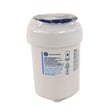
- Poor water taste/slow flow: GE refrigerator water filter MWFP
- Ice production failures: GE refrigerator ice maker kit WR30X10093
Cooling and airflow problems can lead to food spoilage, while water filter and ice maker issues can reduce dispenser performance and cause nuisance leaks or clogs. Catching the early signs (weak airflow, rising temps, frost buildup) helps prevent bigger repairs.
Last updated: January 2026
How wide is a 25.6 cubic foot refrigerator?
Most refrigerators in the 25 to 26 cubic foot class are built for a 36-inch opening; the cabinet is commonly about 35 3/4 inches wide, with handles sometimes adding a bit more. For GE model DSE25JSHECSS, confirm the exact overall width and clearance method in the DSE25JSHECSS owner’s manual and installation instructions before installation.
Measure your space and the refrigerator the same way installers do:
- Opening width: wall-to-wall at the front and back of the cutout
- Cabinet width: the metal box, not including handles
- Overall width: cabinet plus handles (if they protrude)
- Door swing clearance: room to open doors past 90° if you need full bin access
- Back clearance: space for the power cord and water line
Even within “36-inch” models, small differences matter.
| Capacity class | Nominal opening | Typical cabinet width | Notes |
|---|---|---|---|
| 25 to 26 cu. ft. | 36 in. | ~35 3/4 in. | Handles can increase overall width |
A difference as small as 1/4 inch can keep the refrigerator from sliding into the opening or can cause door interference. Proper clearance also helps prevent pinched water lines to the icemaker and dispenser.
Last updated: January 2026