Installation guide
 Owner’s manual
 Error Codes


How long will an Amana dryer last?
An Amana gas dryer like model NGD4655EW0 typically lasts 10 to 15 years with normal household use. Consistent airflow maintenance (lint screen and venting) and addressing wear items early usually makes the biggest difference in how long the dryer stays reliable.
What affects lifespan the most
- Venting and airflow: restricted exhaust makes the dryer run hotter and longer
- Lint control: lint buildup stresses the blower housing, thermostat, and thermal safety devices
- Load habits: frequent overloading strains the drum, belt, and drive motor
- Heat system health (gas models): igniter, radiant sensor, and gas valve coils wear over time
- Routine cleaning: keeps drying times down and reduces component stress
Simple maintenance that helps NGD4655EW0 last longer
Use these habits as your baseline:
- Clean the lint screen every load; replace it if torn or warped (see dryer lint screen W11778253).
- Use a 4-inch heavy metal vent and keep it as short and straight as possible.
- Clean the entire vent run periodically (including the outside hood).
- Avoid overloading; clothes should tumble freely.
- If drying times increase, fix airflow first before replacing parts.
Common wear items and what they usually mean
| Symptom | Likely wear area | Typical next step |
|---|---|---|
| Squealing, thumping, rumbling | Drum support components | Inspect rollers, shafts, and bearing surfaces |
| Drum not turning | Belt or motor system | Check belt condition and idler path |
| Long dry times | Venting or blower | Clear venting; inspect blower wheel |
| No heat (gas) | Ignition or gas valve system | Troubleshoot igniter, sensor, coils |
Why it matters
A dryer that dries efficiently runs fewer minutes per load, which reduces heat stress on thermostats, fuses, the drive motor, and the drum system. That is the easiest way to push lifespan toward the high end of the 10 to 15 year range.
For model-specific safety and venting requirements, follow the NGD4655EW0 installation guide.
Last updated: January 2026
How much does it cost to replace drum bearings on a dryer?
On the Amana NGD4655EW0 gas dryer, “drum bearings” typically refers to the drum support wear parts (front bearing/glide area and rear rollers), not a single sealed bearing like you’d see in some other appliances. Typical total cost runs about $120 to $370: roughly $20 to $120 for parts plus $100 to $250 for labor.
What “drum bearings” usually means on NGD4655EW0
This Amana model is a top-load style dryer (you load from the top of the cabinet, not through the door). The drum still rides on support surfaces that can wear and cause noise.
Common wear items people call “bearings” include:
- Front drum bearing or glide surface (drum rides on the front bulkhead)
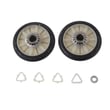
- Drum support rollers and shafts (rear support)
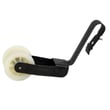
- Idler pulley and belt routing components
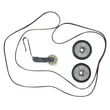
- Drive belt
- Rear seal (if you have rubbing or air leaks)
Parts that commonly apply to this repair
If you hear squealing, scraping, or a rhythmic thump, we typically inspect the front bearing area and the rear roller support system.
Typical cost ranges (parts vs. labor)
| Repair approach | Parts (typical) | Labor (typical) | Total (typical) |
|---|---|---|---|
| DIY replace one wear item | $20 to $60 | $0 | $20 to $60 |
| Pro replace one wear item | $20 to $60 | $100 to $200 | $120 to $260 |
| Pro replace multiple wear items | $60 to $120 | $150 to $250 | $210 to $370 |
What changes the price most
- How far the dryer must be disassembled (drum removal is the big labor step)
- Whether you replace one part or refresh multiple wear items at once
- Local service call minimums and hourly labor rates
- Secondary damage (drum rubbing, worn bulkhead surfaces, belt wear)
Why it matters
Worn drum support parts can make the dryer noisy and can accelerate belt wear or cause the drum to rub. Fixing the wear parts early often prevents more expensive damage.
For safety and venting requirements that affect reassembly and testing, follow the NGD4655EW0 installation guide.
Last updated: January 2026
Is the Amana gas dryer any good?
Yes. The Amana gas dryer model NGD4655EW0 is generally a solid, no-frills dryer for everyday loads; it is known for simple controls, dependable drying performance, and straightforward maintenance when the venting and lint system are kept clean. See the NGD4655EW0 installation guide for venting and setup requirements.
What “good” usually means for NGD4655EW0 owners
Most customers looking at this Amana gas dryer want reliable heat, reasonable dry times, and easy operation. In our experience, you will get the best results when you focus on airflow and basic upkeep.
- Dries best with a short, smooth 4-inch metal vent run
- Simple cycle selection; fewer features to troubleshoot
- Good fit for basic family laundry (towels, jeans, everyday clothing)
- Performance depends heavily on proper venting and a clean lint path
- Gas models typically recover heat quickly between tumbles
Quick checklist to keep performance strong
Use these habits to help your NGD4655EW0 dry efficiently and avoid common “takes too long” complaints:
- Clean the lint screen before or after every load
- Avoid overloading; clothes need room to tumble
- Use the correct cycle (timed dry for heavy items, lower heat for delicates)
- Confirm the exhaust hood outside opens freely
- Periodically clean lint buildup in the lint chute and vent duct
Common “not so good” experiences (and what usually causes them)
Many negative reviews for any vented gas dryer trace back to installation or airflow, not the dryer itself.
| Symptom | Most common cause | What to check first |
|---|---|---|
| Long dry times | Restricted venting | Vent length, crushed duct, clogged hood |
| Clothes feel hot but still damp | Poor airflow | Lint screen, lint chute, blower area |
| No heat | Ignition or gas supply issue | Gas shutoff valve, burner ignition sequence |
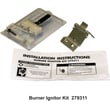
If the dryer runs but will not heat, the ignition system components are common wear items; for example, the igniter 279311 is one of the parts used in the burner ignition circuit on this model.
Why it matters
A “good” gas dryer can still perform poorly if airflow is restricted. Proper venting and lint control protect drying performance, reduce cycle times, and help prevent overheating-related shutdowns.
Last updated: January 2026
What are common dryer part failures?
On the Amana NGD4655EW0 gas dryer, the most common part failures are heat-safety and ignition components (fuse/cut-off, thermostats, igniter, gas valve coils) plus normal-wear drive parts (belt, motor, blower wheel). Restricted venting is a top root cause; follow the venting rules in the NGD4655EW0 installation guide.
Common failures and the symptoms they cause
- No heat or heat cuts out: thermal cut-off/fuse kit, operating thermostat, radiant sensor, igniter, gas valve coils
- Drum will not tumble: broken belt, failed drive motor, seized drum support components
- Long dry times: restricted venting, damaged blower wheel, air leaks around lint chute
- Squealing, thumping, grinding: worn drum support parts, pulley wear, blower wheel issues
- Will not start: door switch, push-to-start switch, motor problems
Model-matched parts to check first (NGD4655EW0)
These parts are listed for this model and commonly resolve the symptoms above:
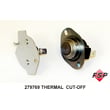
- Cut-off kit 279769 (thermal cut-off fuse kit)
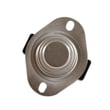
- Dryer operating thermostat WP3387134
- Igniter 279311
- Dryer radiant sensor WP338906
- Dryer gas valve coil kit WPW10328463
- Belt 341241
- Drive motor 279827
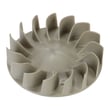
- Dryer blower wheel WP694089
Quick symptom-to-part guide
| Symptom | Most likely area | Common first checks |
|---|---|---|
| No heat | Ignition and safety circuit | Venting restriction, cut-off kit, igniter, coils |
| Runs, no tumble | Drive system | Belt condition, motor operation |
| Long dry times | Airflow | Vent duct, blower wheel, lint chute sealing |
| Loud noise | Drum support/airflow | Blower wheel, drum support wear |
Why it matters
When airflow is restricted, the dryer can overheat and trip heat-safety devices, which stops heat and can shorten the life of thermostats, the motor, and the belt.
For drying-time complaints, we also recommend reviewing dryer takes a long time to dry.
Last updated: January 2026