Installation guide
 Owner’s manual



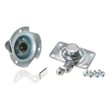
What is the most common problem with a GE dryer?
On the GE DBXR463EG1WW electric dryer, the most common issues we see are long dry times (usually airflow or lint buildup), noisy operation from worn drum support parts, and a drum that will not turn due to a worn or broken belt. Use the DBXR463EG1WW owner's manual to match symptoms to checks.
Most common symptoms and what they usually mean
- Clothes take too long to dry: lint filter full, venting/ducting restricted, load too large, or controls not set for the fabric type.
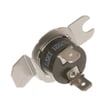
- No heat or weak heat: heating circuit problem (often the heating element or thermostats) or a power supply issue.
- Drum will not turn: belt or idler system issue.
- Noisy cycles (squeal, thump, scraping): drum glides, felt seals, or idler pulley wear.
Quick checks we recommend first (fast, no parts)
- Clean the lint filter before every load (a full screen can add a lot of dry time).
- Confirm the exhaust duct is not kinked, crushed, or clogged; check that the outside damper opens easily.
- Sort loads by fabric weight; heavy items (like towels) need smaller loads to dry evenly.
- Avoid overloading; it wastes energy and increases wrinkling.
- If dry times vary, remember automatic cycles change with load size, fabric type, and vent condition.
Common parts tied to these problems on DBXR463EG1WW
| Symptom | Common wear item | Example part for this model |
|---|---|---|
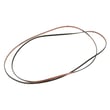
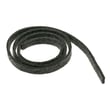
| Drum will not turn | Belt | Drive belt WE03X29897 |
| Squealing or chirping | Idler pulley | Idler pulley WE12X83 |
| Scraping or rumbling | Drum glide/bearing | Dryer drum glide bearing WE03X37318 |
| No heat | Heating element | GE dryer heating element assembly WE11M23 |
Why it matters
Long dry times and overheating are often caused by restricted airflow. Fixing lint and venting issues first helps protect the heating system, improves drying performance, and reduces energy use.
Last updated: February 2026
What is the lifespan of a GE dryer?
A GE electric dryer like model DBXR463EG1WW typically lasts 10 to 15 years. Consistent airflow maintenance (lint filter and venting) and avoiding overloads are the biggest factors that keep the motor, heating system, and drum support parts running longer.
What extends the life of a DBXR463EG1WW dryer
Follow these routine habits from the DBXR463EG1WW owner's manual:
- Clean the lint filter before every load.
- Avoid overloading; it wastes energy and increases wear.
- Keep the exhaust vent short, not crushed, and made of 4-inch rigid or flexible metal duct (no plastic).
- Check the outside exhaust hood flaps for free movement and clear any nesting or blockage.
- Have a qualified technician vacuum lint from inside the dryer about once a year.
Common wear items that affect lifespan
Some parts wear gradually; replacing them when symptoms show up can prevent bigger failures.
| Symptom | Likely wear area | Example part for this model |
|---|---|---|
| Drum not turning, squealing, or burning rubber smell | Belt and tension system | Drive belt WE03X29897 |
| Thumping, scraping, or drum drag | Drum glides and felt seals | Dryer drum glide bearing WE03X37318 |
| Long dry times even with heat | Airflow restriction (venting) | Use the DBXR463EG1WW installation guide to confirm venting setup |
Why it matters
A dryer can still “run” while drying poorly. Poor venting and lint buildup make the dryer run hotter and longer, which increases stress on the heating element, thermostats, motor, and drum support system. Good airflow and basic cleaning are the simplest ways to reach the full 10 to 15 year lifespan.
Last updated: February 2026
Is a 7.3 cubic foot dryer big?
Yes; 7.3 cubic feet is a large-capacity dryer size. For the GE DBXR463EG1WW electric dryer, the rated drum capacity is 6.0 cubic feet (a standard-capacity size), so use the model’s rating, not the 7.3 cu. ft. benchmark, when planning loads.
Quick capacity guide (how 7.3 compares)
- 7.3 cu. ft. is large-capacity and fits bulkier loads more comfortably
- 6.0 cu. ft. (DBXR463EG1WW) is standard-capacity for everyday family laundry
- Bigger drums reduce the chance of overpacking and improve tumbling
- Drying time still depends heavily on airflow and venting
- Overloading any size dryer can cause longer dry times and more wrinkles
Capacity comparison table
| Capacity (cu. ft.) | Common label | Typical use |
|---|---|---|
| 3.5 to 5.0 | Compact | Small spaces, light loads |
| 5.1 to 6.5 | Standard | Most households, mixed loads |
| 6.6 to 7.4 | Large | Bulky items, larger families |
| 7.5+ | Extra-large | Very large loads, frequent laundry |
Why it matters
Choosing load size based on the correct capacity helps prevent poor drying, overheating, and premature wear on drum support parts such as the belt and glides.
Tips to get the best results with DBXR463EG1WW
- Load loosely; items should tumble freely
- Clean the lint screen every load
- Use the correct cycle and heat setting for fabric type
- Keep the exhaust run short and as straight as possible
- Follow venting rules: 4-inch metal ducting (avoid plastic or other combustible duct)
For exact model specifications and cycle guidance, use the DBXR463EG1WW owner’s manual. For venting, electrical, and clearance requirements, use the DBXR463EG1WW installation guide.
Last updated: February 2026