Owner’s manual
 Error Codes



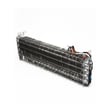
Why is my Kenmore refrigerator leaking underneath?
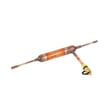
Water under a Kenmore 79571303011 bottom-mount refrigerator is usually caused by a defrost drain problem (clogged or frozen) or water overflowing the drain pan. We recommend checking the defrost drain path first, then inspecting the drain tube and water system for slow leaks.
Most common causes (and what to check)
- Clogged or frozen defrost drain: Meltwater can back up and spill into the cabinet, then run to the floor.
- Drain tube issue: A loose, kinked, or partially blocked drain line can misdirect water.
- Cracked or shifted drain pan: Water can miss the pan or overflow during defrost.
- Ice maker or water line seepage: Small leaks can travel and show up underneath.
- Door not sealing well: Excess humidity creates heavy frost, leading to more defrost water.
Quick troubleshooting steps
- Unplug the refrigerator and remove the lower freezer drawer/bins as needed.
- Look for ice buildup on the freezer floor or rear panel (a strong clue the defrost drain is blocked).
- Flush the drain with hot water (a turkey baster works well) until it flows freely to the pan.
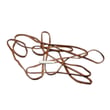
- Inspect the drain outlet and tubing; if it is damaged or not draining well, replace the drain tube.
- If the leak appears only when making ice or dispensing water, inspect the inlet valve and ice maker fill area.
Parts that commonly relate to leaks on this model
| Symptom | Likely area | Example part for 79571303011 |
|---|---|---|
| Water after defrost, puddle under unit | Defrost drain path | Refrigerator drain tube 5251JA3003D |
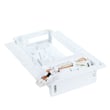
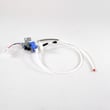
| Leak near back, only with ice/water use | Water supply/inlet | Refrigerator water inlet valve assembly AJU55759303 |
Why it matters
Leaks underneath can lead to floor damage and can also signal airflow or defrost issues that reduce cooling performance. Fixing the drain path early helps prevent recurring ice buildup and repeat leaks.
For model-specific access points and panel removal guidance, follow the 79571303011 owner's manual.
Last updated: January 2026
What size is Kenmore refrigerator model 79571303011?
Kenmore refrigerator model 79571303011 is a full-size bottom-mount refrigerator; for exact exterior dimensions (width, height, depth) and required clearances, use the specifications section in the 79571303011 owner's manual. That is the best source for fit, door swing, and ventilation requirements.
What “size” usually means for a bottom-mount refrigerator
When customers ask about size, we recommend confirming these measurements before delivery or moving the unit:
- Overall width (cabinet, not just doors)
- Overall height (to the top hinge cover)
- Overall depth (with and without handles)
- Door swing space (room for doors and freezer drawer to open)
- Ventilation clearance (space behind, above, and at the sides)
How to measure your space (quick checklist)
Measure the opening and the path into the kitchen, then compare to the manual specs.
| What to measure | Where to measure | Why it matters |
|---|---|---|
| Opening width | Between cabinets/walls | Prevents binding and rubbing |
| Opening height | Floor to cabinet/soffit | Avoids hinge and top trim interference |
| Opening depth | Back wall to front edge | Prevents sticking out too far |
| Entry path | Doorways, hallways, turns | Confirms the refrigerator can be moved in |
Typical size range (for planning only)
Most Kenmore bottom-mount refrigerators in this class fall into these planning ranges; confirm the exact numbers in the manual for model 79571303011.
- Width: 30 to 33 inches
- Height: 67 to 70 inches
- Depth: 30 to 35 inches (varies with handles)
Why it matters
Correct sizing prevents installation problems (doors hitting walls, drawers not opening fully) and helps maintain airflow for reliable cooling.
Last updated: January 2026
What is the bottom part of a refrigerator called?
On a Kenmore bottom-mount refrigerator like model 79571303011, the “bottom part” is most often the machine compartment (also called the compressor compartment). It houses the compressor, condenser fan, condenser coils, and a drain pan that help remove heat and keep the refrigerator cold.
Common names you may hear
- Machine compartment: The lower rear area where the cooling system components sit
- Compressor compartment: Focuses on the compressor and its related parts
- Toe grille (front bottom): The vented cover at the very bottom front on many refrigerators
- Base pan or drain pan: The pan underneath that catches defrost water
What’s typically located in the bottom area
Most bottom sections include some combination of these components:
- Compressor (the pump that circulates refrigerant)
- Condenser fan (moves air across the condenser area)
- Condenser coils (release heat from the refrigerant)
- Drain tube and drain pan (routes and collects defrost water)
- Start device/relay (helps the compressor start)
If you’re tracking a leak or puddle, the drain system is a common place to check; see the refrigerator drain tube 5251JA3003D.
Quick guide: “bottom front” vs “bottom back”
| What you mean by “bottom part” | What it’s usually called | What it does |
|---|---|---|
| Bottom front (near the floor) | Toe grille or base grille | Lets air flow in and out; may hide leveling legs |
| Bottom back (behind the unit) | Machine compartment | Holds cooling components that remove heat |
| Underneath the cabinet | Drain pan/base pan | Collects defrost water for evaporation |
Why it matters
Using the right name helps you find the correct diagram, part, or repair steps. For example, a “warm fridge” complaint often points to the machine compartment (airflow, fan, coils), while “water on the floor” often points to the drain tube or drain pan.
For model-specific component locations and access panels, use the 79571303011 manual.
Last updated: January 2026