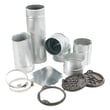
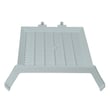
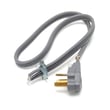
Installation guide
 Owner’s manual
 Error Codes
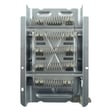


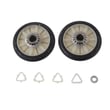
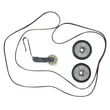
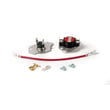
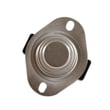
Can I replace the heating element myself in the dryer?
Yes, many homeowners can replace the heating element in a Kenmore dryer model 11060222510 with basic tools, careful wire handling, and strict power safety. We recommend following the step-by-step procedure in the 11060222510 installation guide and replacing any heat-safety parts that test bad at the same time.
Safety first (before you touch anything)
- Unplug the dryer (electric shock risk).
- If it is a gas dryer, shut off the gas supply valve before service.
- Let the heater area cool completely.
- Do not attempt repairs you do not understand or do not have the skills to carry out (this is called out in the guide).
- Clean lint from the cabinet and vent path while the dryer is open; lint buildup is a common cause of overheating.
What the DIY job usually involves
Most Kenmore 110-series dryers follow this general flow:
- Remove the rear panel (or access panel) to reach the heater housing.
- Label wires, then disconnect the element terminals.
- Remove mounting screws, slide out the heater assembly, and swap the element.
- Inspect wiring terminals for heat damage; replace any burnt connectors.
- Reassemble, restore power, then run a short heat test.
Common replacement parts for “no heat” symptoms
If your dryer tumbles but does not heat, these are the parts we commonly see involved:
| Symptom | Most common checks | Parts often replaced |
|---|---|---|
| Drum turns, no heat | 2 fuses/breakers, 240V supply | Dryer heating element 279838, thermal cut-off kit, high-limit thermostat |
| Heats briefly, then stops | Airflow restriction, overheating | Thermal cut-off kit, high-limit thermostat |
| Burning smell or hot cabinet | Lint buildup, restricted vent | Cleanout plus heat-safety parts as needed |
Quick heat test after reassembly
The installation instructions describe a simple check: after the dryer runs about 5 minutes, open the door and feel for heat. If there is still no heat, verify both household fuses or breakers (many electric dryers use two), then move to component testing.
Why it matters
A heating element replacement is straightforward, but correct wiring, good airflow, and working safety thermostats help prevent repeat failures and overheating. Following the documented procedure reduces mistakes and protects the dryer’s heater circuit.
Last updated: February 2026
Can you still get parts for Kenmore appliances?
Yes. We still carry replacement parts for Kenmore appliances, including Kenmore dryer model 11060222510. The key is matching the exact model number and then selecting the correct part by diagram and part ID so the replacement fits and works correctly.
How to make sure you order the right Kenmore part
Use your model number (11060222510) and confirm the part location in the diagrams and instructions in the 11060222510 owner's manual.
- Match the full model number from the appliance label (not just “Kenmore 110”)
- Compare the part name and part ID, not only the description
- Check whether your dryer is gas or electric (this affects heating parts)
- Replace common wear items together when it makes sense (belt, rollers, idler)
- Follow the safety and access steps in the 11060222510 installation guide before disassembly
Common Kenmore dryer parts we stock for model 11060222510
These are examples of frequently replaced items for this model:
| Symptom | Likely part to check | Example part for this model |
|---|---|---|
| Drum not turning, motor runs | Drum belt or idler pulley | Belt 341241, dryer idler pulley WP691366 |
| No heat or weak heat | Heating circuit components | Dryer heating element 279838, dryer thermal cut-off fuse kit 279816 |
| Squealing or thumping | Drum support components | Dryer repair kit 4392065 |
Why it matters
Kenmore parts availability is usually not the problem; correct identification is. Using the exact model number and the correct part ID helps prevent wrong-part returns and gets your dryer back to normal drying performance faster.
Last updated: February 2026
How do I remove the front panel of my Kenmore dryer?
To remove the front panel on your Kenmore dryer model 11060222510, we disconnect power, release the top panel (or lower access panel, depending on cabinet style), remove the front mounting screws, unplug the door-switch connector, then lift the front panel up off the lower tabs and pull it forward.
Safety and prep
- Unplug the dryer or switch off the breaker.
- If you have a gas dryer, close the gas shut-off valve.
- Pull the dryer forward enough to avoid crushing the vent.
- Wear cut-resistant gloves; sheet metal edges are sharp.
- Keep screws grouped by location for easier reassembly.
For safety notes and cabinet access details, use the 11060222510 installation guide.
Front panel removal (common Kenmore 110-style cabinet)
- Remove the lint screen (if it pulls out from the top); remove any screws in the lint screen housing.
- Release the top: slide a putty knife into the seam a few inches in from each front corner to pop the spring clips; lift the top.
- Remove screws securing the front panel (typically at the upper inside corners under the raised top, and sometimes around the door opening).
- Disconnect the door-switch wiring harness from the front panel.
- Lift the front panel straight up to clear the lower retaining tabs; pull the panel toward you.
If you are opening the cabinet to reach the drum
When the front is off for drum access, we often replace the wear items that cause squealing or slipping:
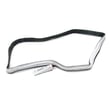
- Belt 341241 (drum drive belt)
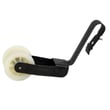
- Dryer idler pulley WP691366 (belt tensioner)
- Dryer repair kit 4392065 (common roller and idler wear parts)
| Symptom during removal | Most common cause | Fix |
|---|---|---|
| Top will not lift | Hidden screws in lint screen housing | Remove housing screws, then release clips |
| Panel stuck at bottom | Still engaged on lower tabs | Lift up first, then pull forward |
| Door won’t separate | Door-switch harness still connected | Unplug harness before lifting panel away |
Why it matters
Removing the front panel the right way prevents bent cabinet panels, broken door-switch wiring, and drum misalignment that can lead to noise, poor drying, or premature belt wear.
Last updated: February 2026
How do I tell what model my Kenmore dryer is?
Your Kenmore dryer’s model number is printed on the appliance ID label; on model 11060222510, you’ll typically find that label inside the door opening on the cabinet frame, or on the back of the dryer near the top. Match the full model number exactly when ordering parts.
Where to look on a Kenmore dryer
Check these common label locations first:
- Inside the dryer door opening on the cabinet frame
- On the back panel near the top edge
- Along the door opening lip (near the latch side)
- On the inside of the front panel area (visible when the door is open)
If you see both a model number and a serial number, record both; the model number identifies the correct parts list, and the serial number helps confirm production details.
What the model number looks like (and what to write down)
For Kenmore dryers, the model number is usually a long number string (often starting with 110). Write it exactly as shown, including all digits.
| Label item | Example | Why it matters |
|---|---|---|
| Model number | 11060222510 | Ensures parts fit your exact dryer |
| Serial number | (varies) | Helps match revisions and production runs |
Tips to avoid ordering the wrong part
- Use the full model number, not just the first 3 digits
- Don’t use the cycle name (Timed Dry, Auto Dry) as an identifier
- If the label is worn, take a clear photo and zoom in
- Confirm whether your dryer is electric or gas using the 11060222510 owner’s manual
Why it matters
Kenmore model families can look nearly identical, but use different belts, thermostats, or heating components. Using the exact model number helps us match the correct diagrams and parts the first time.
Last updated: February 2026
How much does it cost to replace a temperature sensor on a dryer?
For Kenmore dryer model 11060222510, replacing a temperature-sensing part typically costs $20 to $60 for the part, plus $100 to $250 for labor if you hire service. Total installed cost is usually $120 to $310, depending on which sensor is being replaced and access time.
What “temperature sensor” usually means on this dryer
On most Kenmore dryers, customers use “temperature sensor” to describe one of these heat-control parts. Your exact match and location are shown in the 11060222510 installation guide.
- Operating thermostat: regulates normal cycling temperature
- High-limit thermostat: safety limit if temperatures get too high
- Thermal cut-off fuse: one-time safety device that opens on overheating
- Heating element (electric models): heat source; not a sensor, but often replaced during “no heat” repairs
Typical cost breakdown
| Cost item | Typical range | Notes |
|---|---|---|
| Part (thermostat or thermal cut-off) | $20 to $60 | Most common “sensor” parts fall here |
| Service call / diagnostic | $0 to $120 | Sometimes waived with repair |
| Labor | $100 to $250 | Varies by region and venting access |
| Total installed | $120 to $310 | Most common real-world range |
When replacement is most likely (and what to check first)
Before replacing any sensor, we recommend these quick checks because restricted airflow can overheat the dryer and damage thermostats and fuses.
- Clean the lint screen every load
- Confirm the vent is 4-inch diameter and not crushed or kinked
- Reduce long vent runs and excessive turns
- Make sure the room temperature is above 45°F for proper cycle operation
- Keep the exhaust area free of lint and dust buildup
Parts that commonly get replaced together
If the dryer overheated, it is common to replace the safety parts as a set and correct the venting issue.
- Dryer thermal cut-off fuse kit 279816
- Dryer high-limit thermostat WP3977767
- Dryer operating thermostat WP3387134
Why it matters
A failing thermostat or thermal cut-off can cause no heat, overheating, or long dry times. Fixing airflow issues at the same time helps the new part last and helps the dryer dry efficiently.
Last updated: February 2026
How to tell if the dryer heating element is bad?
If your Kenmore dryer model 11060222510 runs but produces no heat (or takes much longer to dry), the heating circuit needs attention. We confirm a bad heating element by checking for heat during a timed test and then verifying the element and safety fuses with a multimeter.
Quick checks first (no tools)
Follow the heat-check described in the 11060222510 installation guide: run a full-heat cycle for about 5 minutes, then open the door and feel for heat.
- Make sure the cycle is a heated cycle (not Air/Fluff).
- Confirm the door fully closes and latches.
- For electric setups, check both household fuses or breakers (the drum can turn with only one leg of power).
- Verify the dryer is getting 240 volts (electric models).
- Clean the lint screen and confirm airflow is strong at the exhaust.
Definitive test: multimeter checks (power off)
Unplug the dryer (and shut off gas if applicable) before testing.
- Heating element continuity: A good element typically shows continuity and often measures roughly 10 to 50 ohms.
- Short to ground: If the element shows continuity from a terminal to the metal heater housing, it is shorted and must be replaced.
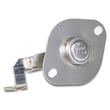
- Thermal cut-off/fuse: If the dryer has no heat, a blown thermal cut-off can stop the heater even when the drum runs.
If the element fails testing, replace the dryer heating element 279838. If wiring at the heater looks heat-damaged, replace the dryer heating element wire kit 279457 as well.
What the symptoms usually mean
| Symptom | Most common cause | What to check next |
|---|---|---|
| Drum turns, no heat | Power supply issue or open safety device | 2 breakers/fuses, thermal cut-off |
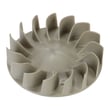
| Heat comes and goes | Overheating from poor airflow | Venting, lint buildup, blower wheel |
| Long dry times, warm but weak | Restricted airflow | Lint screen, duct, outside hood |
Why it matters
A weak or failed heating circuit can be caused by restricted venting; fixing airflow helps prevent repeat failures of the heating element and thermal cut-off.
Last updated: February 2026
What does F mean on a Kenmore dryer?
On Kenmore dryer model 11060222510, an “F” code is a fault code that means the dryer’s control detected a problem and stopped normal operation. The exact meaning depends on the full code shown (for example, F1/F01), so we use the model’s troubleshooting steps to pinpoint the failed circuit or part.
What to do first (quick checks)
- Write down the entire code (example: F1, F01, F2) and any beeps.
- Unplug the dryer (or switch off the breaker) for 2 minutes, then restore power and retry.
- Confirm the door is fully closed; the manual notes the dryer will not run if the door is not closed completely.
- Press and hold PUSH to START until you hear the drum moving (a quick press may not start the cycle).
- If the drum turns but there is no heat, check both household fuses or breakers (many electric dryers use two).
For model-specific troubleshooting flow and checks, use the 11060222510 owner’s manual.
Common “F” code causes on Kenmore dryers
Most “F” codes trace back to one of these areas:
- Temperature sensing (thermistor or thermostat circuit)
- Control board or timer logic
- Wiring connections (loose plug, overheated terminal)
- Airflow restriction causing overheating and safety shutdown
If you’re seeing an F-code on a Kenmore 110-series electronic control dryer, the fastest way to interpret it is the Kenmore 110 series electronic control model dryer error codes guide.
Airflow and overheating checks (important for many fault codes)
Restricted venting can trigger overheating protection and repeated faults. Our manual guidance includes:
- Use 4 in. (102 mm) vent material
- Make sure the vent is not crushed, kinked, too long, or has too many turns
- Use only one fabric softener sheet at a time (a sheet can block the grille)
Quick airflow reference
| What you notice | What it often points to | What to check |
|---|---|---|
| Long dry times | Poor airflow | Lint screen, vent routing, 4 in. duct |
| Stops mid-cycle with code | Overheat protection | Vent restriction, blower path |
| Runs but no heat | Power or heat circuit issue | Breakers/fuses, heater circuit |
Why it matters
An “F” code is the dryer protecting your laundry and the appliance. Getting the full code and correcting airflow or a failing sensor/control issue prevents repeat shutdowns and reduces the chance of heat-related damage.
Last updated: February 2026
What size is a Kenmore Model 11060222510 dryer?
The Kenmore dryer model 11060222510 is a full-size, roughly 27-inch class dryer. For exact cabinet dimensions and required installation clearances (especially in a closet), we follow the measurements and diagrams in the Installation guide for this model.
Typical size you can plan around
Most Kenmore 110-series, full-size dryers are close to these exterior dimensions:
- Width: about 27 in.
- Height: about 38 to 44 in. (varies by control panel and leveling feet)
- Depth: about 27 to 31 in. (varies by door style and vent hookup)
If you are measuring for a tight laundry closet, use the clearance diagram in the installation guide rather than relying only on cabinet size.
Installation clearances that affect “real-world size”
Even if the dryer cabinet fits, you still need space for airflow, venting, and door swing.
Key points called out for this Kenmore installation:
- Plan a location that allows proper exhaust installation (vent routing matters).
- The dryer needs a sturdy, level floor; slope should be no more than 1 inch under the dryer.
- Do not install where temperatures drop below 45°F.
- The space must be large enough for the dryer door to open fully.
- Closet installs require ventilation openings and minimum airspace around the dryer.
Quick measuring checklist
Use this checklist before you order a replacement dryer or build cabinetry:
- Measure width wall-to-wall at the narrowest point.
- Measure depth from the back wall to the front edge of the door (include handles).
- Confirm you have room for a 4-inch vent connection and routing.
- Add space for the power cord/outlet location.
- Confirm the door swing clears trim, walls, and washer lids.
Cabinet size vs. space needed (at-a-glance)
| What you’re planning for | What to measure | Why it’s different |
|---|---|---|
| Dryer cabinet “size” | Height, width, depth of the metal cabinet | Doesn’t include vent, cord, or door swing |
| Installed footprint | Cabinet size plus rear/side clearances | Prevents overheating and improves drying |
| Closet fit | Opening size plus venting and door clearance | Ensures airflow and service access |
Why it matters
Correct sizing prevents crushed or kinked venting, poor airflow, longer dry times, and closet overheating. It also helps avoid installation issues when you replace parts like the belt 341241 and need service access.
Last updated: February 2026