Installation guide
 Owner’s manual




How much does it cost to replace a heating element in a Kenmore dryer?
For the Kenmore gas dryer model 11072332510, “heating element” cost depends on what’s actually being replaced. Gas dryers typically replace ignition and burner-heating parts (igniter, radiant sensor, gas valve) rather than an electric heater coil; parts commonly run $25 to $300, and professional service often totals $150 to $400.
On a gas dryer like 11072332510, no-heat repairs most often involve the burner/ignition system, airflow safety devices, or controls.
- Ignition parts: igniter and radiant sensor are common no-heat causes
- Gas delivery parts: gas valve or complete burner assembly when needed
- Safety cutoffs: thermal cut-off kit if overheating occurred
- Airflow-related fixes: vent cleaning (often the real root cause)
- Labor: diagnosis plus disassembly and reassembly time
For model-specific operating and troubleshooting steps, use the 11072332510 owner's manual and the 11072332510 installation guide.
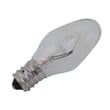
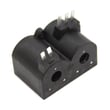
These are common “heat system” parts we see replaced on Kenmore gas dryers, including 11072332510.
| What gets replaced | Example part for this model | Typical part cost range |
|---|---|---|
| Igniter | Igniter 279311 | $25 to $60 |
| Radiant sensor | Dryer radiant sensor WP338906 | $20 to $60 |
| Thermal safety kit | Dryer thermal cut-off kit W11050897 | $10 to $40 |
| Gas valve | Dryer gas valve 279923 | $120 to $220 |
| Burner assembly | Gas burner W10823508 | $200 to $350 |
Our installation guidance for gas dryers recommends a simple heat check and gas supply check.
- Run the dryer about 5 minutes, then open the door and feel for heat
- If there’s no heat, turn the dryer off and confirm the gas shutoff valve is open
- Verify the house fuse/circuit breaker is OK
- Make sure the door fully closes (a bad door switch can stop operation)
- Check for a crushed or clogged vent that can trigger overheating cutoffs
Replacing the wrong “heating element” part is a common mistake on gas dryers. Confirming whether the dryer is igniting and whether airflow is restricted helps you target the correct fix and avoid repeat failures.
Last updated: February 2026
How do I know what model my Kenmore dryer is?
Your Kenmore dryer’s model number is printed on the appliance ID label; for Kenmore dryers it’s most often inside the door opening on the frame, and it’s the key detail we use to match the correct parts, diagrams, and specifications for your exact dryer.
Check these common label locations on Kenmore dryers:
- Inside the dryer door opening (on the front frame)
- On the back panel of the dryer cabinet
- Near the lint screen housing (some designs place the label close to the filter opening)
- On the side panel near the front edge (less common)
For label examples and model-specific details, use the 11072332510 owner's manual.
The model number is usually a long string of numbers and sometimes letters. For this page, the model number format is like 11072332510.
Write down (or photograph) these items from the label:
- Model number (example: 11072332510)
- Serial number (helps identify production run and compatible revisions)
- Type of fuel (gas vs. electric; your model is a gas dryer)
- Any suffixes after the model number (if shown)
Use this table to avoid mix-ups when ordering parts.
| Item | Where you’ll see it | Example | What it’s used for |
|---|---|---|---|
| Model number | Appliance ID label | 11072332510 | Identifies the exact dryer |
| Part number | On the part or parts list | W10131364 | Identifies the manufacturer’s part |
| Part ID | On our parts listing | 341241 | Identifies the specific part listing |
Kenmore dryers can look similar across series, but internal components (like the drive system, door switch, or gas burner parts) can differ. Using the exact model number prevents ordering the wrong belt, thermostat, or igniter.
If you’re troubleshooting a “won’t start” symptom while you’re locating the label, the dryer door switch WP3406107 is a common related part on this model.
Last updated: February 2026
What is an F1 code on a Kenmore dryer?
On a Kenmore dryer, an F1 code indicates a control problem, most commonly a failed electronic control board or a stuck key on the console. On model 11072332510, start by resetting power, then check the console and wiring before replacing parts.
- Unplug the dryer (or switch off the breaker) for 5 minutes, then restore power and try a cycle.
- Press each button to confirm none feel stuck or continuously “beep” when touched.
- If the code returns immediately, stop using the dryer until you complete the checks below.
- If the dryer runs but the code appears mid-cycle, inspect for vibration or loose connections at the console.
| Likely cause | What you may notice | Typical fix |
|---|---|---|
| Stuck or shorted console key | Code appears when you touch the panel, random beeping | Clean/dry console area; inspect keypad/console harness |
| Loose or damaged wire harness | Code comes and goes, especially after moving the dryer | Reseat connectors; repair damaged wiring |
| Failed electronic control board | Code returns after reset, dryer won’t start or won’t run correctly | Replace the control board (model-specific part) |
- Disconnect power.
- If you need to access internal wiring, follow the access steps in the 11072332510 owner’s manual.
- Inspect the console area for moisture, corrosion, or pinched wires.
- Reseat any accessible wire harness connectors firmly.
An F1 code is the dryer telling you the control system is not reading inputs correctly. Fixing it early prevents no-start problems, unexpected shutoffs, and repeated error beeping during cycles.
If your dryer displays other codes, use our Kenmore 110 series electronic control model dryer error codes reference to match the code to the right troubleshooting path.
Last updated: February 2026
How do I know if my Kenmore dryer thermal fuse is blown?
On your Kenmore gas dryer model 11072332510, a blown thermal fuse commonly shows up as a dryer that won’t start or runs but won’t heat. The sure way to confirm it is to unplug the dryer and test the fuse for continuity with a multimeter, as outlined in the 11072332510 owner’s manual.
- Dryer will not run even though the door is closed and power is available
- Drum turns but there is no heat (often confused with a tripped breaker or closed gas valve)
- Dryer stops mid-cycle and then will not restart until the issue is corrected
- You recently noticed long dry times or restricted airflow (lint buildup, crushed vent)
- Unplug the dryer (and shut off the gas supply valve as a safety step).
- Access the thermal fuse area (location varies by design; use the 11072332510 installation guide for access and safety notes).
- Remove at least one wire from the fuse terminal.
- Meter test:
- Good fuse: continuity (beep or near 0 ohms)
- Blown fuse: no continuity (no beep, open circuit)
The manual’s troubleshooting points to a few common “no heat” causes that can mimic a blown fuse:
| Symptom | Most common cause | What to do |
|---|---|---|
| Tumbles, no heat | Gas supply valve closed | Open the supply line shutoff valve and retest heat after a few minutes |
| Won’t start | Door not fully closed or start not held | Close door firmly; press and hold Start until drum moves |
| No heat or intermittent heat | Airflow restriction | Clean lint screen; inspect and clear venting |
A thermal fuse is a safety device; when it blows, it usually means the dryer overheated from restricted airflow. Replacing the fuse without fixing the venting often leads to the same failure again.
If you determine the fuse is blown, also inspect related overheating and airflow parts such as the dryer operating thermostat WP3387134 and the vent path.
Last updated: February 2026