Owner’s manual
 Error Codes


What is the advantage of a bottom mount fridge?
A bottom-mount refrigerator like the LG LPXS30866D puts the fresh-food section at eye level, so we reach everyday items faster with less bending. The freezer stays below, which works well when we use refrigerated foods more often than frozen foods.
Key advantages in daily use
- Less bending for fresh food: produce, milk, and leftovers are easier to see and grab.
- Better organization up top: shelves and bins are more accessible for frequent loading.
- Freezer capacity stays strong: the lower drawer typically holds bulky frozen items well.
- Improved visibility: fewer missed items means less food waste.
- Comfort for most households: reduces strain during repeated door openings.
Bottom-mount vs top-freezer: quick comparison
| Feature | Bottom-mount refrigerator | Top-freezer refrigerator |
|---|---|---|
| Most-used compartment height | Fresh food at eye level | Fresh food lower, more bending |
| Freezer access | Lower drawer or pull-out | Upper swing door |
| Best for | Frequent fresh-food use | Frequent freezer use |
Why it matters
Most households open the refrigerator compartment far more than the freezer. With a bottom-mount design, we spend less time crouching and more time quickly finding what we need, which improves convenience and day-to-day kitchen workflow.
Tips to get the most from a bottom-mount layout
- Keep everyday items on the middle shelves for fastest access.
- Store raw meats on the lowest refrigerator shelf to help prevent drips.
- Avoid overpacking vents so cold air can circulate evenly.
- Set typical targets: 37°F for the refrigerator and 0°F for the freezer.
- Use odor control and airflow features as directed in the LPXS30866D owner's manual.
Last updated: January 2026
How to tell if an LG compressor is bad?
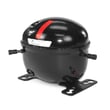
A bad compressor in an LG LPXS30866D refrigerator usually shows up as warm temperatures (or no cooling) even though the lights and fans run, often with repeated clicking or a steady hum followed by silence. We confirm it by checking airflow, condenser operation, and the compressor start circuit before replacing the compressor.
Quick symptoms that point to the compressor
- Refrigerator and freezer both warming up over several hours
- Compressor is very hot to the touch and cycles off quickly
- Repeated clicking every few minutes (start attempt then overload trips)
- Condenser fan runs but the compressor does not stay running
- Little to no heat coming off the condenser area while “running”
- Frost pattern is abnormal (no frost at all on the evaporator, or only a small patch)
What to check first (most common non-compressor causes)
Before condemning the compressor, we rule out issues that can mimic a compressor failure:
- Verify temperature settings and allow 24 hours after changes
- Clean dust from the condenser area and confirm airflow
- Make sure the condenser fan runs when the compressor is supposed to run
- Listen for the click-hum-click pattern that suggests a start problem
- Check for error indications and follow the diagnostic steps in the LPXS30866D manual
Start device vs. compressor: a simple comparison
| What you observe | More likely cause | What we do next |
|---|---|---|
| Click every few minutes, compressor never stays on | Start relay/overload issue | Test/replace start components such as the refrigerator compressor start relay EBG60663230 and refrigerator compressor overload protector 6750CL0001D |
| Compressor runs steadily but cooling is weak | Sealed system or compressor wear | Check condenser cleanliness, airflow, and frost pattern; sealed system diagnosis may be needed |
| No sound/vibration from compressor, fan runs | Control or start circuit problem | Verify power to compressor circuit; inspect start components |
Why it matters
Replacing a compressor is a major repair. Checking the start relay and overload protector first prevents unnecessary parts replacement and often restores cooling faster and at a lower cost.
Last updated: January 2026
Why does my LG freezer keep icing up at the bottom?
Bottom-of-freezer ice buildup in your LG LPXS30866D is almost always caused by defrost water not draining correctly. When the defrost drain is restricted or the drain tube is frozen, water refreezes on the freezer floor and gradually forms a thick ice sheet.
Most common causes
- Frozen or clogged defrost drain hole under the evaporator cover
- Ice blocking the drain tube leading to the drain pan
- Food packaging or a drawer/bin not fully seated, letting warm air in and increasing frost
- Door not sealing tightly (gasket not making full contact)
- Freezer temperature set too cold, increasing frost and refreeze
Quick checks and fixes (safe DIY)
- Unplug the refrigerator and remove the freezer drawer/bins.
- Melt the ice on the freezer floor using towels and a hair dryer on low (keep heat moving; do not overheat plastic).
- Locate the drain opening at the back/bottom area (behind the rear panel on many bottom-mount designs) and flush it with hot water using a turkey baster.
- Confirm the drain is flowing to the drain pan by listening for water dripping after flushing.
- Make sure drawers and rails fully close and nothing holds the door open.
For panel removal, drain access, and reassembly details specific to this model, follow the LPXS30866D owner’s manual.
When to suspect a door seal problem
If you see frost mainly along the door edge or the ice returns quickly after clearing the drain, check the gasket.
| What you notice | Likely issue | What to do next |
|---|---|---|
| Ice sheet only on freezer floor | Drain frozen/clogged | Clear drain and verify flow |
| Frost around door perimeter | Air leak at gasket | Clean gasket, check alignment |
| Water/ice plus warm temps | Cooling/airflow issue | Check vents, avoid overpacking |
If the gasket is torn, hardened, or won’t seal after cleaning and warming it, replacement is the lasting fix. For this model, the correct options are the LG refrigerator door gasket, left ADX72930427 and LG refrigerator door gasket, right ADX72930428.
Why it matters
A blocked drain or air leak forces longer run times, can cause temperature swings, and leads to recurring ice that interferes with drawer operation and storage space.
Last updated: January 2026