Owner’s manual
 Error Codes


What is the capacity of the wa52m8650av a4?
The Samsung WA52M8650AV washer has a 5.2 cu. ft. capacity. This is the tub capacity used to describe how much laundry the washer can handle per load; actual usable space varies by cycle (like Bedding/WaterProof) and fabric type. See the WA52M8650AV user manual for cycle and loading guidance.
Capacity is a volume rating, not a weight limit. Your WA52M8650AV also uses auto-load sensing, so water level and agitation can change based on what you put in.
- Bulky items (comforters, blankets) often need fewer pieces per load to prevent imbalance
- Dense items (towels, jeans) can reach the practical limit sooner than light fabrics
- Overfilling can reduce cleaning performance and increase vibration
- Some cycles are designed for specific load types (for example, Bedding/WaterProof)
Use these habits to get the most out of a 5.2 cu. ft. Samsung top-load washer:
- Load items dry and unfolded, spread evenly around the tub
- Keep items below the top of the tub so the lid closes without pressing on laundry
- Mix large and small items when possible to help balance during spin
- Use HE (high efficiency) detergent to prevent oversudsing
- If you see an unbalance message (like “Ub”), redistribute and restart the spin
| What you’re washing | Typical approach in WA52M8650AV | Why |
|---|---|---|
| Everyday mixed laundry | Normal or Deep Wash, full but not packed | Best cleaning and balance |
| Towels/jeans | Medium-full load | Heavy fabrics can overload quickly |
| Comforter/blanket | Fewer items, Bedding/WaterProof | Bulky loads can unbalance |
| Delicates | Smaller loads, Delicates cycle | Protects fabrics and reduces tangling |
Matching load size to the 5.2 cu. ft. capacity helps your WA52M8650AV clean better, spin out more water, and avoid issues like excessive vibration, long cycle times, and out-of-balance errors.
Last updated: January 2026
What is the most common problem with the Samsung washing machine?
On the Samsung WA52M8650AV washer, one of the most common issues we see is a fill or water-level sensing problem, often showing up as a no-fill condition (like code 4C) or a water level sensor fault (code 1C). Start by checking the water supply, inlet hoses, and inlet screens using the WA52M8650AV user manual.
- Confirm both hot and cold water faucets are fully open.
- Make sure the inlet hoses are not kinked, twisted, or crushed behind the washer.
- Check for low home water pressure (this model calls for 20 to 116 psi).
- Clean the inlet hose mesh filters (clogged screens can trigger a fill error).
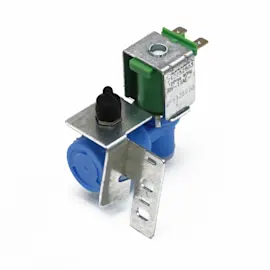
- Reseat hose connections and look for leaks at the faucet and washer inlet valve.
The WA52M8650AV manual lists these common “water” information codes:
| Code | What it points to | What to do first |
|---|---|---|
| 4C | Water is not supplied | Check faucets, hoses, and clean inlet screens |
| 1C | Water level sensor issue | Power reset; if it returns, service may be needed |
| LC | Drain hose issue (can affect filling behavior) | Verify drain hose routing and clogs |
For broader Samsung guidance, we also use the Samsung top load washer error codes reference to compare symptoms across similar top-load models.
Fill and water-level problems can stop a cycle mid-wash, cause poor cleaning (not enough water), or lead to repeated draining and refilling. Catching a simple hose kink or clogged inlet screen early can prevent unnecessary part replacement.
Last updated: January 2026
What is the average lifespan of a Samsung washing machine?
Most Samsung washers average about 10 to 14 years of service life; your Samsung WA52M8650AV can often reach that range (or longer) when it’s installed correctly, used with HE detergent, and maintained regularly. For model-specific care and maintenance routines, follow the WA52M8650AV user manual.
A washer’s lifespan is usually determined more by use and upkeep than by the brand name on the lid.
- Load size and balance: frequent overloading or chronic unbalanced loads increase wear
- Detergent choice: using HE detergent helps prevent oversudsing and residue buildup
- Water quality: hard water can leave deposits that contribute to odors and component stress
- Ventilation and drying: leaving the lid open between loads helps reduce mildew and odors
- Early repairs: fixing small leaks, fill issues, or drain problems early prevents bigger failures
The WA52M8650AV includes features like Self Clean and a mesh filter at the water inlet that should be cleaned periodically.
- Run Self Clean regularly (Samsung recommends about every 20 washes)
- Clean the water inlet mesh filter once or twice a year (more often if you have low flow)
- Use the right cycle for bulky items (for example, Bedding/WaterProof) to reduce imbalance
- Avoid excess detergent; too many suds can cause odors and performance issues
- Check hoses and connections for seepage and tighten as needed
Use this as a practical starting point; the best choice depends on the specific failure and part cost.
| If your washer is… | Usually makes sense to… |
|---|---|
| Under ~5 years old | Repair (especially for hoses, valves, minor leaks) |
| 6–10 years old | Compare repair cost vs. condition and usage |
| 10+ years old | Consider replacement if the repair is major (motor, control, tub) |
A washer that’s maintained and not overloaded typically cleans better, runs quieter, and avoids common problems like oversudsing, odors, and drain or fill errors. Those day-to-day habits are often what separate a 7-year washer from a 14-year washer.
Last updated: January 2026